


Key takeaways:
- Understanding the differences between shelving and racking helps you pick the right system for your space and budget.
- The type of shelving you need depends on what you're storing and where: from value shelving to industrial shelving.
- Warehouse racking systems like selective, drive-in and cantilever racking each solve different storage problems.
- Smart layout design and vertical stacking can increase storage density by up to 50%.
- Load capacity, safety regulations and environmental conditions all matter before you install any racking system.
- The right system improves stock management, access and day-to-day productivity.
What's the Difference Between Racking and Shelving?
Shelving and racking both help you organise storage spaces, but they do different jobs. Knowing the distinction is the starting point for any shelving and racking buying guide.
Shelving units are lighter systems you load and unload by hand. They suit environments like offices, retail stockrooms, garages and workshops. Racking systems are heavier structures built for palletised goods, and you'll typically access them with forklifts or reach trucks.
| Feature | Shelving | Pallet Racking |
|---|---|---|
| Loading Method | By hand | By forklift or reach truck |
| Typical load per level | Varies by type (check UDL rating) | Varies by beam height and frame (typically higher) |
| Best suited for | Small parts, boxes, documents, retail stock | Palletised goods, bulk inventory |
| Common settings | Offices, garages, retail, workshops, sheds | Warehouses, factories, distribution centres |
| Height range | Typically up to around 2.5 m | Can exceed 10 m depending on system |
| Assembly | Often boltless and tool-free | Competent installation recommended |
The best setup depends on what you need to store, how often you'll access it and the space you're working with. For many Irish businesses, a combination of shelving and racking gives you the most efficient result.
What Types of Shelving Are Available?
Shelving units come in a range of styles and materials. The right type depends on what you're storing, the environment and your budget.

Value shelving: Affordable and versatile for light to medium loads. Great for home storage, small businesses and stockrooms.
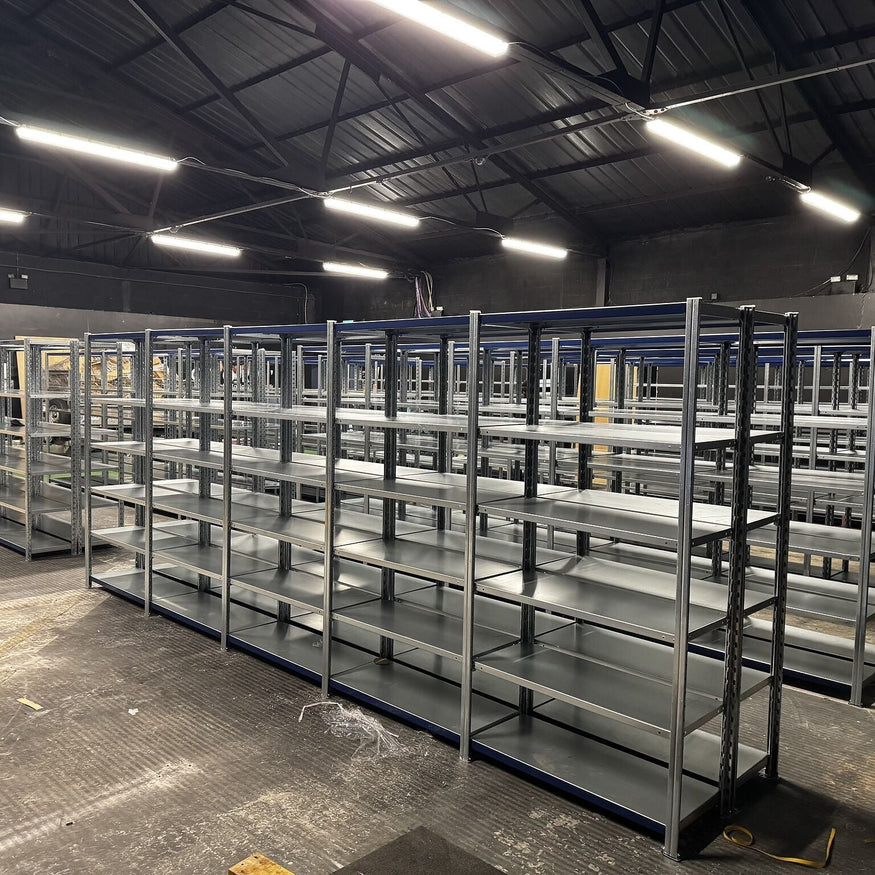
Metal shelving: Durable and long-lasting. Works across a wide range of commercial and residential settings.
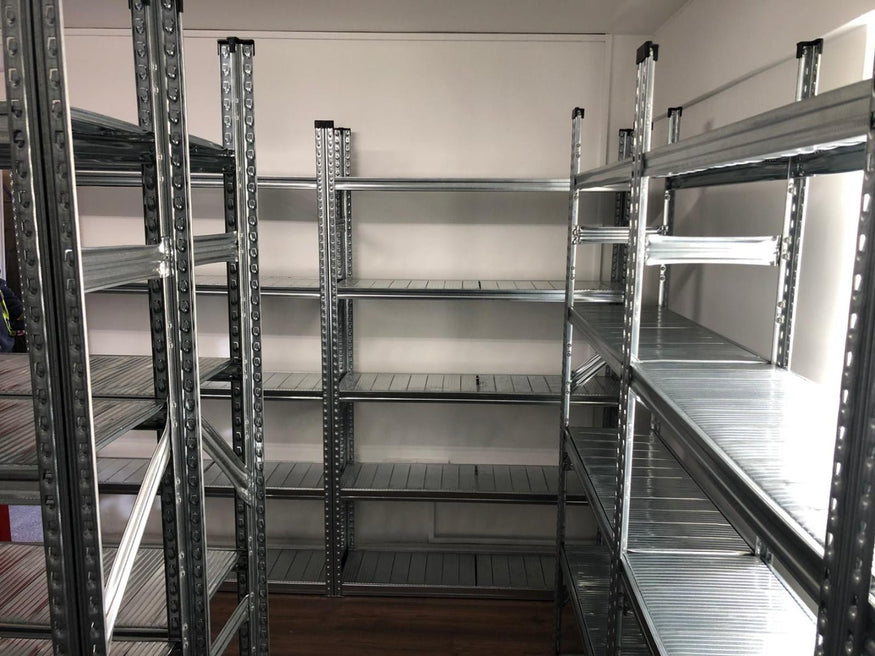
Galvanised shelving: Rust-resistant steel shelving for cold, damp or outdoor environments.
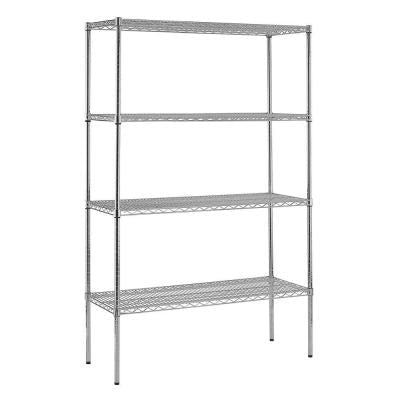
Chrome wire shelving: Promotes airflow and visibility. Popular in HORECA settings, retail and food storage.
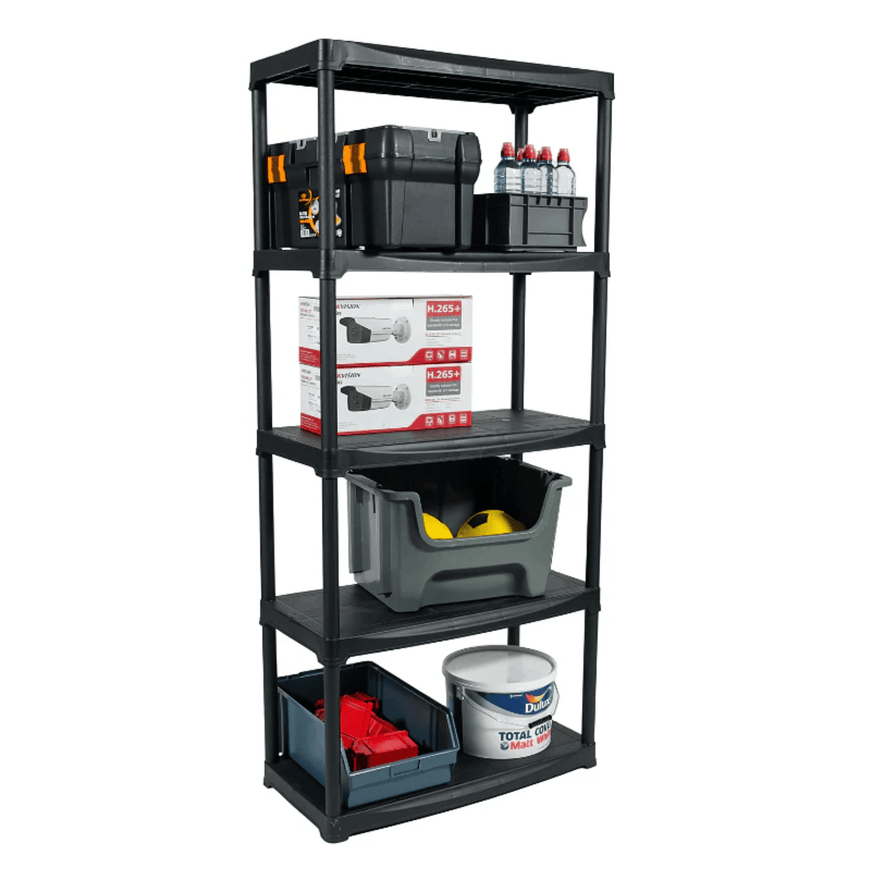
Plastic shelving: Lightweight and easy to assemble. Suits damp conditions where metal might corrode.
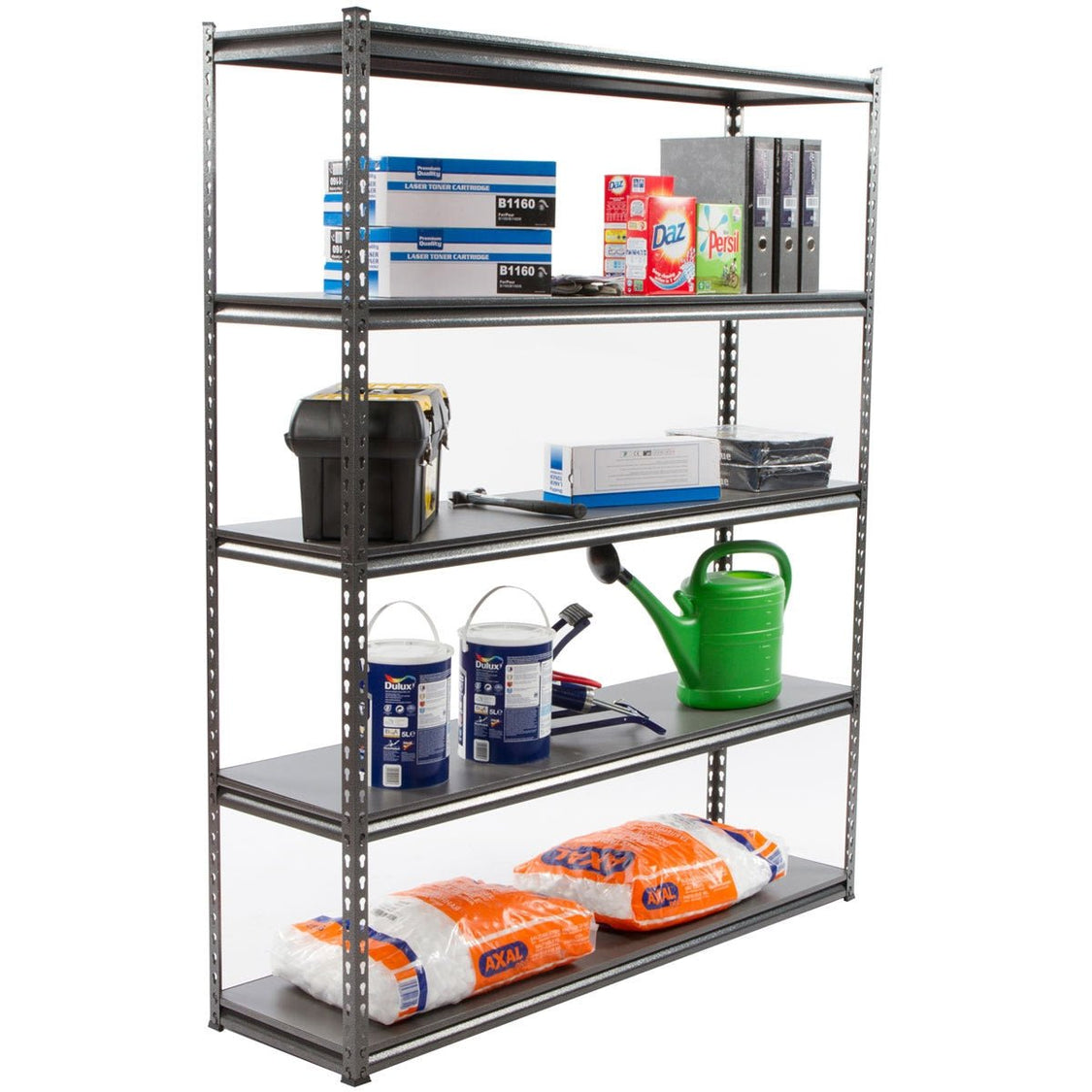
Home and office shelving: Designed for documents, supplies and display items in professional or residential spaces.
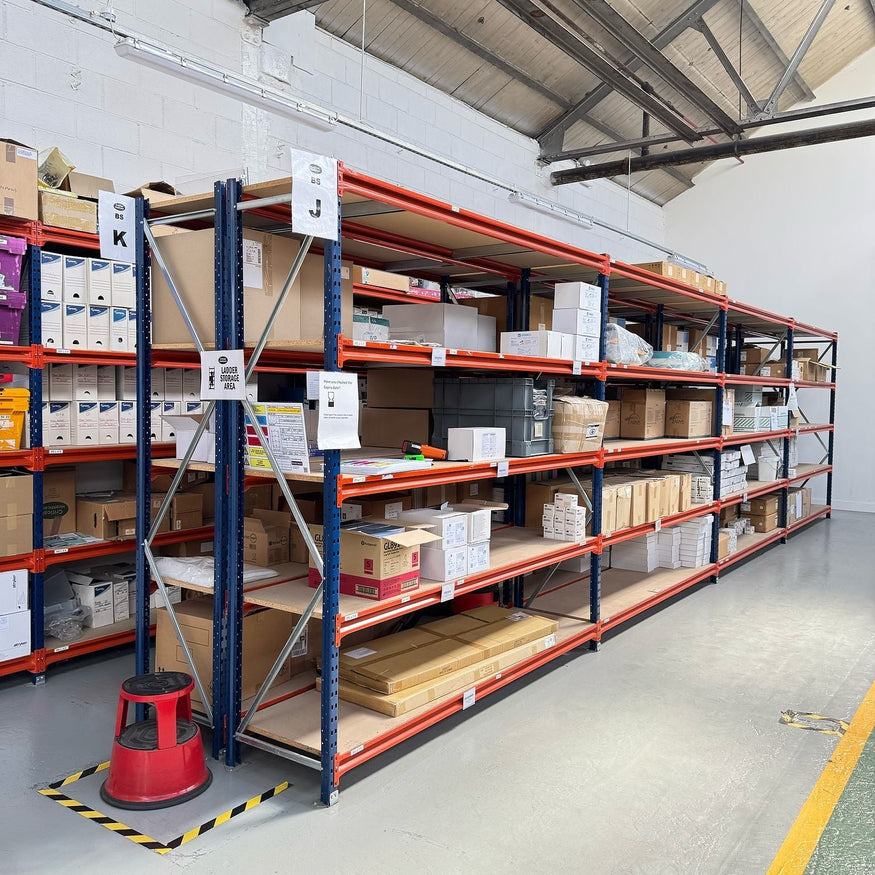
Warehouse shelving: Longspan shelving for hand-loaded items that are too bulky for standard shelving but don't need pallet racking
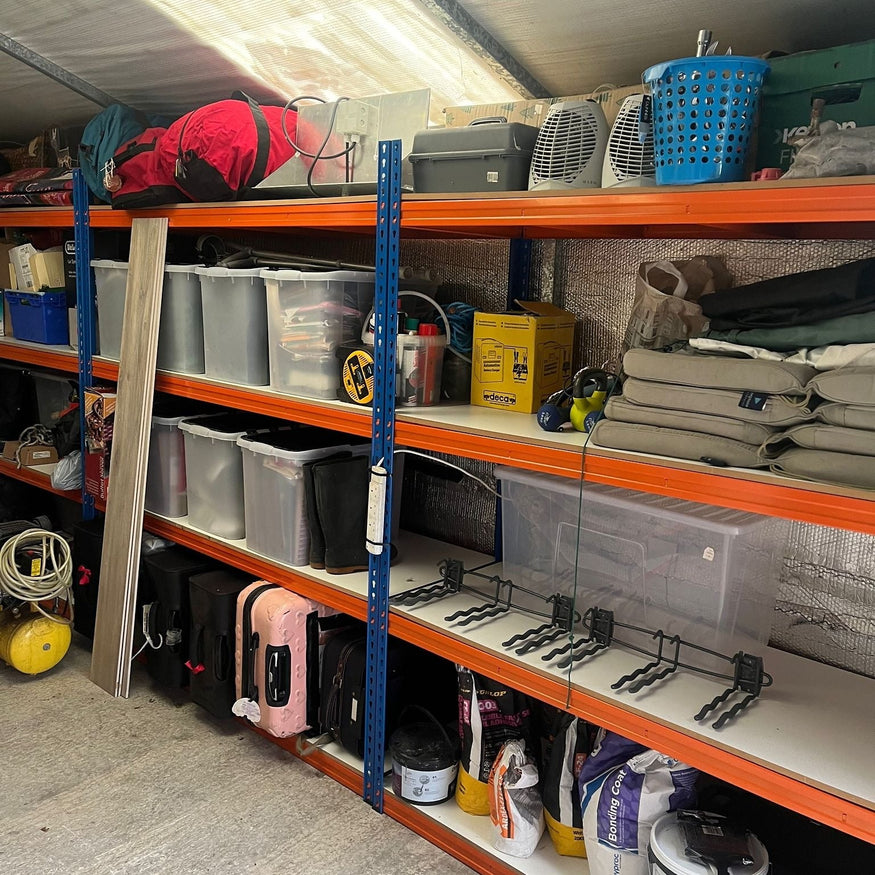
Garage shelving: Freestanding and wall-mounted options that keep tools, equipment and household items in order.
| Shelving Type | Best For | Environment |
|---|---|---|
| Value shelving | Light storage, home use | Dry, indoor, insulated |
| Industrial shelving | Heavy items, warehouses | Indoor, commercial |
| Galvanised shelving | Cold storage, damp areas | Cold rooms, outdoor |
| Chrome wire shelving | Food storage, retail, HORECA | Kitchens, clean rooms |
| Plastic shelving | Light items, damp conditions | Wet areas, bathroom |
| Longspan/warehouse shelving | Bulky hand-loaded items | Warehouses, stores |
Adjustable shelving gives you flexibility as your needs change. Boltless shelving goes together quickly without tools, making it a practical choice if you need to set up or reconfigure storage in a hurry.
What Are the Different Types of Warehouse Racking Systems?
Pallet racking is the backbone of warehouse storage across Ireland. It lets you store palletised goods vertically, making the most of your available height and floor space. Here's a guide to the different types of industrial racking systems.
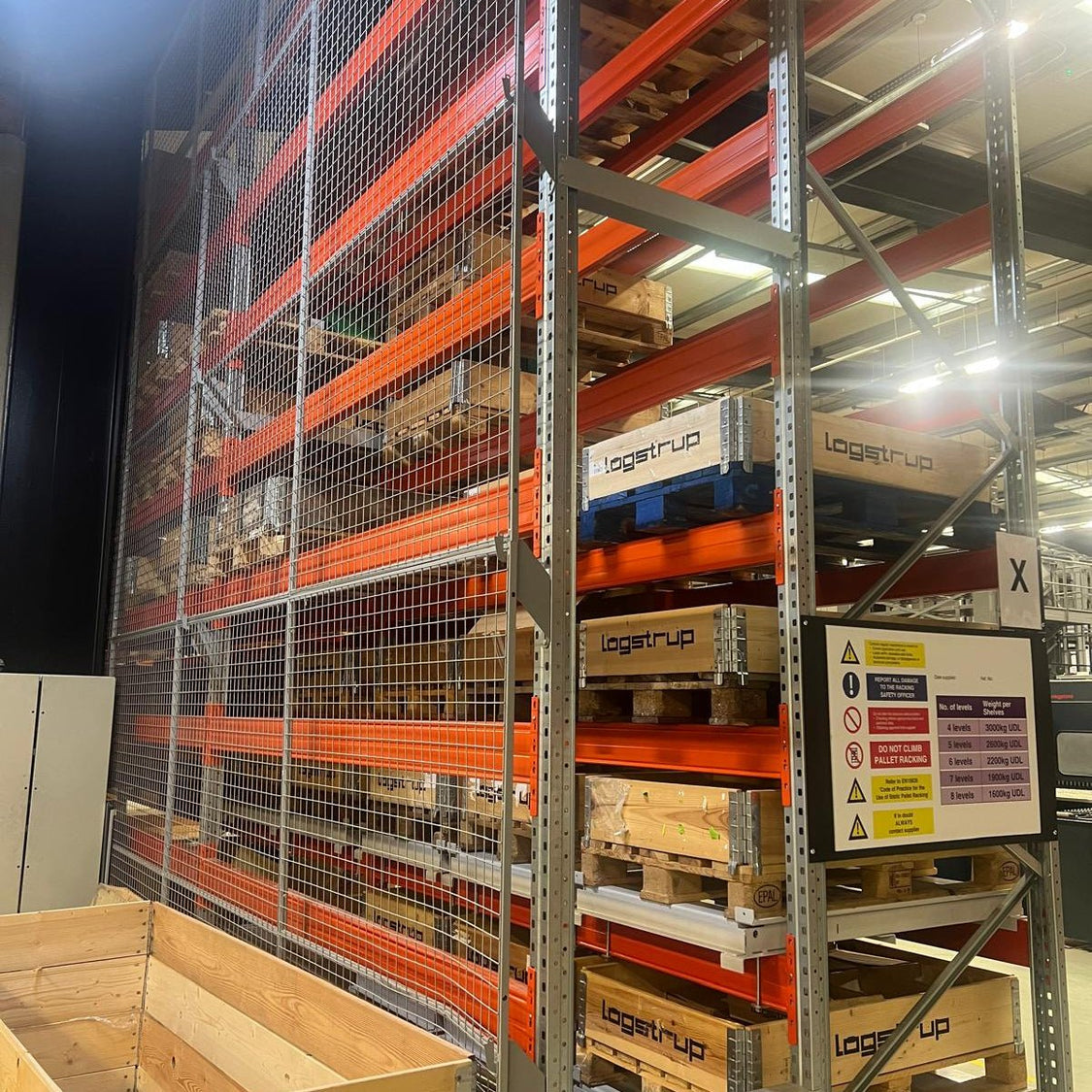
Selective pallet racking: The most common type. Every pallet is directly accessible, so it's ideal for warehouses with a wide range of SKUs. Browse our full industrial pallet racking range.
Drive-in racking: Removes aisles between racks to create high-density storage. Best for bulk storage of similar products where stock rotation is less critical.
Push-back racking: Uses a sliding cart mechanism to store pallets several positions deep. You get dense storage with better stock rotation than drive-in systems.
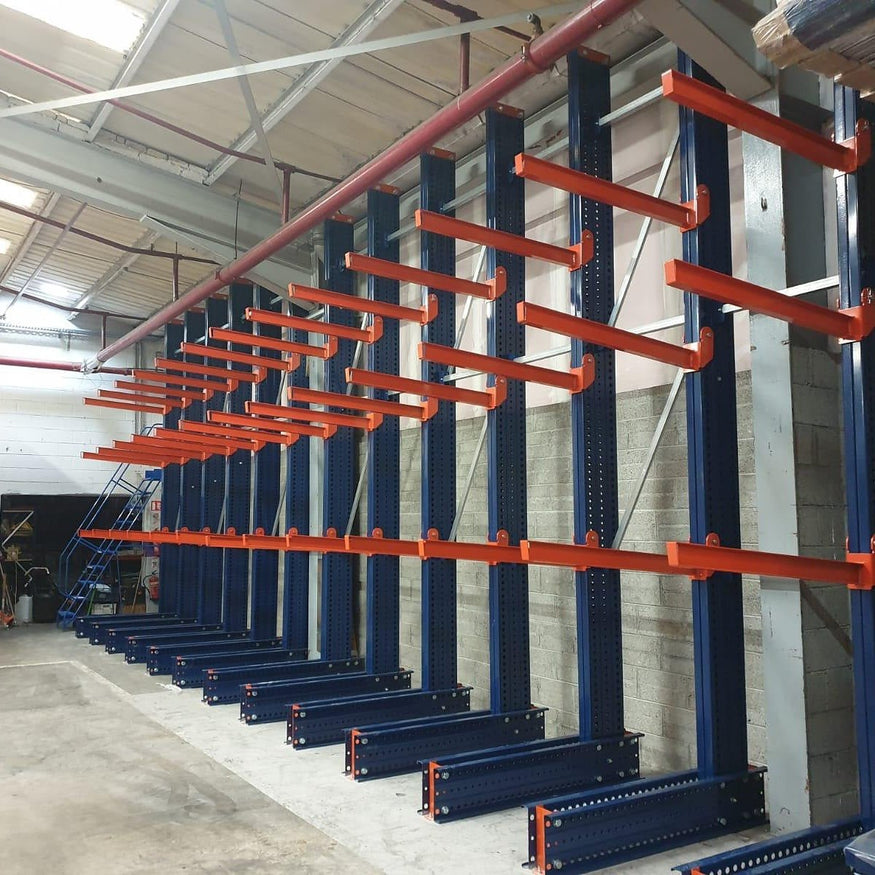
Cantilever racking: Built for long, awkwardly shaped items like pipes, timber and steel bars. Arms extend from a central column with no front uprights, giving you unobstructed access. View cantilever racking options.
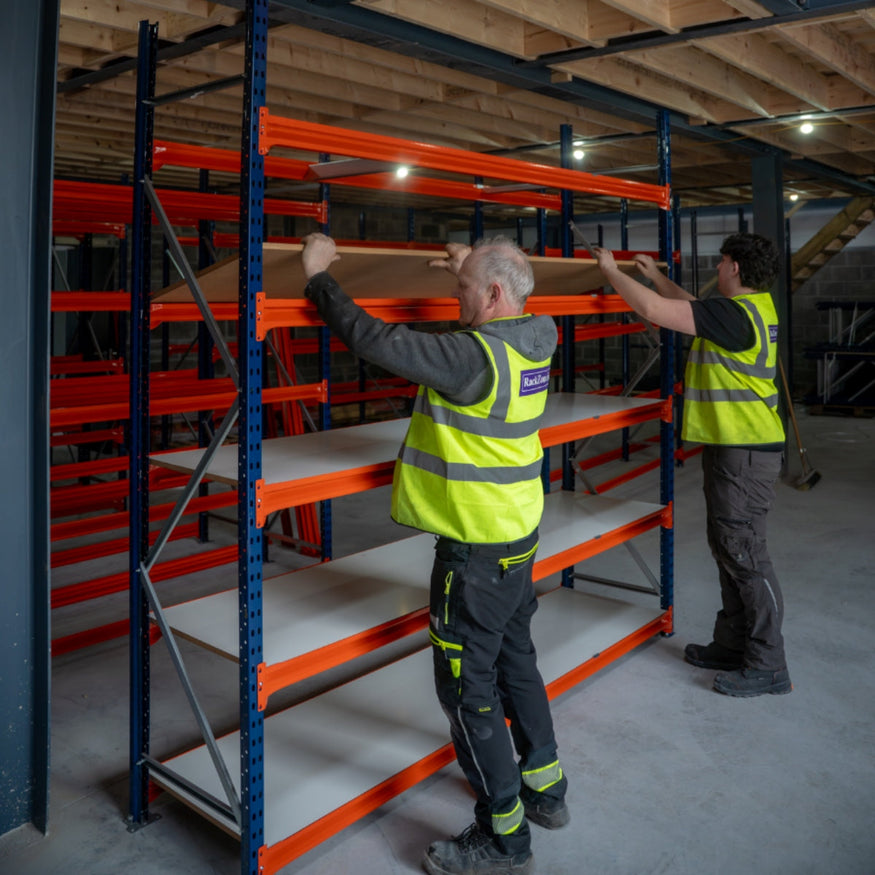
Longspan racking: Bridges the gap between lighter shelving and pallet racking. Ideal for hand-loaded items that are too heavy or bulky for standard shelving. See our longspan racking.
Carton flow racking: Uses inclined shelves with rollers to move stock forward automatically. Works well for first-in, first-out (FIFO) stock rotation in picking operations.
| Racking type | Storage density | Access method | Best for |
|---|---|---|---|
| Selective | Standard | Direct to each pallet | Mixed SKUs, high turnover |
| Drive-in | High | Last-in, first-out (LIFO) | Bulk storage, low SKU count |
| Push-back | High | LIFO with better rotation | Medium SKU range, dense storage |
| Cantilever | Varies | Open front access | Long or awkward items |
| Longspan | Standard | Hand-loaded | Bulky items, picking areas |
| Carton Flow | High | FIFO (automatic) | Order picking, perishables |
What Should You Consider Before Installing a Racking System?
Before you commit to any shelving or racking system, there are a few things to get right first. Sorting these out early saves time, money and potential safety headaches later on.
What needs to be stored? Think about the size, weight and type of items you're dealing with. Palletised goods need pallet racking. Smaller items like parts, tools or documents are better suited to shelving or bin storage.
What weight does the shelf need to take? Every shelving unit and racking beam has a maximum load rating. Going over it is a safety risk. Always check the uniformly distributed load (UDL) for shelving and the per-beam capacity for racking.
Where will your shelving be placed? The environment matters. Galvanised shelving resists rust in cold or damp conditions. Chrome wire shelving suits kitchens and food storage well. Standard metal shelving works fine in dry indoor spaces.
What are the dimensions of the space for the shelves? Measure your available area carefully, including ceiling height. Don't forget to account for aisles, doorways and clearance around fire exits.
Should the shelf stand free or against a wall? Freestanding units give you access from both sides but take up more floor space.
Do the shelves need to be moved often? If flexibility matters, look at mobile shelving on tracks or units with castors. Boltless shelving is also easy to take apart and relocate.
Will your storage needs grow? Modular systems let you add bays or levels as your business expands. Choosing modular from the start means you won't need costly replacements down the line.
How Can You Maximise Storage Space with an Efficient Layout?
Smart layout design is one of the best ways to increase storage capacity without expanding your premises. And you don't always need a major overhaul to see results.
Use your vertical space. Tall shelving units and high-rise pallet racking can boost capacity without eating into your floor area. Adjustable shelves let you fine-tune spacing as stock profiles change.
Map your floor space. Place larger units along walls to keep the centre clear. Use corners for L-shaped configurations. In warehouses, narrow-aisle layouts with reach trucks can increase storage density by up to 50% compared to standard setups.
Design for access, not just storage. Group similar products together and place frequently accessed items at eye level and near entrances. Keep main aisles wide enough for trolleys or forklifts. Use clear labelling and a bay-numbering system in larger facilities.
Think about traffic flow. Position high-turnover stock close to dispatch areas to cut travel time. Keep picking faces logical and consistent. In stockrooms and archives, mobile shelving on tracks compresses storage when no one needs the aisle.
Mezzanine floors with additional shelving can double or even triple your usable area without any building work. For smaller businesses, vertical storage solutions and wall-mounted systems free up valuable floor space.
How Do You Choose the Right Shelving or Racking System for Your Industry?
Different sectors have different storage demands. So how do you match the right system to what you actually need?
Warehouse and industrial settings. Industrial pallet racking handles heavy palletised loads, and selective racking gives you the best access for mixed inventories. Cantilever racking suits long or irregular items. Tyre racking keeps tyres stacked safely and prevents deformation.
HORECA and food storage. Kitchens, restaurants and food prep areas need hygienic, corrosion-resistant storage. Chrome wire shelving promotes airflow and is easy to clean. Our HORECA shelving is designed for the demands of food service environments. Shelving used in food storage should support HACCP (Hazard Analysis Critical Control Point) compliance.
Retail. Slatwall panels with adjustable brackets let you reconfigure displays quickly. Open shelving works well for customer-facing stock areas. Shop shelving is also another option, which can be supplied on a project basis.
Office and professional spaces. Home and office shelving handles documents, supplies and reference materials. Modular systems with a mix of shelves, drawers and cabinets give you the flexibility to reconfigure as teams or needs change.
Cold storage. Damp, chilled environments need corrosion-resistant materials. Galvanised shelving or plastic-coated racking handles these conditions without degrading.
Garage and home. Garage shelving keeps tools, sports equipment and seasonal items in order. Wall-mounted systems are a good option where floor space is tight.
What Load Capacity and Safety Standards Should You Know About?
Load capacity isn't something you can afford to overlook. Overloaded shelving or racking can collapse, causing serious injury and stock damage.
Shelving load capacity. Every shelf has a UDL (uniformly distributed load) rating. This tells you the maximum weight it can safely hold when the load is spread evenly. Always check the per-shelf and per-bay ratings before loading up. Metal shelves generally support more weight than wood or plastic.
Racking load capacity. Pallet racking capacities are rated per beam pair and per bay. These values depend on beam length, upright frame height and the system's configuration. Don't exceed these limits.
Safety regulations. In Ireland, pallet racking installations should comply with relevant EU standards, including EN 15512 for the structural design of adjustable pallet racking systems and EN 15635 for the use and maintenance of steel static storage systems. Regular racking inspections help you spot damage, overloading or misuse before it becomes a problem.
Food storage compliance. If your shelving stores food products, it should support HACCP principles. Chrome wire shelving and stainless steel options are common choices in food-contact environments.
Racking protection. Upright protectors, row-end guards and racking accessories help prevent accidental forklift damage. Wire mesh decking adds safety by stopping items from falling through beam levels.
How Can Shelving and Racking Improve Productivity and Efficiency?
The right storage system doesn't just hold stock. It makes your operation faster, safer and more efficient.
Cut unnecessary movement. A well-designed racking layout reduces the distance your team travels to pick, pack and replenish stock. Place high-turnover items in accessible positions to speed up daily operations.
Improve stock visibility. Clear labelling, logical grouping and consistent bay numbering help staff find items quickly. Bin shelving and parts storage keep small components tidy and easy to locate, reducing search time and preventing mix-ups.
Support lean management. Lean principles focus on cutting waste and getting more value from what you have. Mobile shelving can increase storage capacity by up to 50% because it compresses unused aisle space. Vertical solutions like mezzanines create extra levels without expanding your footprint.
Pick the right racking for your workflow. Selective racking gives you direct access to every pallet, making it ideal for high-turnover environments. Drive-in racking maximises density for bulk storage. Cantilever racking gives you clear front access for long items, making picking faster and safer.
Investing in the right shelving and racking system pays for itself through faster workflows, fewer errors and better use of the space you've got.


