


Pick the wrong material and you'll know about it. A shelving unit rusting from the inside out, a finish that buckles under weekly cleaning: these are expensive, avoidable mistakes. This guide covers everything you need to know about galvanised shelving so you can make the right call before you commit. You'll find the full range of options in our shelving collection, from standard steel to specialist units built for demanding environments.
Understanding Metal Shelving Types
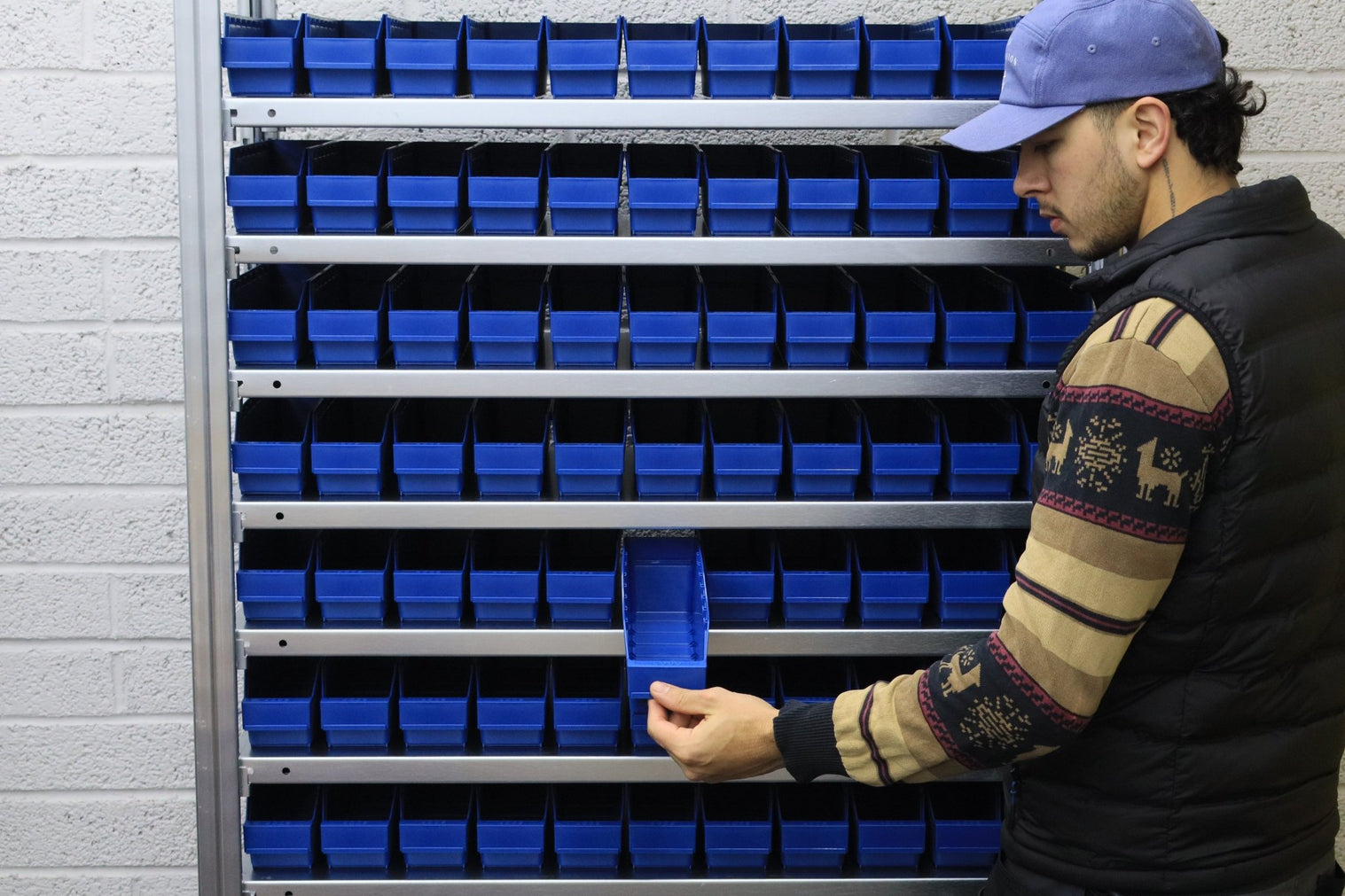
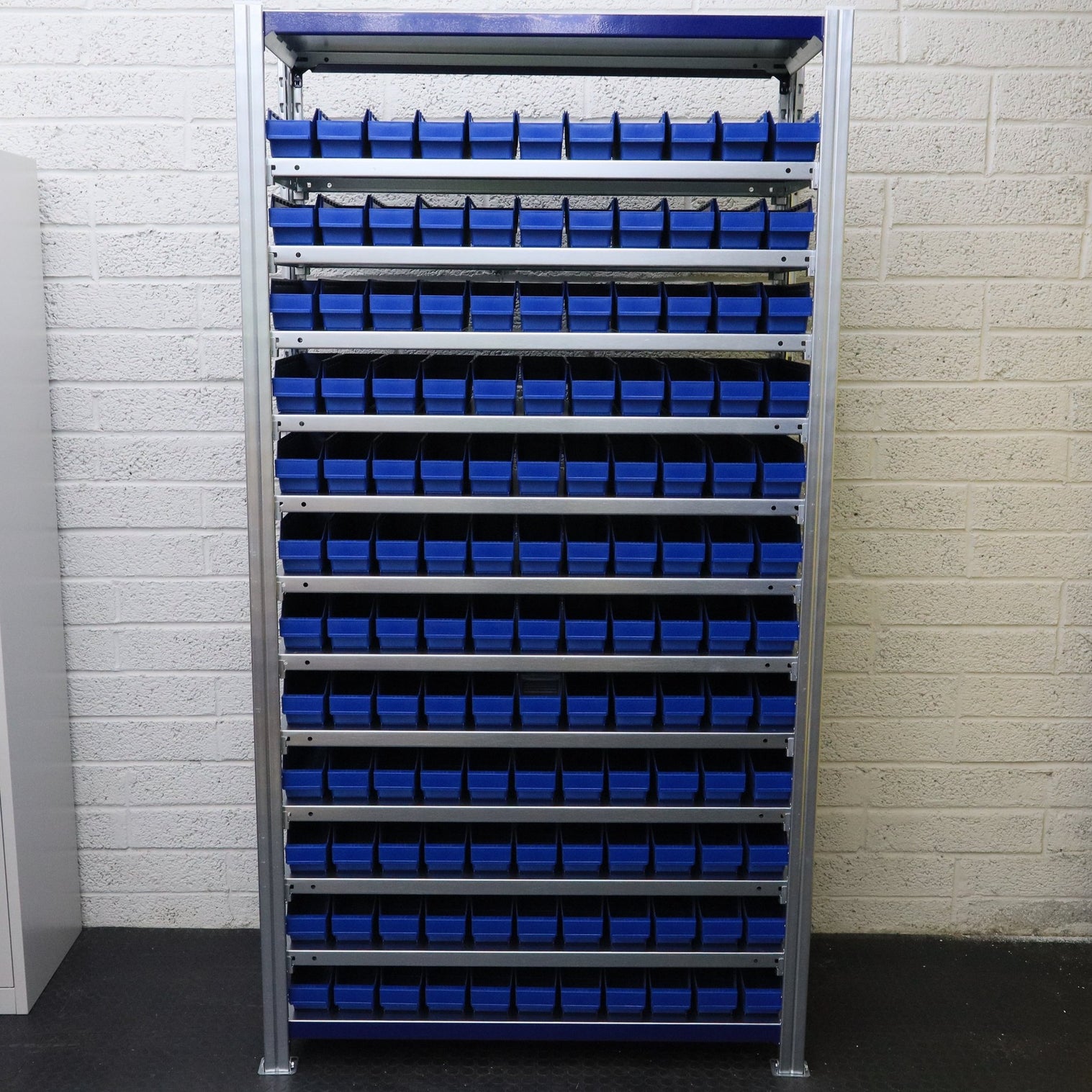
Not all metal shelving performs the same way. How a unit is manufactured and what the surface treatment is determine how it holds up under pressure, whether it suits your environment and what it'll actually cost you across a realistic service life.
Standard Powder Coated Steel: The Starting Point
Standard steel shelving is painted or powder-coated after manufacture. In dry, stable conditions, it does the job: offices and general-purpose stockrooms where the air is clean and the temperature doesn't shift. The problem is durability. Powder coatings chip and scratch; once bare steel is exposed to moisture, rust spreads quickly and doesn't stop.
Moving Beyond Standard Steel
The moment your storage space involves real environmental stress, the choice narrows to two serious options: galvanised steel and stainless steel. Both offer genuine corrosion resistance. The differences are in how they achieve that protection and what they cost across a realistic service life.
What Is Galvanised Shelving?
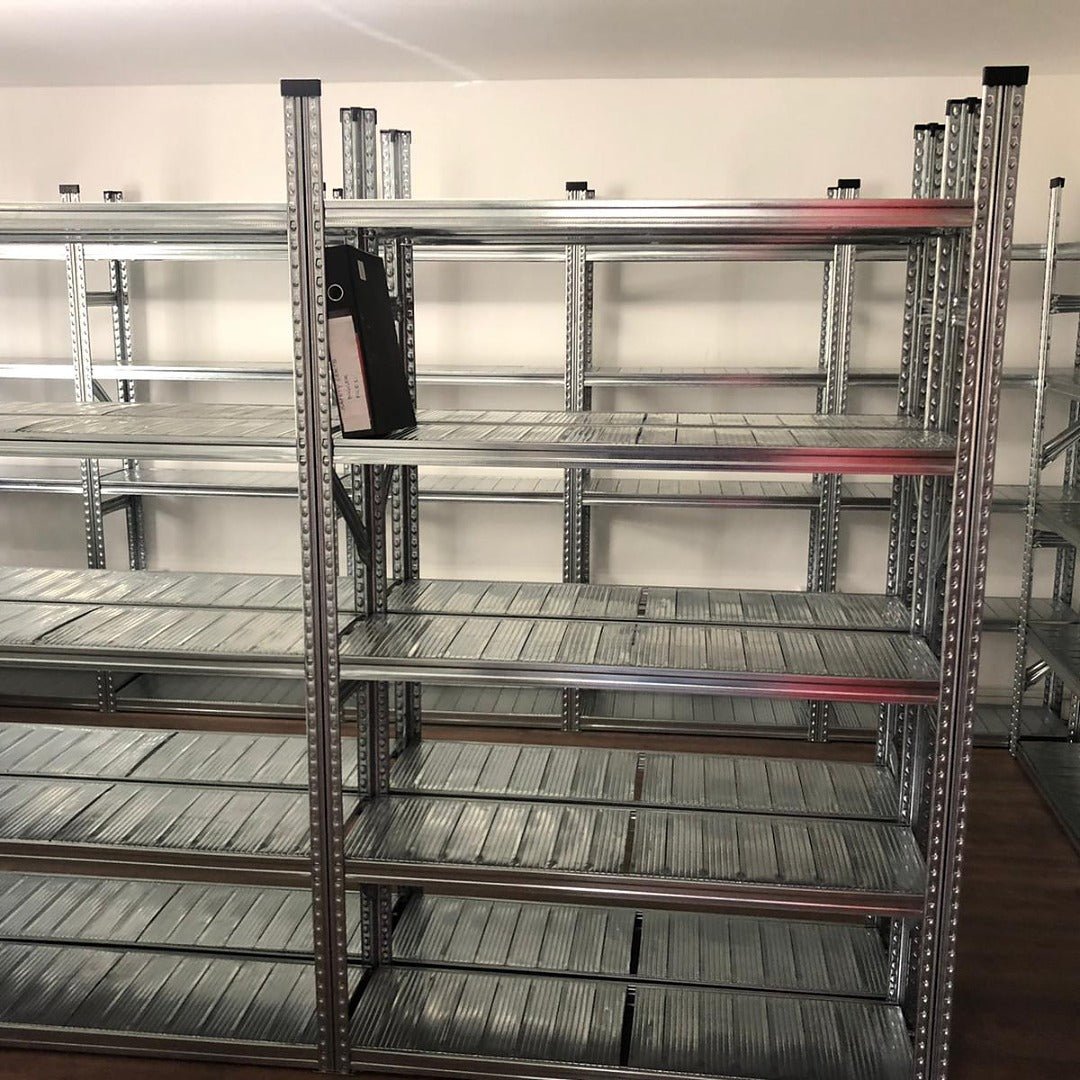
Galvanised shelving is steel with a zinc coating applied to protect it from rust and corrosion. The zinc forms a physical barrier between the steel and the elements; it also does something more useful than that. If the surface is scratched, the zinc around the damage sacrifices itself electrochemically to protect the exposed steel beneath. That self repairing quality is what makes galvanised shelving so resilient in conditions that would compromise standard alternatives.
How the Galvanisation Process Works
How the zinc gets applied has a direct bearing on the durability and performance of the finished product. There are two main methods in common use.
Hot Dip Galvanisation: The Industrial Standard
Hot dip galvanisation submerges the steel in a bath of molten zinc at around 450°C. The zinc bonds metallurgically with the steel, forming a thick alloy layer that's integral to the structure rather than sitting on top of it. This is the process behind most industrial and structural galvanised shelving; it produces the most robust corrosion protection and the longest service life of any galvanisation method.
Electro Galvanisation: Finish Over Durability
Electro galvanisation uses an electrical current to deposit zinc onto the steel surface. The coating is thinner and more uniform, with a smoother finish than hot dip. It performs well in moderate conditions but doesn't match hot dip galvanisation in genuinely harsh environments. You'll find it on lighter duty products where surface finish matters more than raw protection.
For storage in demanding settings, hot dip is the standard that counts.
Advantages of Galvanised Shelving
The case for galvanised shelving is practical rather than theoretical. It works well across the environments most Irish businesses actually operate in, and it does so at a price that makes commercial sense.
Corrosion Resistance in Real World Conditions
Galvanised shelving handles cold rooms and industrial workshops without the rust problems that would end a powder coated unit's useful life prematurely. The zinc coating provides reliable protection in conditions where standard alternatives simply don't last.
Is galvanised steel as corrosion resistant as stainless steel? Stainless steel does carry a higher baseline of corrosion resistance, but for most Irish storage applications, galvanised steel provides more than adequate protection at a considerably lower cost.
Hygiene and Ease of Cleaning
The zinc surface doesn't harbour bacteria the way porous materials can. It wipes down cleanly, tolerates standard cleaning products and dries quickly. Galvanised shelving is widely used in food storage and cold chain environments for exactly this reason: it meets hygiene requirements without the price tag that comes with stainless steel.
High Load Capacity
Galvanised shelving retains the full structural strength of steel. It's a practical choice in warehouse environments where real carrying capacity (not just a figure on a spec sheet) matters.
Long Term Cost Efficiency
Upfront, galvanised shelving costs more than standard powder coated steel. Across a realistic service life in a corrosive or high moisture environment, that calculation reverses. There's no repainting, no touch up and no annual treatment required. The zinc coating works passively, without any input from you.
Drawbacks of Galvanised Shelving
A Finish That Reads as Industrial
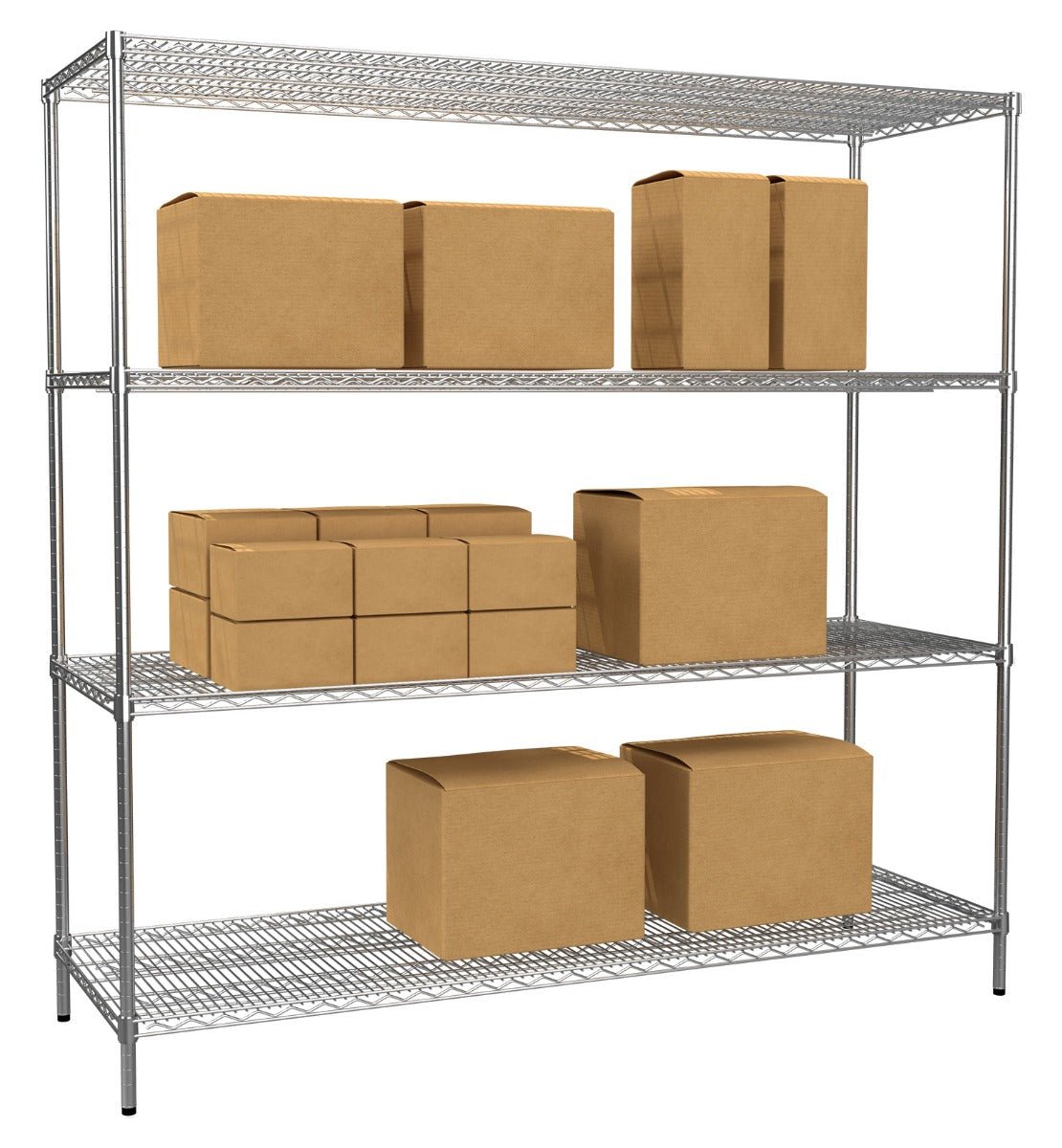
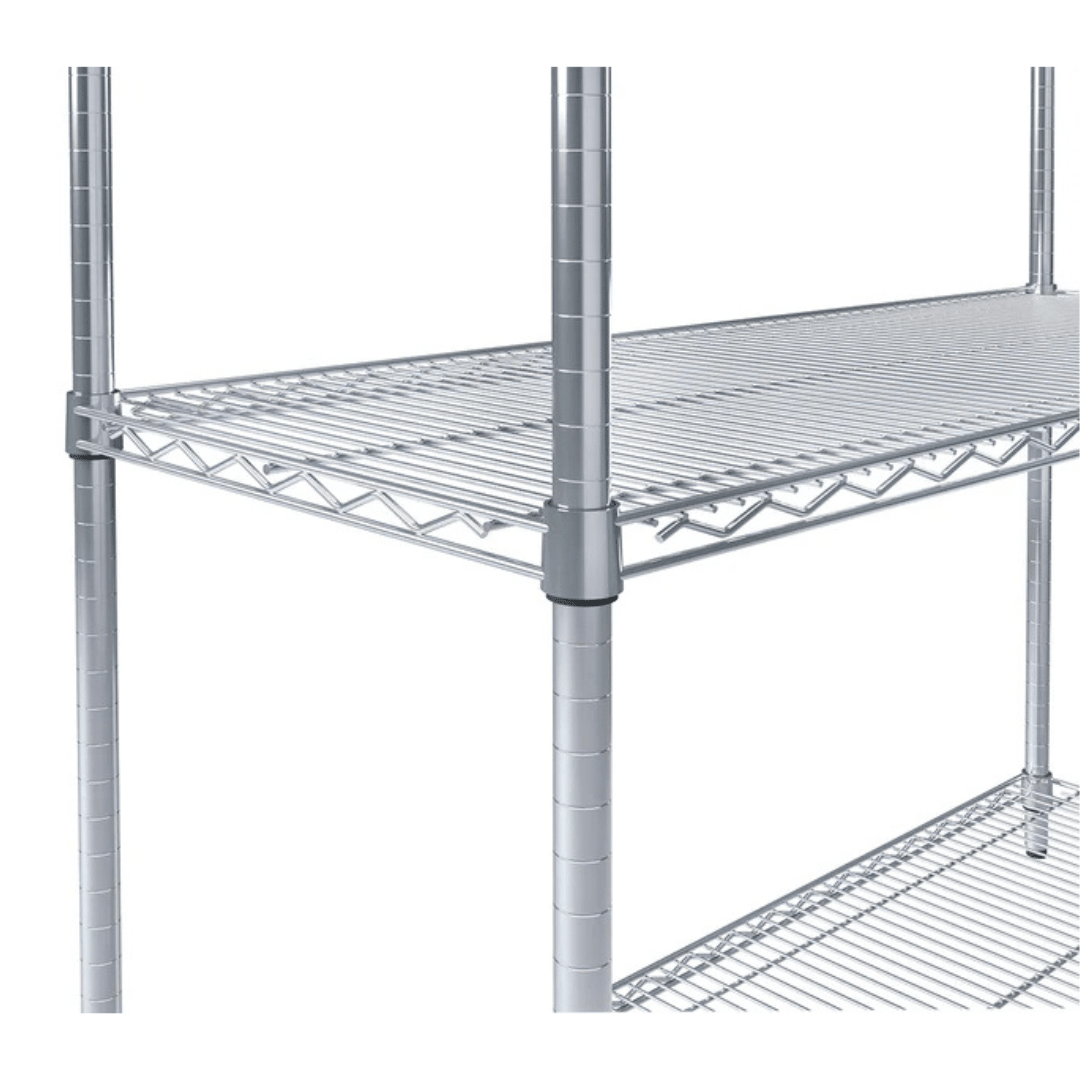
Hot dip galvanised steel has a distinctive grey, slightly mottled surface. It suits a warehouse or workshop well; it's a harder sell in a customer-facing space or commercial showroom. If appearance is part of the brief, stainless steel or chrome wire shelving are worth considering instead.
Welding and On-Site Modification
Cutting or welding galvanised steel with heat releases zinc oxide fumes, which are hazardous to health. This isn't a concern in normal use, but it's relevant if your installation involves on site modifications or if you anticipate adjusting the racking at a later point.
Galvanic Corrosion in Mixed Metal Installations
If galvanised steel comes into prolonged contact with copper or stainless steel in a wet environment, galvanic corrosion can occur. The dissimilar metals form a small electrochemical cell that accelerates corrosion of the less noble material. In most storage applications this isn't a significant issue; in high moisture settings with mixed metal components, it needs careful planning.
What Is Stainless Steel Shelving?
Stainless steel gets its corrosion resistance from chromium. When the alloy contains sufficient chromium, it reacts with oxygen in the air to form a thin, stable oxide layer on the surface. That layer is self repairing: damage it, and it rebuilds in the presence of oxygen. Unlike galvanised steel, there's no coating to chip or wear away.
304 vs 316 Stainless Steel: Which Grade Is Right for You?
The grade matters, and it's worth understanding the difference before you specify.
304 stainless steel (approximately 18% chromium, 8% nickel) is the standard for food service and general commercial storage. It offers strong corrosion resistance across a broad range of environments.
316 stainless steel adds molybdenum to the alloy, which improves resistance in environments involving chlorides or aggressive alkaline cleaning agents. It's more expensive and generally reserved for specialist applications where 304 isn't sufficient.
Advantages of Stainless Steel Shelving
Hygiene Compliance at Regulated Level
Stainless steel is not porous, resists bacterial adhesion and tolerates aggressive cleaning regimes that would damage most other materials. In commercial food production and pharmaceutical storage, it's the sector default. When hygiene compliance is set by regulation rather than preference, stainless steel is the correct specification.
Superior Corrosion Resistance in Extreme Environments
In highly aggressive conditions (strong acids and sustained salt spray), stainless steel outlasts galvanised steel. The chromium oxide layer is more chemically stable than a zinc coating under continuous chemical attack. For most storage applications this level of resistance is unnecessary; for a handful of specialist ones, it's essential.
Professional Appearance and Finish
Stainless steel has a clean, consistent surface that suits commercial kitchens, healthcare settings and customer-facing environments. It looks the part alongside its functional performance.
Safer to Modify On Site
Stainless steel can be welded without the hazardous fume issue associated with galvanised steel. On-site adjustments and custom fabrication are more straightforward as a result.
Drawbacks of Stainless Steel Shelving
Cost is the most significant factor. Stainless steel shelving carries a substantial price premium over galvanised. In any environment where galvanised would perform equally well, that extra spend is difficult to justify.
It's also marginally heavier than galvanised steel of equivalent dimensions (a point worth noting in large installations or where the supporting structure has load constraints). And the galvanic corrosion risk works in both directions: stainless steel in contact with standard steel in a wet environment can accelerate corrosion of the less noble metal; mixed installations need careful planning regardless of which material you're specifying.
Choosing the Right Shelving for Your Needs
For most demanding storage applications, galvanised shelving is the right answer. It covers cold rooms, outdoor use, damp workshops and heavy industrial environments at a price that makes financial sense. The protection is real and the maintenance requirement is minimal.
Stainless steel earns its cost when hygiene compliance is set by regulation: pharmaceutical storage and regulated healthcare settings where cleaning chemicals are aggressive and contamination standards are non-negotiable.
Standard powder coated steel remains the right product for dry, controlled environments where moisture simply isn't a factor.
Matching Material to Environment: A Quick Reference
| Environment | Recommended Material |
|---|---|
| Cold rooms and refrigerated storage | Galvanised steel |
| Food storage (not in production settings) | Galvanised steel |
| Commercial kitchens and food production | Stainless steel |
| Outdoor and semi outdoor storage | Galvanised steel |
| Damp garages and workshops | Galvanised steel |
| General warehouse and dry stockrooms | Powder coated steel |
| Pharmaceutical and medical storage | Stainless steel |
| Retail and customer facing spaces | Chrome wire or stainless steel |
| Heavy industrial and manufacturing | Galvanised steel |
Not sure which fits your situation? Give us a call on 090 9673261. We're happy to talk through exactly what you need. You can also browse our galvanised shelving range and our wider shelving collection to see what's in stock and available for next day delivery.
