


Ever ordered shelving that looked right on screen, only to find it doesn't fit the space once it arrives? It's a common and expensive mistake. A unit that's too tall for the ceiling, too deep for the aisle, or under-rated for the load you're putting on it causes real problems. This shelving size guide is here to prevent all of that. From taking your first measurements to understanding load capacity and layout, we'll walk you through every decision so that when you browse RackZone's full shelving range, you're ordering with confidence, not guesswork.
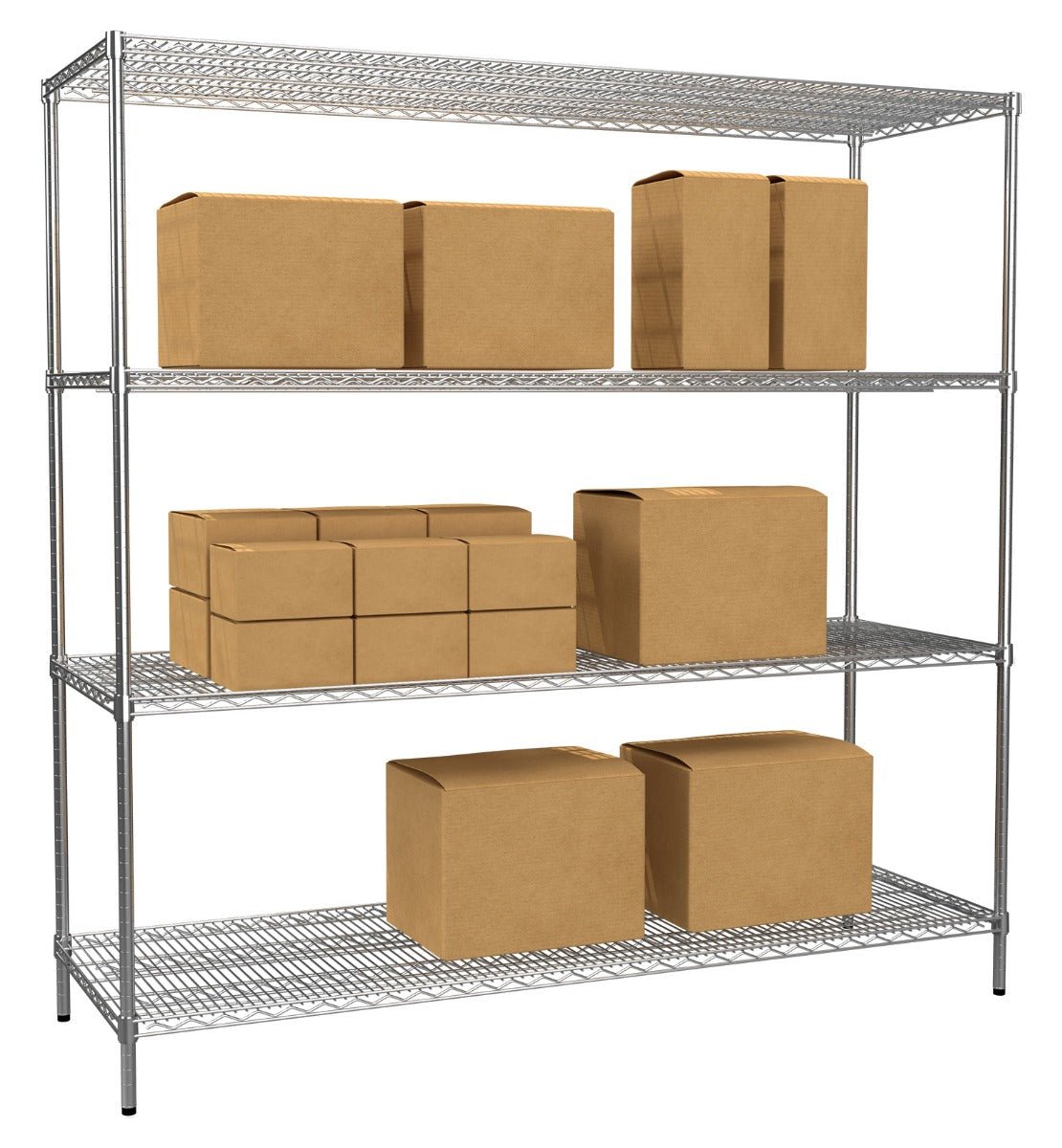
Understanding Your Warehouse Layout
The most important measurement you take is the one before anything else arrives. A clear picture of your space is the foundation every shelving decision rests on, whether you're fitting out a distribution centre or reorganising a busy stockroom.
What to Measure Before You Order Anything
Start with a floor plan. It doesn't need to be architect quality. A rough sketch showing where everything fixed is located will do: doors, windows, columns, electrical panels, drains. These are your hard constraints, and no amount of clever shelving arrangement gets around them.
Once you have that, take the key measurements:
- Floor to ceiling height, checked at multiple points (ceilings aren't always level)
- Clear working height, which means subtracting any overhead obstructions like lighting rigs, sprinkler heads or ducting
- Available floor area: the usable zone, not just the room dimensions
- Column positions, if applicable
- Door openings and swing arcs
| Dimension | Why it matters |
|---|---|
| Floor to ceiling height | Sets the maximum unit height you can safely fit |
| Clear working height | Often lower than ceiling height once beams and ducting are accounted for |
| Available floor area | Determines how many bays you can fit once aisles are factored in |
| Column positions | Affects bay alignment and where aisles can realistically run |
| Door swing arcs | Prevents units blocking access or emergency exit routes |
Mapping Traffic Flow and Loading Zones
Where do people walk? Where do pallet trucks move? These operational questions set your aisle widths, and aisle width determines how much floor is left for storage. As a general industry guide, a pedestrian-only aisle is typically cited at a minimum of 900mm clear space, a pallet truck at around 2,000mm to turn, and a counterbalance forklift at 3,500mm or more.
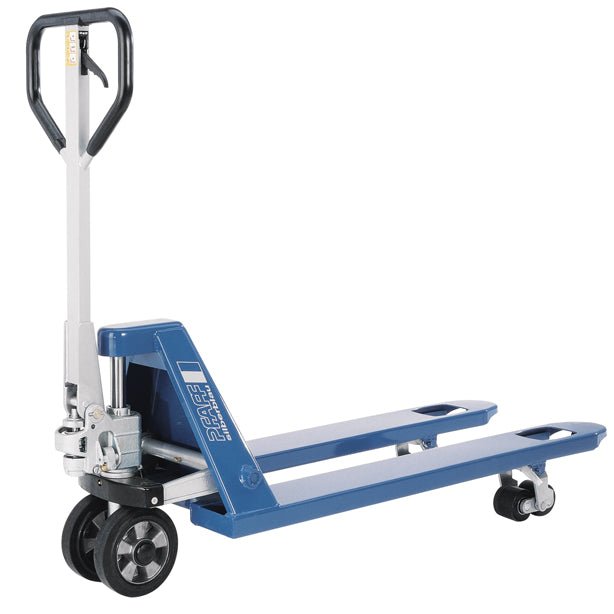
Get these wrong and you don't just lose efficiency; you create a safety issue that no shelving unit will solve.
Loading zones deserve their own attention. Fast-moving stock should sit close to the dispatch point, at accessible heights. Slower lines go deeper into the layout. That one decision shapes the whole shelving configuration, and it costs nothing to get right at the planning stage.
Height Restrictions: The Dimension People Overlook
A warehouse might have 5m to the ceiling across most of its floor, then a beam running along one wall that drops it to 3.2m. That wall needs different shelving. Check every proposed run. Mark restrictions on your sketch before you look at a single product page.
It takes ten minutes. Returning a pallet of assembled shelving takes considerably longer.
How to Choose Industrial Shelving That Actually Saves Space
Knowing your space gets you halfway there. The next step is matching a shelving system to it. The right unit isn't always the tallest or the widest. It's the one that fits your products, supports your workflow and leaves enough room to work safely. That calls for careful thinking about each key dimension.
Width: Matching the Span to What You're Storing
Shelf width, the horizontal span between uprights, varies across the range.
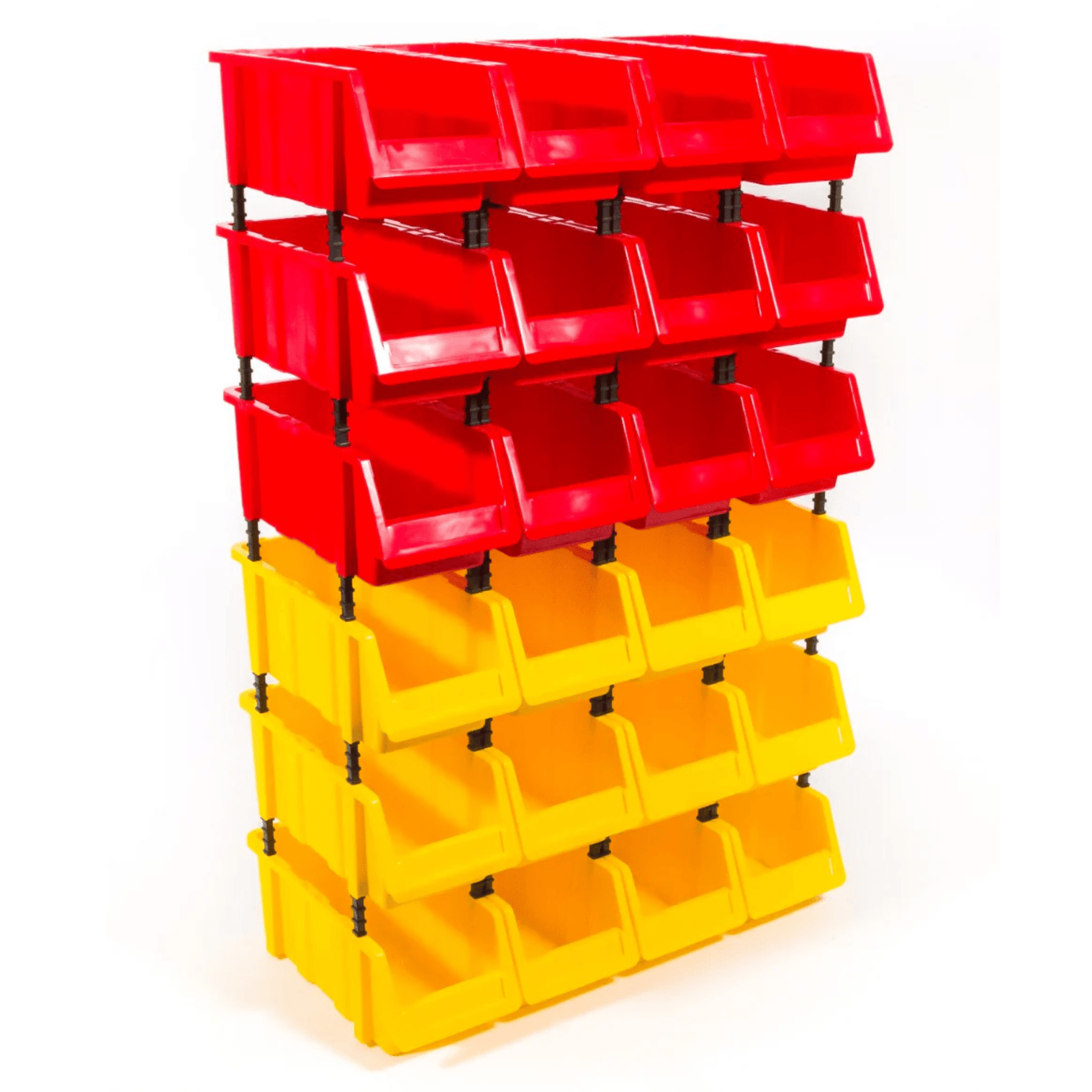
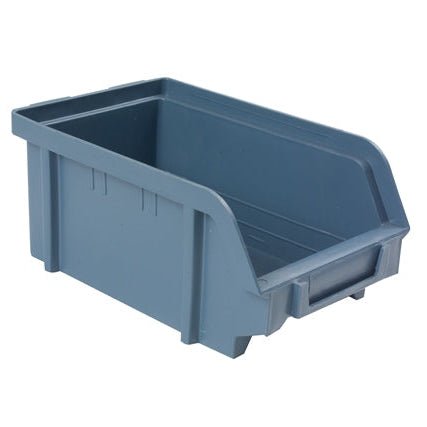
Match the pick face to the shelf width rather than going wider by default. If your boxes are 600mm deep, a much wider shelf leaves dead space at the back that's hard to use. For small parts bins and tilt bins, narrower bays often work better because everything stays within arm's reach without searching.
How Deep Should Shelves Be?
Depth might be the most misunderstood shelf dimension. Too shallow and items overhang. Too deep and the back of the shelf becomes inaccessible: stock disappears behind other stock, and retrieval slows down.
The table below reflects general industry guidance on shelf depth by application. Confirm against specific product specs before ordering.
| Shelf depth | Generally suited to |
|---|---|
| 300mm | Small parts, files, light retail stock |
| 400mm | Medium boxes, general stockroom use |
| 450–500mm | Most warehouse and industrial applications |
| 600mm | Large containers, Euro boxes, heavier industrial loads |
As a practical guideline, take your largest regularly stored item and add 50-100mm for clearance. That gives you a working depth to match against available product options.
Shelf Height, Level Spacing and Adjustability
For picking operations, ergonomic guidance generally places a comfortable standing reach at around 1,800mm from floor level (though this varies by individual). Anything above that needs a step or a warehouse ladder. If upper levels are used for reserve or bulk stock, that's a practical setup; just factor in safe access from the start rather than as an afterthought.
Adjustability matters more than people often expect. If your stock mix shifts seasonally or by supplier, fixed shelves become a constraint fast. Adjustable shelving keeps the unit useful over a longer working life.
Load Capacity and UDL Ratings
Every shelf carries a UDL rating: uniformly distributed load, the maximum weight safely carried when spread evenly across the full surface. This is not the same as a point load. A single heavy item placed at the centre of a shelf pushes past the UDL far sooner than the same weight distributed across the whole surface.
Work out the heaviest realistic load per shelf. Compare it to the UDL rating. Build in a margin. Running any shelf at its absolute maximum in daily use accelerates wear and increases risk.
Wire Shelving Size Guide
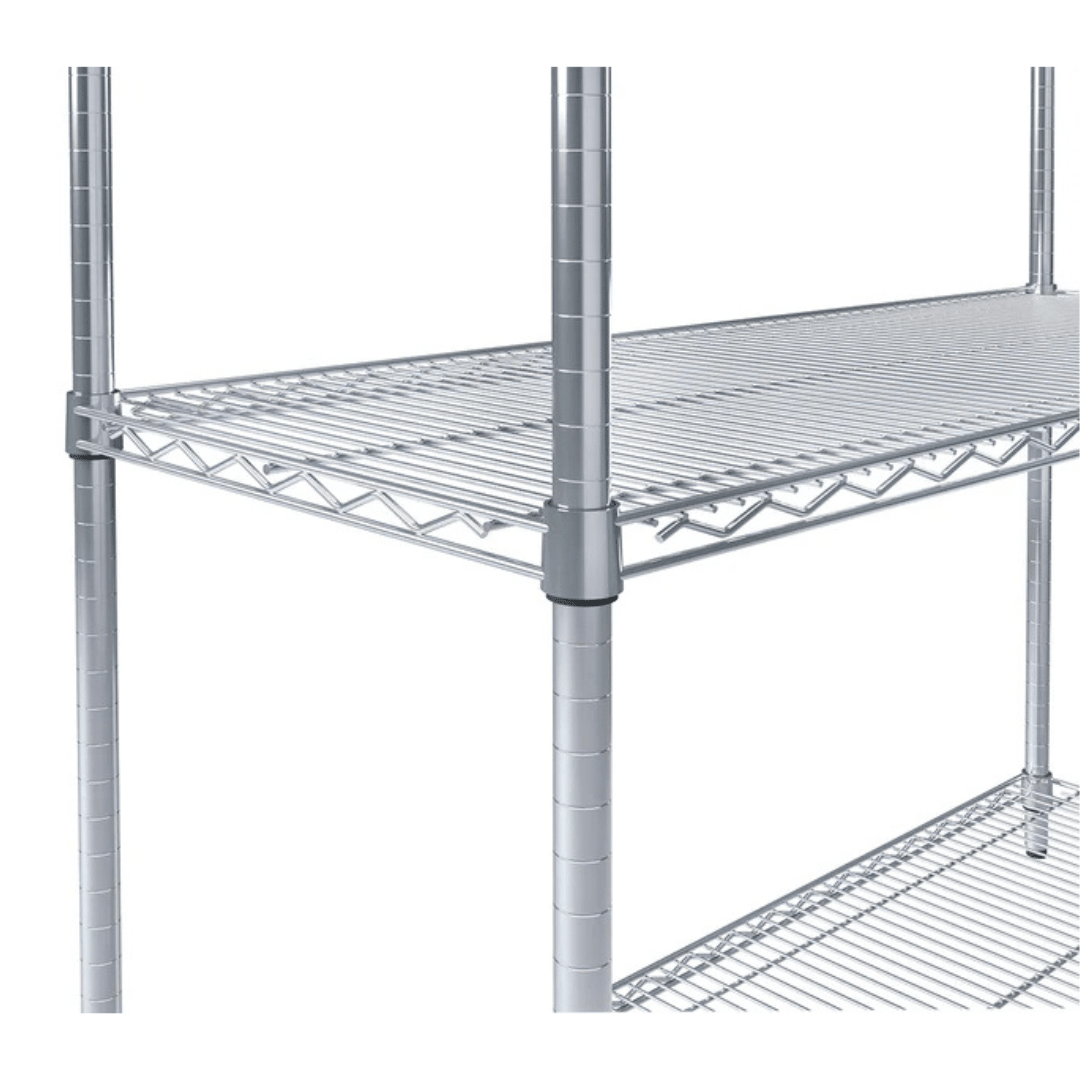
Chrome wire shelving sits in a different category to heavy-gauge steel. It's the standard specification for food service, cold storage, pharmaceutical environments and retail displays: anywhere ventilation, hygiene or visual access to stock takes priority. Its sizing logic differs from standard steel shelving, so it's worth working through separately.
Chrome Wire Shelving Dimensions and Configurations
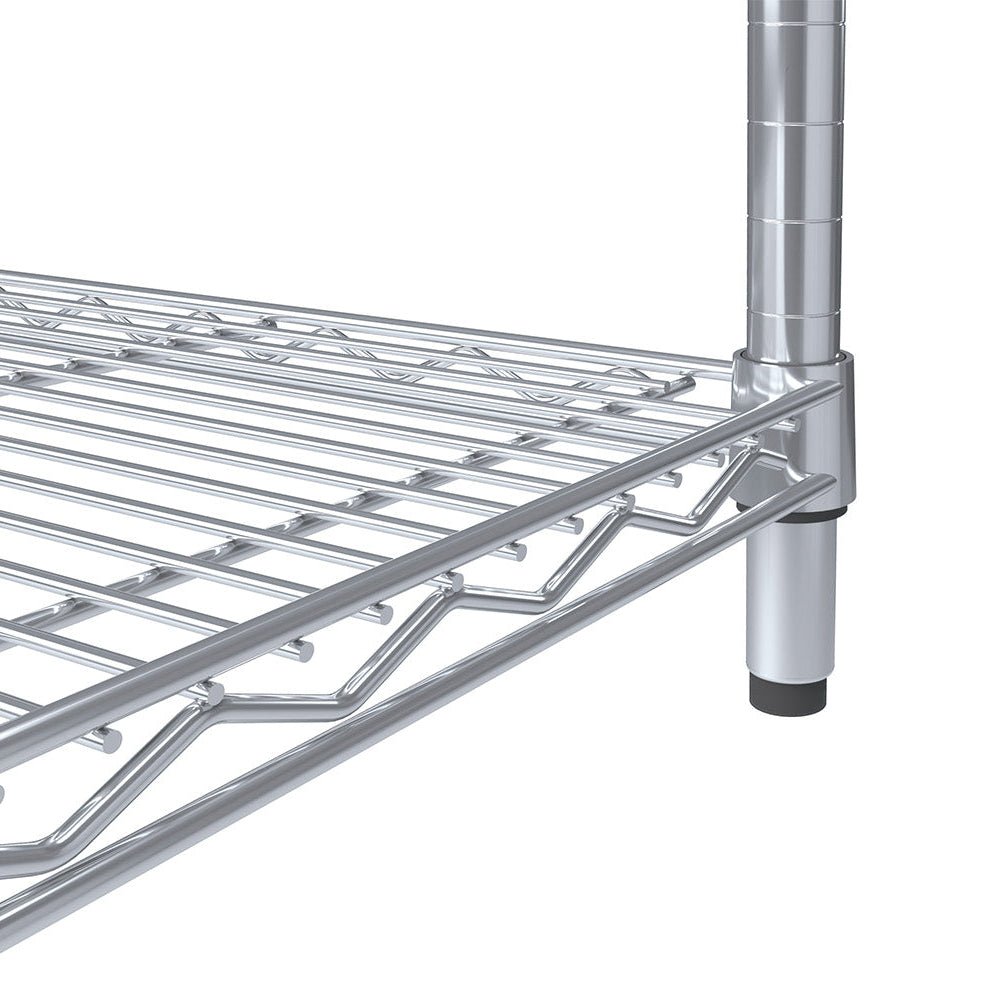
Wire shelving units come in a range of standard widths and depths. Height is set by the pole length and the number of shelves fitted, which makes it one of the more flexible dimensions in the range. The same set of poles can be configured at different total heights depending on how many levels you need, which gives options without replacing the whole unit.
Chrome Wire Shelving Height Recommendations
For most domestic settings - a utility room, a larder or home office storage - a mid-height multi-level unit is a practical starting point. In a commercial kitchen or cold room, overhead extraction and ceiling clearance may bring that limit down. Measure your available clear height first. As a practical guideline, allow some clearance below the ceiling for comfortable loading and unloading at the top level.
What to Check Before You Order Chrome Wire Shelving
A few technical points are worth confirming before placing an order:
- Wire gauge, because thicker wire carries higher loads
- Shelf weight rating per level
- Compatibility between starter and add-on bays, important if you're extending an existing run
- Whether poles and shelves are interchangeable across the range you're buying from
Standard chrome wire shelving is designed for ambient conditions. Walk-in chillers and freezers present a different set of demands: condensation, sustained low temperatures and temperature variation all affect both finish and frame over time. Galvanised shelving is generally the better specification for those environments.
Smart Space Use Strategies
Getting the right shelving is one part of the picture. Laying it out well is the other. A well-chosen unit in a poorly planned layout will underperform a modest unit in a thoughtful one.
Going Vertical: The Storage Dimension Most People Miss
Floor space in Irish warehouses is expensive, and the gap between the top of your current shelving and the ceiling is often completely wasted. Taller bays, accessed safely with a warehouse ladder or mobile steps, can increase your storage capacity without adding a single square metre to your footprint.
Zone Your Layout by Stock Movement
Put fast-moving lines at the most accessible levels - waist to shoulder height, in the bays closest to dispatch. Slower stock goes higher or further back. It's a straightforward change, and it reduces picking time without adding more equipment or more space.
The principle is to configure shelving to both the size of your products and the available storage space. That means checking your most regularly stored items against the shelf dimensions before you finalise an order, not after.
Planning Shelving Layouts and Aisle Clearance
Sketch your proposed layout before anything arrives. Look for tight corners a loaded trolley won't get through, and spots where two bay ends face each other without adequate clearance between them. Check that no aisle is blocked by a door swing.
These are easy to fix on paper. They're much harder to fix once 200kg of shelving is already assembled. And it's worth asking: what's the point of higher storage density if retrieval slows your whole operation down? Access and capacity have to be balanced, not traded against each other.
Choosing the Right Shelving System
You've measured the space, worked out the dimensions, and thought through the layout. Now it's a matter of matching everything to the right product. And the right choice depends almost entirely on what you're storing and where.
Matching the System to the Job
Heavy warehouse and distribution use: Industrial shelving and longspan racking handle the loads and spans that commercial operations demand. Longspan is particularly effective for hand-loaded bays storing bulky items that don't suit a pallet racking system.
Stockrooms, retail and light commercial use: Value shelving and metal shelving offer a practical, well-priced configuration. They're adjustable and available in formats that work well in tighter spaces without overcomplicating the setup.
Garages and home workshops: Garage shelving and heavy-duty shelving units bridge the gap between consumer and industrial specification. They handle real loads without the cost or footprint of a full industrial system.
Food service and hygiene-sensitive environments: Chrome wire shelving and galvanised steel shelving are widely used in these settings.
Cold storage: Galvanised shelving is generally the better specification here. Zinc coating resists corrosion from condensation and temperature variation in a way untreated steel does not.
Not sure which system fits your requirements? Call us on 090 9673261 and we'll talk through your measurements, load requirements and budget to find the right fit. We're 100% Irish owned, we hold stock in Ireland, and orders placed before 3pm are delivered next business day anywhere in the Republic of Ireland. Rated Excellent on Trustpilot.


