


The wrong depth wastes floor space. The wrong spacing wastes vertical space. Both cost you money and storage capacity you can't afford to lose. This guide walks you through exactly how to choose the right shelf depth and spacing for your setup: step by step, scenario by scenario. Browse RackZone's full shelving range to see the options we'll cover here, or read on to find the configuration that fits your space.
If you're a warehouse manager trying to squeeze more from your existing footprint, a business owner fitting out a new stockroom or a homeowner reclaiming a cluttered garage, getting shelf depth and spacing right changes everything.
What shelf depth actually means (and why it matters more than you think)
Shelf depth is the front-to-back measurement of your shelf. Simple enough. But that single dimension drives a chain of decisions that affect your entire storage layout. Go too shallow and items overhang the front edge, creating safety hazards and limiting what you can store. Go too deep and you end up with dead space at the back of every shelf: wasted capacity that looked great on paper but never gets used. The goal isn't the deepest shelf you can fit. It's the depth that matches what you're actually storing.
The dimensions you need to know
Most heavy-duty shelving in Ireland falls into a handful of standard depths. Knowing these saves you from custom-ordering something that's already available off the shelf (literally).
400 mm deep: Ideal for offices, filing rooms and light retail storage. Fits A4 folders, lever arch files, small parts bins and packaged goods neatly without wasting space.
500 mm deep: A versatile mid-range depth. Works well for stockrooms, retail backrooms, food prep areas and medium-sized containers. Also a popular choice for galvanised shelving in cold storage environments.
600 mm deep: The workhorse depth for industrial and warehouse settings. Accommodates bulk stock, heavier items and standard Euro containers comfortably. This is the most common depth you'll find across RackZone's industrial shelving and longspan shelving ranges.
800 mm deep and beyond: Reserved for extra-deep storage needs: bulky equipment, large containers or palletised goods stored on longspan racking. Essential in distribution centres and manufacturing environments, but overkill for most standard applications. The perfect option for accessing both sides on an aisle configuration.
How to choose the right depth: match the shelf to the item
Before you measure anything else, measure what you're storing. Grab a tape measure, pick up the largest item you'll regularly place on the shelf. Note its depth. That's the starting point.
Add a few centimetres of clearance to that figure. You need room to slide items on and off without catching on uprights or adjacent shelves. That total gives you your minimum shelf depth.
A few rules of thumb:
Store items so their longest dimension runs front to back. This keeps your aisle clear and makes everything easier to reach.
If you're storing mixed item sizes, choose a depth that fits your largest regular item. Smaller items can always sit on a deeper shelf. A deeper item can't safely sit on a shallow one.
Don't buy 800 mm deep shelving to store 400 mm deep boxes. You'll halve your usable floor space and end up with a black hole at the back of every shelf where things go to disappear.
Shelf spacing: the vertical dimension people forget
Depth gets all the attention. Spacing gets neglected. That's a problem, because poor vertical spacing wastes more capacity than poor depth ever does.
Shelf spacing is the clear gap between one shelf surface and the shelf above it. Get it wrong and you'll either have shelves crammed so tight you can't slide anything in or out, or gaps so large you could park a forklift in them.
Here's how to get it right.
Measure the tallest item you'll store on each shelf level. Add enough clearance above it to slide items in and out comfortably: typically a few centimetres is plenty. That's your shelf spacing for that level.
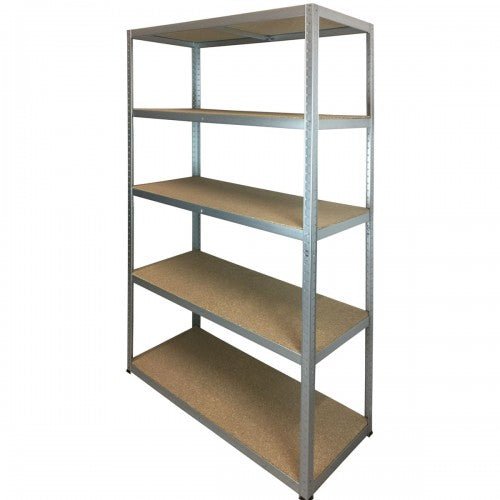
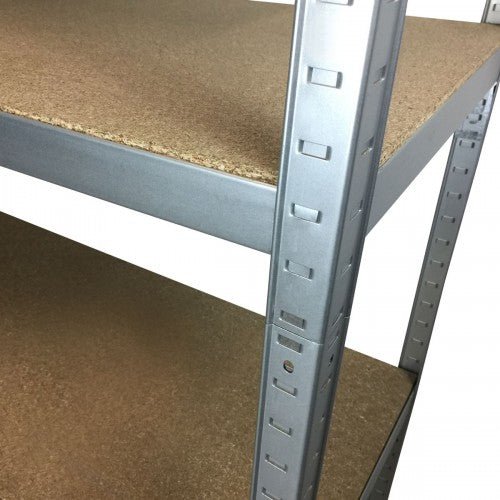
You don't need uniform spacing throughout. Most shelving systems (including RackZone's value shelving, industrial shelving and galvanised shelving) offer adjustable shelf heights. Use that flexibility. Put tighter spacing where you're storing shorter items. Give taller items the room they need. This alone can add one or two extra shelf levels to a standard unit: that's significant extra capacity from the same footprint.
Five real-world scenarios (and the shelf depth and spacing to use)
Scenario 1: The garage clear-out
The situation: You've got power tools, paint tins, garden chemicals, sports gear and boxes of "stuff you'll definitely use someday" taking over your garage floor.
The fix: 600 mm deep garage shelving gives you capacity for bulkier items like power tools and cleaning supplies without eating too far into your parking space. A unit at 1,830 mm high with five adjustable levels keeps everything within reach without needing a stepladder. Set your bottom shelf spacing wider for tall paint tins and power tools. Tighten the upper shelves for smaller boxes and containers. Keep heavy items at waist height.
Why it works: 600 mm depth fits most garage items comfortably. Adjustable spacing means you're not stuck with one-size-fits-all gaps that waste the top third of every shelf.
Scenario 2: The stockroom that's "full"
The situation: Your stockroom shelving looked spacious when it went in. Now every shelf is packed, the floor's covered in overflow stock and your team spends five minutes finding anything.
The fix: Before you move to a bigger unit, audit your vertical spacing. Measure the actual height of items on each shelf. Chances are you'll find significant wasted clearance on every level. Tighten each shelf gap to just above the tallest item on that level. On a five-shelf unit, reclaiming even 80-100 mm per level could give you enough space to add a sixth shelf.
Why it works: You've just increased your storage capacity without buying a single extra unit or giving up any floor space. That's the power of spacing done right.
Scenario 3: The warehouse picking zone
The situation: You're running a hand-pick operation and your team needs fast access to a wide range of SKUs. Speed matters. Errors matter more.
The fix: 600 mm deep longspan shelving with beam levels set to match your container heights. Use standardised picking bins or Euro containers across the zone so every shelf level has consistent spacing. Label bays clearly and keep your most-picked items between knee and shoulder height.
Why it works: Consistent container sizes mean zero wasted vertical space. The 600 mm depth fits standard Euro containers perfectly and gives pickers clear sight lines to identify stock. RackZone's longspan shelving range handles loads across wide spans without intermediate supports, keeping every bay fully accessible.
Scenario 4: The office archive room
The situation: Lever arch files, document boxes and old paperwork are stacked on every surface. You need a system that's tidy, accessible and doesn't take up half the office.
The fix: 400 mm deep shelving keeps the footprint tight. Standard A4 lever arch files stand roughly 320 mm tall, so set shelf spacing at around 350 mm to give enough clearance to slide files in and out. On a 1,960 mm high value shelving unit, this typically gives you six usable levels.
Why it works: 400 mm depth matches the footprint of standard A4 files and archive boxes almost exactly. No dead space at the back, no overhang at the front. The tight spacing maximises levels without making it hard to retrieve files.
Scenario 5: The cold storage unit
The situation: You're storing food products, packaging or temperature-sensitive stock in a chilled or freezing environment. Condensation, hygiene regs and corrosion are all factors.
The fix: Galvanised steel shelving or chrome wire shelving in 500-600 mm depths. Galvanised shelving with perforated plastic shelves is specifically designed for cold storage environments and can withstand temperatures down to -30°C. Wire shelving promotes airflow around stored items (critical for food safety compliance) and resists the rust that destroys standard powder-coated steel in cold, damp conditions. Set spacing to suit your container sizes and allow air to circulate above each stored item.
Why it works: Galvanised or chrome finishes handle moisture without corroding. Open or perforated shelf surfaces prevent condensation pooling. And proper spacing means your cold air circulates evenly: no warm spots, no frozen patches, no failed stock checks.
Quick-reference depth recommendations
Here's a summary to keep things simple.
A4 files and small office supplies: 400 mm
Retail stock, toolboxes, medium containers: 500 mm
Warehouse stock, Euro containers, bulk goods: 600 mm
Large equipment, palletised goods that need offloading, bulk distribution: 800 mm+
If you're unsure, 600 mm is the safest general-purpose choice. It handles the widest range of items without wasting space, and it's the most widely available depth across RackZone's shelving collections.
Three spacing mistakes that cost you capacity
Mistake 1: Setting all shelves at the same height.
Uniform spacing ignores the reality that your stored items come in different sizes. Adjust each level individually.
Mistake 2: Leaving the top shelf empty.
If your unit is 1,960 mm tall and your top shelf sits well below that, you've got wasted vertical space. Move shelves up to use the full height. Store lighter, less-accessed items at the top.
Mistake 3: Ignoring the floor.
The floor is a shelf level too. Set your lowest shelf at a height that makes sense for what's stored there. Heavy items belong low. Don't waste clearance at the bottom if you don't need it for a pallet truck or cleaning access.
How to measure your space before you order
Getting dimensions right before you order saves frustration. Here's a quick checklist.
Measure your available floor space. Note the width and depth available for shelving. Account for any obstructions: pipes, electrical panels, door swings, pillars.
Measure your aisle width. You need enough space to walk past comfortably, and significantly more if forklifts or pallet trucks operate in the area. Don't sacrifice safe aisle width for an extra row of shelving.
Measure your ceiling height. Your shelving unit needs clearance above the top shelf. Fire suppression systems, lighting and overhead services all limit your usable height.
Measure your items. Width, depth and height of the largest items you'll store on each level. This drives both your shelf depth and your spacing.
Check your load requirements. Every shelf has a maximum uniformly distributed load (UDL). Make sure the depth and type of shelving you choose can handle the weight you'll put on each level. RackZone's product pages list UDL ratings for each shelving unit, so matching weight to shelf is straightforward.
Make the most of the shelving you've got
If you already have shelving in place, you can still improve your storage capacity without replacing anything.
- Reassess your shelf spacing every six months as your stock profile changes. What made sense when you set up the shelving might not reflect what you're storing today.
- Use shelf dividers or bins to organise smaller items on deeper shelves. This stops items migrating to the back and keeps everything visible and accessible.
- Label every shelf level and bay. It sounds basic, but clear labelling cuts picking times and reduces errors.
- Store heavy items on lower shelves and lighter items higher up. This improves stability and makes retrieval safer and easier.
Ready to find the right shelving?
Getting shelf depth and spacing right isn't complicated. It just takes a tape measure, a clear picture of what you're storing and a willingness to adjust your setup as your needs change.
Browse RackZone's full shelving range or longspan shelving options to find the right fit for your space. Every product page lists full dimensions, load ratings and pricing. Order before 3pm for next-day delivery anywhere in Ireland.
Need a hand choosing? Call our team on +353 (0)90 9673261. We'll help you match the right depth, spacing and shelving type to your setup.
If you're unsure, 600 mm is the safest general-purpose choice. It handles the widest range of items without wasting space, and it's the most widely available depth across RackZone's shelving collections.
Three spacing mistakes that cost you capacity
Mistake 1: Setting all shelves at the same height.
Uniform spacing ignores the reality that your stored items come in different sizes. Adjust each level individually.
Mistake 2: Leaving the top shelf empty.
If your unit is 1,960 mm tall and your top shelf sits well below that, you've got wasted vertical space. Move shelves up to use the full height. Store lighter, less-accessed items at the top.
Mistake 3: Ignoring the floor.
The floor is a shelf level too. Set your lowest shelf at a height that makes sense for what's stored there. Heavy items belong low. Don't waste clearance at the bottom if you don't need it for a pallet truck or cleaning access.
How to measure your space before you order
Getting dimensions right before you order saves frustration. Here's a quick checklist.
Measure your available floor space. Note the width and depth available for shelving. Account for any obstructions: pipes, electrical panels, door swings, pillars.
Measure your aisle width. You need enough space to walk past comfortably, and significantly more if forklifts or pallet trucks operate in the area. Don't sacrifice safe aisle width for an extra row of shelving.
Measure your ceiling height. Your shelving unit needs clearance above the top shelf. Fire suppression systems, lighting and overhead services all limit your usable height.
Measure your items. Width, depth and height of the largest items you'll store on each level. This drives both your shelf depth and your spacing.
Check your load requirements. Every shelf has a maximum uniformly distributed load (UDL). Make sure the depth and type of shelving you choose can handle the weight you'll put on each level. RackZone's product pages list UDL ratings for each shelving unit, so matching weight to shelf is straightforward.
Make the most of the shelving you've got
If you already have shelving in place, you can still improve your storage capacity without replacing anything.
- Reassess your shelf spacing every six months as your stock profile changes. What made sense when you set up the shelving might not reflect what you're storing today.
- Use shelf dividers or bins to organise smaller items on deeper shelves. This stops items migrating to the back and keeps everything visible and accessible.
- Label every shelf level and bay. It sounds basic, but clear labelling cuts picking times and reduces errors.
- Store heavy items on lower shelves and lighter items higher up. This improves stability and makes retrieval safer and easier.
Ready to find the right shelving?
Getting shelf depth and spacing right isn't complicated. It just takes a tape measure, a clear picture of what you're storing and a willingness to adjust your setup as your needs change.
Browse RackZone's full shelving range or longspan shelving options to find the right fit for your space. Every product page lists full dimensions, load ratings and pricing. Order before 3pm for next-day delivery anywhere in Ireland.
Need a hand choosing? Call our team on +353 (0)90 9673261. We'll help you match the right depth, spacing and shelving type to your setup.


