


Preventing stock damage at height in pallet racking requires a combination of proper equipment selection, safety accessories and operational best practices. Stock stored on upper levels faces risks from unstable loads, falling items and structural damage from forklift impacts. Implementing the right preventative measures protects your inventory investment and maintains warehouse safety.
1. Install Wire Mesh Decking for Load Support
Wire mesh decking prevents items from falling through rack beams and provides robust support for pallets at height. This decking creates a secure platform for boxed goods, irregularly shaped items and damaged pallets that might otherwise slip through standard beam configurations. The open mesh design allows water from sprinkler systems to reach all levels, enhancing fire safety compliance. Wire mesh decking accommodates various load types and provides visibility to lower levels, making stock checks easier at height.
2. Use Locking Safety Pins on Beams
Locking safety pins keep beams securely attached to uprights at all levels. When forklifts accidentally strike beams from below during loading operations, safety pins prevent dislodgement that could cause loads to collapse. These small but crucial accessories provide an essential failsafe mechanism for racks storing heavy stock at height. Different pin designs accommodate various racking manufacturers, including Kimer, Link 51, Stow and Planned Storage systems.
3. Add Upright Protectors to Reduce Impact Damage
Upright angle protectors and upright flat protectors absorb impact loads from forklifts and handling equipment. These floor-mounted guards protect the most vulnerable parts of rack frames (base plates and lower legs) that support upper levels. When uprights sustain damage, the load-bearing capacity of the entire bay decreases, putting stock at all heights at risk. Protectors are particularly important in high-traffic areas where fast-moving equipment operates near racking systems.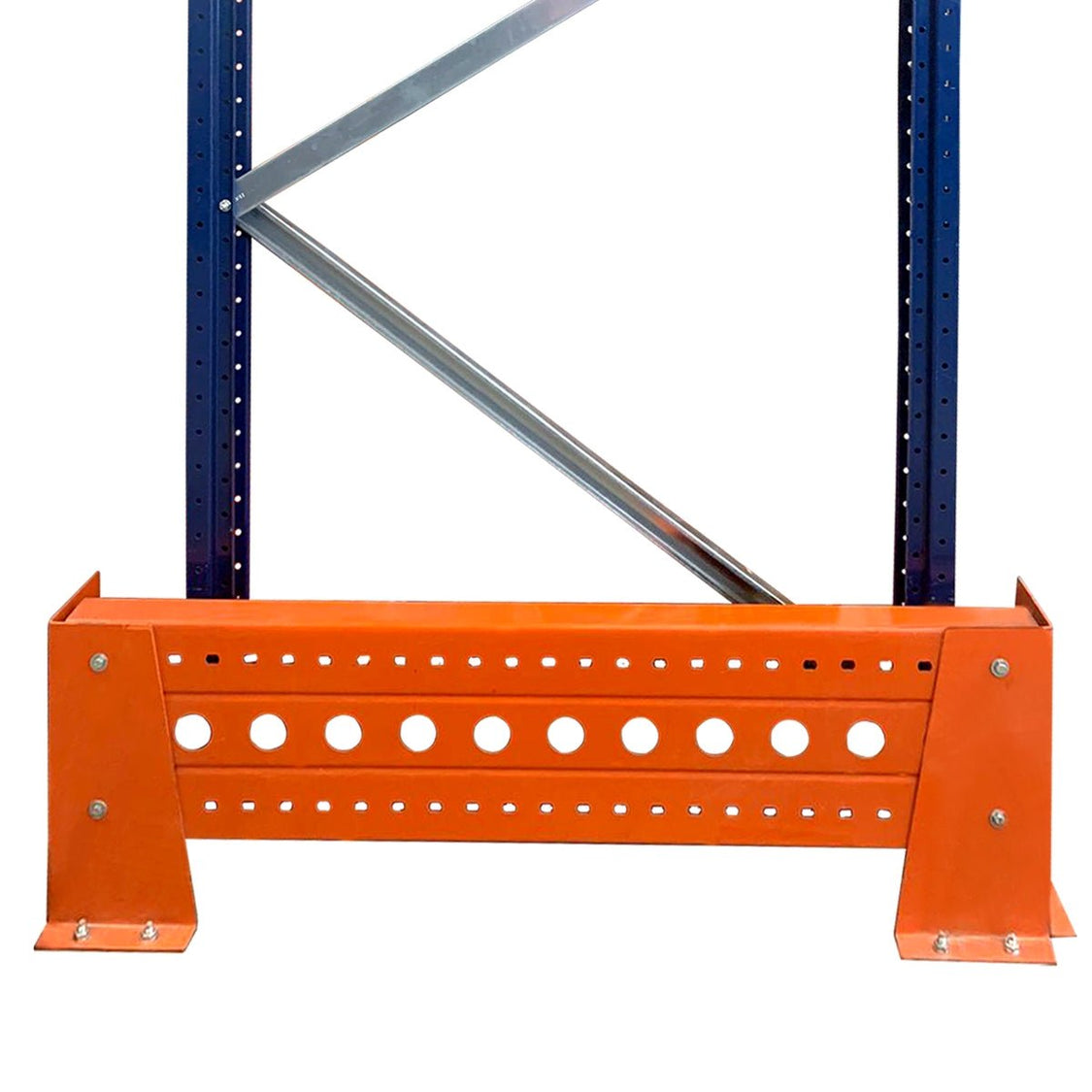
4. Install Pallet Racking Corner Protectors
Corner protectors (racking corner guards) shield rack ends in high-traffic aisles and loading zones from forklift collisions. These freestanding guards absorb impacts before they reach structural components, preventing the weakening of uprights that support loads at height. Corner protectors alert operators to vulnerable areas and reduce accidents that compromise rack integrity.
5. Display Load Capacity Signs Clearly
Load capacity signs prevent accidental overloading by displaying maximum safe working loads for each bay and level. Warehouse operatives and forklift drivers need instant visual confirmation of weight limits, especially when storing heavy items on upper beams. Overloading upper levels creates instability that can cause catastrophic failures, damaging stock throughout the entire racking structure. Position signs at eye level for easy reference during loading operations.
6. Inspect Pallets Before Loading at Height
Use standardised pallets that fit your racking system properly. Inspect all pallets for damage before placing them at height, removing any broken or weak pallets immediately. Damaged pallets can collapse under load, causing stock to fall and potentially triggering a domino effect on adjacent bays. Consistent pallet quality prevents many height-related incidents.
7. Maintain Proper Load Distribution
Never exceed maximum weight limits for individual rack levels or bays. Distribute loads evenly across beams to prevent unbalanced forces that stress one side of the rack more than the other. Heavier items should typically be stored on lower levels with progressively lighter loads at height, improving overall rack stability and reducing the consequences of any failure.
8. Conduct Regular Rack Inspections
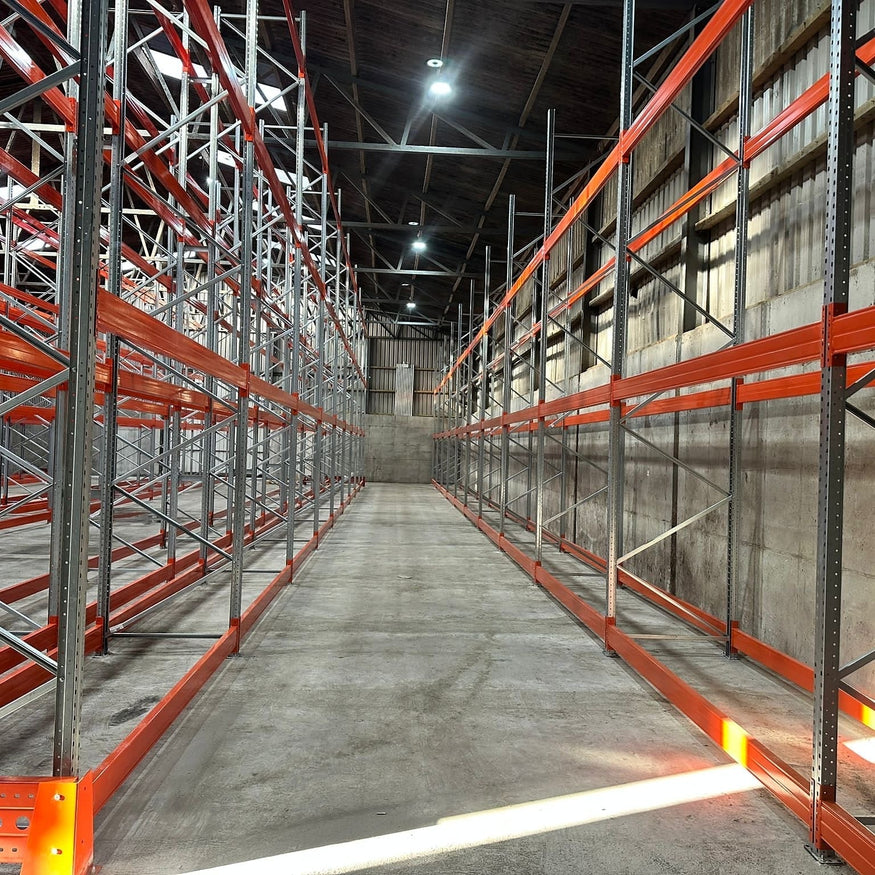
Check regularly for bent or dented uprights, damaged beams and loose connections at all levels. Inspect upper levels systematically using warehouse ladders or mobile platforms, as damage at height is often less visible from ground level. Early detection of structural issues prevents minor problems from escalating into failures that damage stock. Implement a colour-coded inspection system marking racks as safe (green), needing minor repairs (amber), or requiring immediate attention (red).
9. Train Staff on Safe Loading Practices
Train forklift operators on proper loading techniques for upper levels, including approach angles, lift speeds and placement accuracy. Staff should understand how to identify signs of rack damage and report issues immediately. Regular training reinforces the importance of following load capacity guidelines and using correct pallets for height storage.
10. Use Support Beams for Additional Stability
Support beams (900mm and 1100mm sizes) provide extra reinforcement for storing heavy items or creating additional picking levels within standard racking. These accessories enhance the structural integrity of upper levels, reducing flex and movement that could dislodge stock.
Combining these preventative measures creates layers of protection for stock stored at height. Quality safety accessories from established suppliers provide better long-term value through extended service life and reliable performance under demanding warehouse conditions.


