


Safety measures around racking systems combine physical protection equipment, operational procedures and staff training to prevent accidents and structural damage. Warehouse racking systems support heavy loads at height, making comprehensive safety protocols essential for protecting workers and inventory. Implementing multiple layers of protection creates a safer working environment and reduces the risk of costly rack failures.
Install Physical Protection Equipment
Physical barriers form your first line of defence against racking damage. Pallet racking corner protectors (rack guards) shield vulnerable rack ends from forklift impacts in high-traffic areas. These freestanding guards absorb collisions before they reach structural components. Upright protectors (angle and flat protectors) protect base plates and lower uprights from impact loads, particularly important where forklifts reverse or manoeuvre with lowered loads. Column protectors prevent damage to load-bearing uprights that support the entire racking structure.
Wire mesh decking prevents items from falling through beams, protecting workers below and containing loads securely. This decking provides additional safety benefits by allowing sprinkler water to reach all levels, improving fire safety compliance. Locking safety pins secure beams to uprights, preventing accidental dislodgement when equipment strikes beams from below during loading operations.
Display Clear Load Capacity Signs
Load capacity signs must be visible at each bay, showing maximum safe working loads for individual levels and complete bays. Position these signs at eye level where forklift operators and warehouse staff can easily read them during loading operations. Signs should display beam spacing information to ensure only correctly sized pallets are used. Exceeding load capacities compromises structural integrity and creates serious safety hazards throughout the racking system.
Implement Floor Marking Systems
Floor markings designate safe traffic routes and separate forklift lanes from pedestrian walkways. Mark out designated pathways, parking spots, no-go zones and loading areas using high-visibility paint or tape. These markings indicate which equipment types can operate in specific areas and display maximum speed limits. Clear floor markings reduce collision risks and help operators navigate safely around racking installations. Include warning zones around rack ends and corners where visibility may be limited.
Establish Inspection Schedules
Regular inspections identify damage and wear before they become safety hazards. The Health and Safety Authority in Ireland recommends annual inspections by external experts, supplemented by checks from technically competent staff. Daily visual inspections by operators spot obvious issues such as bent uprights, damaged beams, loose connections or overloaded bays. Check for signs of corrosion, particularly in damp environments or cold storage facilities.
Implement a colour-coded system marking racks as safe (green), requiring minor repairs (amber) or needing immediate attention (red). Document all inspections and maintain records of repairs and component replacements. Address identified problems promptly, as delaying repairs allows minor damage to develop into serious structural issues.
Maintain Proper Aisle Widths
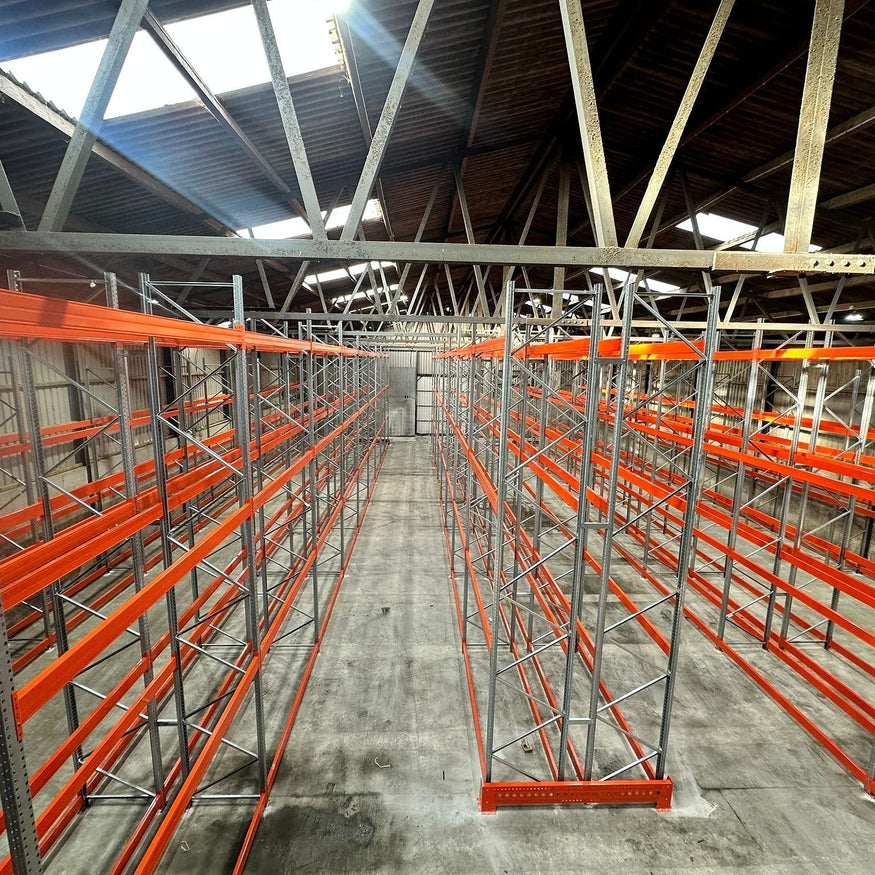
Aisle width directly affects both safety and operational efficiency. Narrow aisles increase collision risks, particularly during busy periods when multiple operators work simultaneously. Calculate appropriate aisle widths based on the turning radius of your handling equipment and the size of typical loads. Consider whether you use reach trucks (suitable for narrower aisles) or counterbalance forklifts (requiring more space).
Adequate aisle spacing allows operators to manoeuvre safely without striking rack uprights or adjacent loads. Balance space efficiency against safety requirements, ensuring operators have sufficient room to work without compromising structural protection.
Use Appropriate Handling Equipment
Select handling equipment suited to your racking configuration and aisle widths. Reach trucks work well in narrow aisle installations, offering precise control and compact turning circles. Counterbalance forklifts suit wider aisles and heavier loads. Ensure all equipment receives regular maintenance to prevent malfunctions that could cause accidents.
Operators must maintain clear visibility when moving loads through racking aisles. Never exceed equipment load ratings and ensure loads are properly balanced before lifting. Equipment should feature warning devices such as reverse alarms and flashing lights to alert nearby workers.
Create Emergency Procedures
Establish clear emergency protocols covering immediate reporting of accidents, rack damage or unsafe conditions. Designate responsible persons for assessing damage severity and authorising rack repairs. Create evacuation routes that remain accessible if rack failures occur, ensuring pathways never become blocked by temporary storage.
Emergency procedures should include protocols for cordoning off damaged areas, reducing loads on compromised bays and engaging qualified engineers for structural assessments. Staff must understand that damaged racks should not be used until properly repaired or replaced.
Maintain Proper Environmental Conditions
Environmental factors affect racking safety. Ensure adequate lighting throughout storage areas, particularly at height, where visibility becomes crucial. Poor lighting increases collision risks and makes load placement more difficult. Install emergency lighting systems that activate during power failures.
Maintain suitable floor conditions with level, solid surfaces properly prepared for rack installation. Uneven floors create instability and increase stress on rack components. Address any floor damage promptly, as deteriorating surfaces can compromise anchor points and structural stability.
Combining these safety measures creates comprehensive protection around racking systems. Regular review of safety protocols ensures procedures remain effective as operations evolve and new risks emerge.
Customer Reviews


