


Estimated reading time: 8 minutes
A good tool organiser is one of those purchases that seems simple until you start looking at the options. With dozens of choices available, from compact portable boxes to wall-mounted systems, finding something that genuinely matches how you work can feel like a task in itself. This guide helps you select a tool organiser you'll actually use every day.
What Should You Consider When Buying a Tool Organiser?
Before you buy anything, work through these questions to understand what you genuinely need. Skipping this step often means ending up with products that sit unused or don't solve the problem you thought they would.
Step 1: Assess Your Working Environment
Where do you actually work? Your answer determines which type of organiser makes sense.
Fixed workshop or garage: Wall-mounted systems, pegboards and hanging organisers make the most of vertical space, keeping tools visible and within reach. They're ideal if you complete most tasks in one location.
Mobile tradesperson: Portable toolboxes, modular systems with wheels and compartmentalised organisers protect your kit during transport. Prioritise durability, secure closures and manageable weight.
Mixed requirements: Many professionals need both. A wall-mounted system at your home base combined with a portable box for site work covers everything without compromise.
Step 2: Audit Your Tool Collection
Take stock of what you own and use regularly:
- Count your hand tools by category (screwdrivers, pliers, wrenches and so on)
- Measure your largest and smallest items
- Identify tools you reach for daily versus occasionally
- Note anything requiring special protection, such as precision instruments or sharp blades
This audit stops you buying organisers that can't fit your equipment or waste space on features you won't use.
Step 3: Evaluate Available Space
Measure your workspace before you buy:
- Wall space for mounted systems (check for studs or suitable anchor points)
- Floor area for mobile units or storage trunks
- Shelf depth if you're integrating with existing racking
- Ceiling height for tall storage solutions
Step 4: Define Your Budget
Tool organisers vary significantly in price, from basic plastic boxes to comprehensive wall systems. Think about total cost:
- Initial purchase price
- Additional accessories like hooks, bins and dividers
- Installation requirements
- Long-term durability and how often you'll need replacements
- Spending more upfront on quality products typically delivers better value over time. They last longer and work better.
Step 5: Match Features to Your Workflow
Which features actually matter to how you work?
| Your Priority | Recommended Features |
|---|---|
| Quick tool identification | Transparent compartments, open-front bins, labelling systems |
| Maximum tool protection | Padded interiors, secure latches, weatherproof seals |
| Space efficiency | Wall-mounted systems, vertical storage, stackable designs |
| Flexibility | Modular components, adjustable dividers, removable bins |
| Portability | Wheels, comfortable handles, balanced weight distribution |
Decision Checklist
Before you buy, make sure you can answer 'yes' to these:
☐ Does this organiser fit my available space?
☐ Can it hold my current tool collection with room to grow?
☐ Does it match where I work (fixed location or on the move)?
☐ Is the build quality right for how often I'll use it?
☐ Does the price fit my budget and expected lifespan?
☐ Can I get replacement parts or expansion options if I need them?
How Do You Spot Quality When Buying a Tool Organiser?
Knowing what separates a worthwhile purchase from a disappointing one saves you money and frustration. Here's what to look for.
| Aspect | Green Flags (Quality Indicators) | Red Flags (Selection Mistakes) |
|---|---|---|
| Material Construction | Thick, rigid plastics; powder-coated steel; reinforced stress points | Thin plastic that warps; untreated metal prone to rust; visible moulding defects |
| Hinges and Latches | Metal hinges; latches that click securely; replaceable components | Plastic hinges that crack; latches that pop open under load; non-standard fittings |
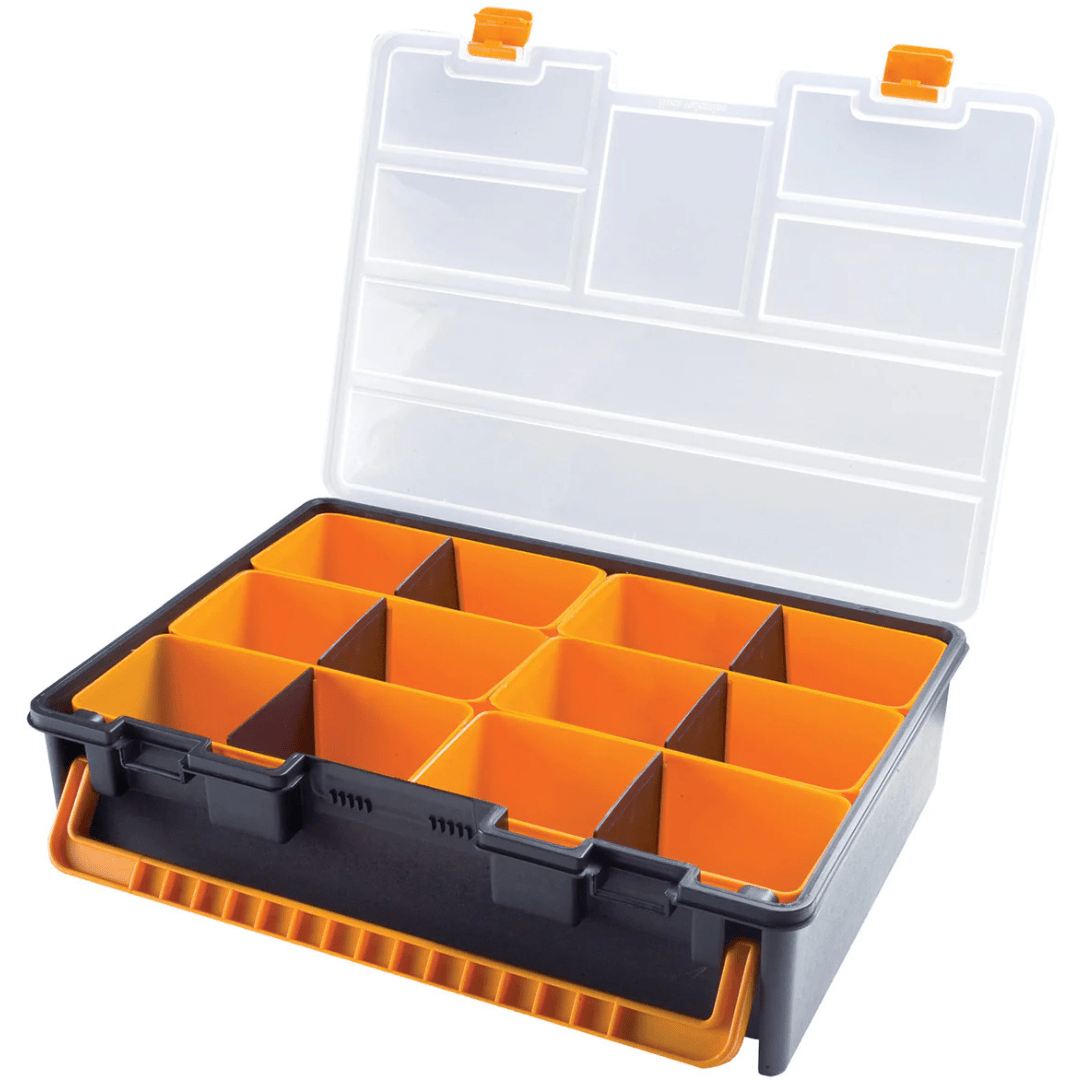
| Compartment Design | Removable dividers; smooth drawers; bins that stay in position | Fixed compartments that waste space; drawers that jam; bins that tip or fall out |
| Wall Mounting Systems | Pre-drilled mounting holes; included fixings; clear weight capacity ratings | No mounting guidance; flimsy backboards; unspecified load limits |
| Portability Features | Sturdy wheels with brakes; ergonomic handles; balanced when loaded | Small wheels that stick; uncomfortable grips; front-heavy design |
| Seal and Protection | Weatherproof gaskets; dust-resistant closures; padded tool rests | Gaps that let debris in; no protection for precision tools |
| Modularity | Compatible expansion units; standardised attachment points; interchangeable components | Proprietary fittings you can't find elsewhere; no expansion options |
| Labelling Options | Integrated label holders; writable surfaces; clear compartment visibility | No labelling provision; opaque containers that hide contents |
| Weight Capacity | Published UDL (uniformly distributed load) ratings; tested to stated limits | Vague capacity claims; shelves that bow under normal loads |
| Brand Reputation | Positive customer reviews; warranty coverage; responsive support | No reviews available; unclear returns policy; uncontactable seller |

Common Selection Mistakes to Avoid
Buying for aspirational tool collections: Purchase organisers sized for what you own now, plus modest growth. Don't buy for the workshop you imagine owning in five years. Oversized systems waste money and space.
Ignoring accessibility: Storage that forces you to unstack boxes or shift items to reach tools defeats the purpose. Prioritise systems that give you direct access to everything you store.
Underestimating weight: Tools are heavy, and a loaded toolbox adds up quickly. Make sure wheels, handles and mounting systems can handle realistic loads.
Choosing looks over function: An attractive organiser serves no purpose if it can't hold your tools properly. Function comes first. Appearance is secondary.
Neglecting future flexibility: Your needs will change. Systems that let you reconfigure things (adjustable shelves, movable hooks, modular bins) adapt as your requirements evolve.
Product Categories Worth Considering
For garage and workshop walls: Pegboard systems and wall-mounted panels offer excellent flexibility. The Wall Zone range includes hooks, shelves and holders you can rearrange instantly as needs change.
For small parts and fasteners: Dedicated parts bins with angled fronts keep screws, bolts and fittings visible and easy to grab. They integrate well with shelving units too.
For complete workshop setups: Combining tool organisers with sturdy workbenches creates efficient stations where everything stays within reach during projects.
Looking After Your Storage
Quality tool organisers need minimal upkeep, but a little attention goes a long way:
- Wipe plastic components to remove dust and debris
- Lubricate metal hinges and drawer slides periodically
- Check mounting fixings remain secure, particularly after heavy use
- Replace worn dividers or damaged bins before they affect how things are organised
Choose RackZone for Your Tool Organisation Needs
The right tool organiser turns a chaotic workspace into somewhere you can actually get things done. We stock a full range of tool storage solutions, from compact plastic organisers and portable toolboxes to complete wall-mounted systems.
Order before 3pm and we'll deliver next business day anywhere in Ireland and Northern Ireland. As a 100% Irish-owned company rated Excellent on Trustpilot, we combine quality products with genuine expertise to help you find exactly what your workshop needs.
Get in touch with our team to discuss your storage challenges and discover why tradespeople and DIY enthusiasts across Ireland trust RackZone to keep their tools organised.
"Always good range of storage products and great service with fast delivery. We have first bought from Rackzone almost 8 years ago and every transaction to date same been first class. Prices are competive. Highly Recomended Irish Company."
Jason Elliot
"Excellent company to deal with. High quality product with a very efficient delivery service. Very easy to assemble. Excellent customer service. Would highly recommend."
Nick Roche


