


Storage has a way of outgrowing itself. You set a system up, it works well and then one day the shelves are full, the floor's getting used and there's a weekend job that keeps getting postponed. Sound familiar? The answer is usually modular shelving.
This modular shelving explained guide covers how these systems are built, what types are available, what they're made from and why they suit far more situations than people expect. Browse our metal shelving, galvanised shelving, warehouse shelving and garage shelving ranges as you read, and you'll have a clear picture of what fits your space before you reach the end.
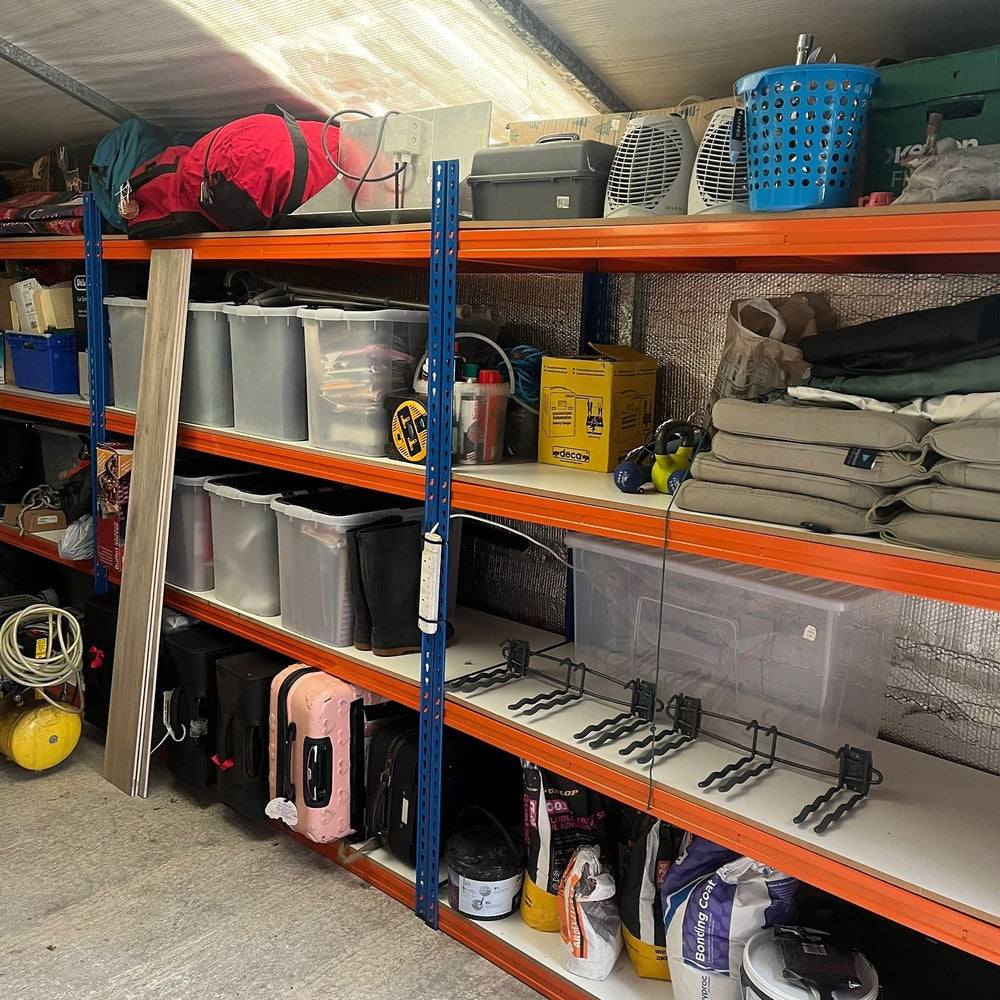
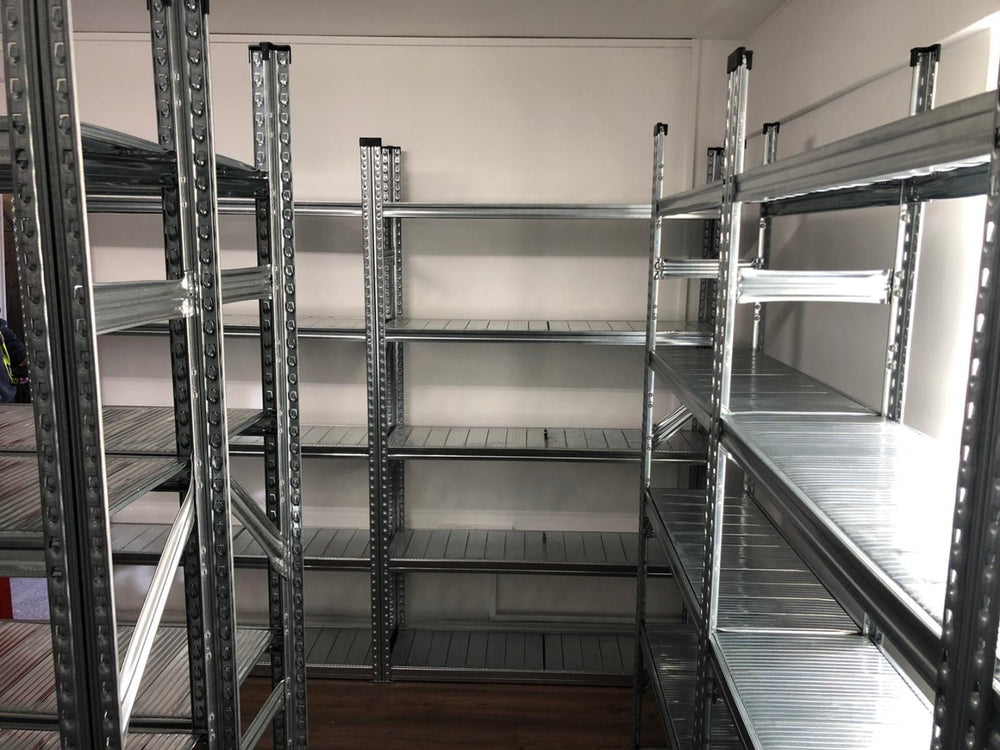
What is modular shelving?
Modular shelving explained: the building block principle
Modular shelving means, in its simplest form, a storage system built from components, not committed to a single fixed layout. Modular shelving is a type of shelving system built from separate parts that are interchangeable and customisable. You choose uprights, beams, shelves and brackets, assemble them into the configuration that fits today and know that the same components can be rearranged, extended or supplemented as things change. A fixed unit gives you one size, one height, one set of dimensions. A modular shelving unit gives you a starting point
How extension bays turn a single unit into a full storage system
The extension bay is what makes a modular shelving system genuinely useful over the long term. A starter bay includes two full uprights, beams and shelves. An extension bay shares one upright with the starter (or with the previous bay in the run), adding only the components that are actually missing. You're not buying a second full unit; you're adding what's needed and nothing more.
Think of it like a sentence: each component connects to the next, the structure makes sense as a whole and you can always add more without losing what's already there.
We're proud to be Ireland's sole distributor of Kimer products; a manufacturer with over 50 years of experience in the design and manufacture of storage systems. That depth of experience is reflected in how their systems are engineered. Starter bays and extension bays work together across the range, so expansion is planned from the outset rather than bolted on as an afterthought.
The uprights are the permanent investment. The shelves, beams and add-ons are the flexible layer. That distinction matters when you're thinking about cost and longevity.
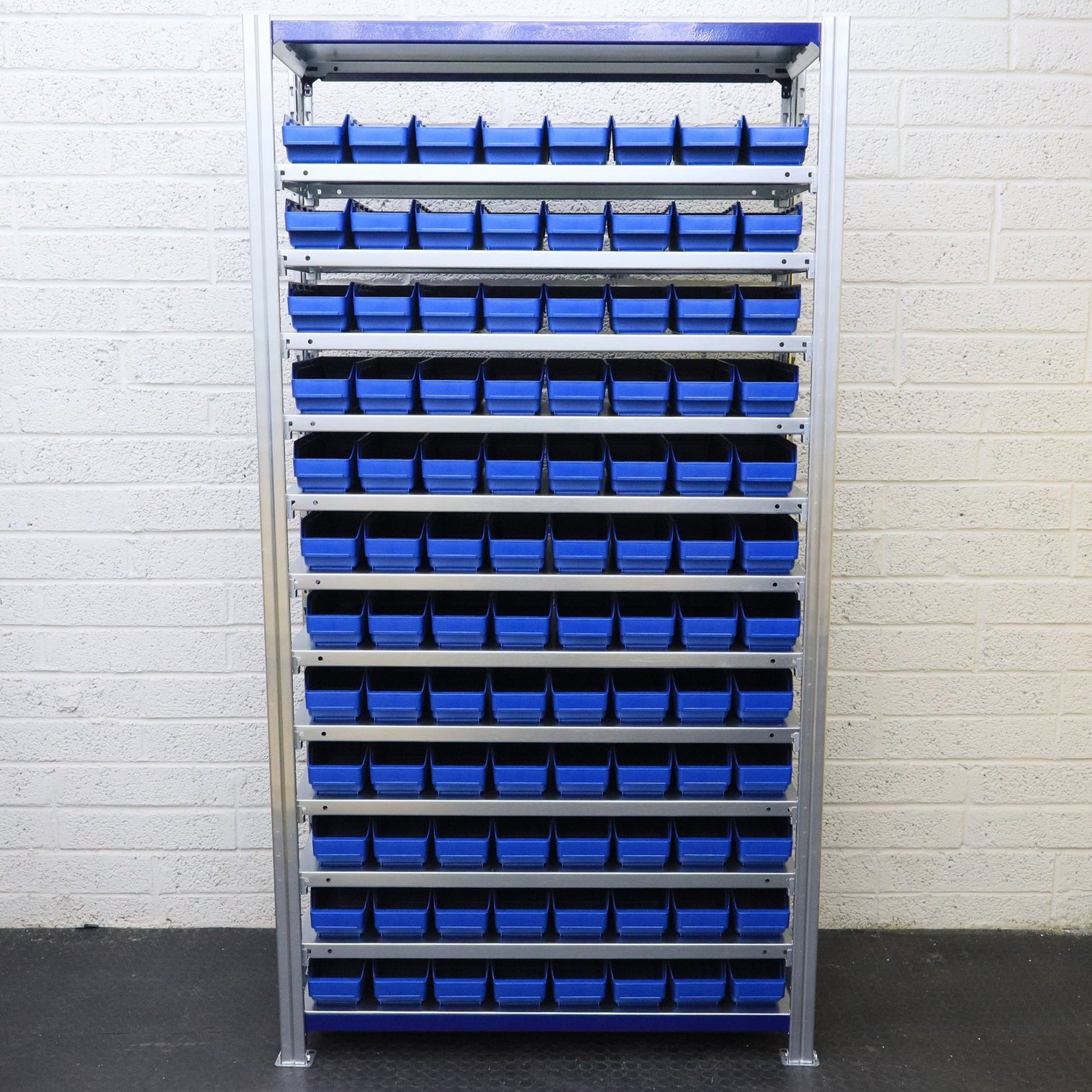
Modular shelving types
Understanding the types available is where the decision gets practical. It's not just about load capacity or dimensions; it's about matching the system to the specific demands of your space and the stock you're storing. Each of the following types can be started at a single bay and extended over time, which is the whole point of a shelving modular system.
Metal shelving: heavy-duty modular shelving for industrial environments
Metal shelving: heavy-duty modular shelving for industrial environments
Metal shelving handles greater loads in more demanding conditions. Workshops, manufacturing facilities, back-of-house retail and light industrial settings all benefit from its strength and adaptability. Extension bays are compatible across the range, so the shelving scales as requirements do.
For businesses that need storage to keep pace with growth, metal shelving removes the cost of replacing an existing system every few years. You extend; you don't restart.
Galvanised shelving: modular shelving for cold storage and damp conditions
Galvanised shelving is the correct specification for wet, cold and humid environments. Galvanising applies a zinc coating to steel, providing protection against corrosion in conditions that would degrade an uncoated finish over time.
It's the standard choice for walk-in refrigerators, food production areas and outdoor stores. If your space involves moisture, temperature fluctuation or food contact surfaces, galvanised shelving is the right material.
Longspan shelving for the warehouse: wide-bay modular shelving for bulky stock
Longspan shelving for the warehouse is engineered for items that don't palletise neatly. Wide bays without intermediate supports keep picking aisles open and accessible, which matters in distribution centres, logistics operations and manufacturing stores where throughput depends on how quickly people can reach what they need.
Extension bays share uprights with starter bays, so the system expands without redundant components. The modular principle is the same as in the rest of our range. The scale is just larger.
Longspan shelving for the garage: modular storage for home workshops
Longspan shelving for the garage brings that load-bearing capability into a domestic or workshop setting. Seasonal equipment, power tools, paint and garden machinery are the usual candidates. A garage shelving system that starts at one bay and grows as the space develops is a far more considered investment than a fixed unit bought once and outgrown quickly.
Modular storage ideas for garages often start with a single starter bay. The satisfaction of a well-organised workshop tends to inspire the next extension before long.
Modular shelving materials: which is right for your space?
Material selection is where modular shelving system design gets specific. Two systems with identical dimensions and load ratings can behave very differently depending on what they're made from and where they're installed. The table below gives a clear overview of the main options and their typical applications.
| Material | Best For | Key Property | Typical Settings |
|---|---|---|---|
| Steel | General commercial and industrial use | Strength, cost-effectiveness | Warehouses, workshops, retail |
| Galvanised steel | Cold, wet or humid environments | Corrosion resistance | Cold storage, food production, outdoor |
| Chrome wire | Light-duty display and ventilation | Open structure, air circulation | Catering, HORECA, retail display |
| Boltless and plastic | Quick assembly, lighter loads | Low weight, fast setup | Home storage, offices, light commercial |
Steel is the foundation of most commercial shelving in Ireland; it handles heavy loads and resists surface wear under daily use. For environments where corrosion is a genuine risk, galvanised steel is the appropriate step up. The zinc coating provides lasting protection in conditions that would compromise an uncoated steel finish within a few years.
Chrome wire suits catering and HORECA settings because of its open structure. Air circulates freely around stored items, which is a practical requirement in food service environments. Boltless and plastic shelving serves lighter applications where speed of assembly takes priority over load capacity.
Good modular shelving system design generally starts with material selection. Get that right and the rest, including load ratings, bay widths and extension options, follows more naturally.
The advantages of modular shelving
Why modular shelving outperforms fixed storage systems
The case for modular shelving isn't complicated. It comes down to what happens when your requirements change. And they will change.
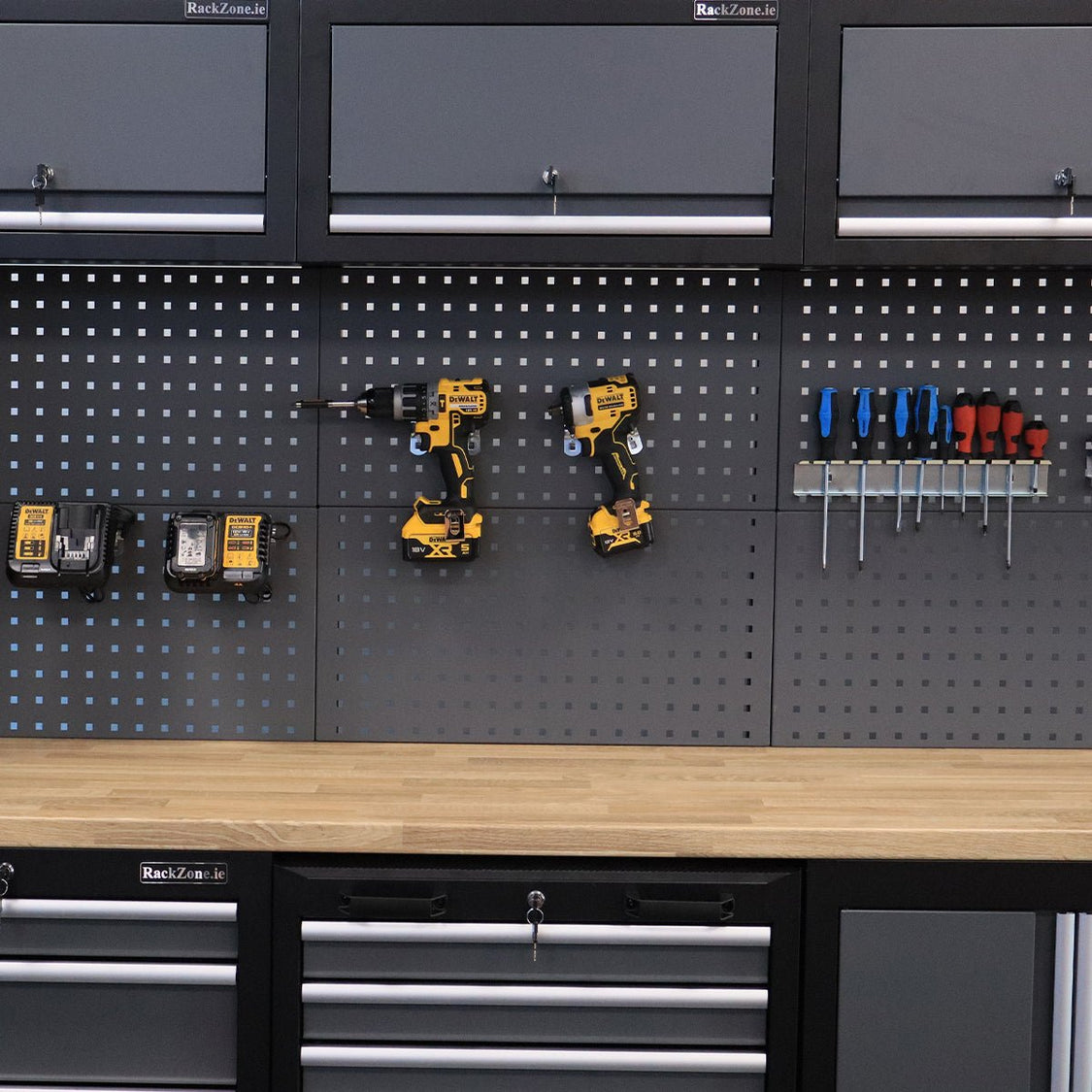
You only invest in what you need. A shelving modular system is bought in stages. The starter bay provides the structure. Extension bays add capacity as demand grows. That keeps upfront cost proportionate and avoids buying space you're not yet using.
Customisation is built into the design. Shelf heights adjust to suit different item sizes. Bay widths vary to match the available footprint. Add-ons including dividers, bins, back panels and wire decking let you configure the layout around the stock you're actually storing. Customisation isn't retrofitted to the system. It's part of how the system functions from day one.
The layout can change; the uprights stay put. Modular shelving in Ireland is in use across settings from small home workshops to large logistics operations. Reconfigure a picking run for a new stock profile, add height to make use of wall space, extend the run into a newly cleared area or rearrange bays to suit a different workflow. The investment carries forward regardless of how the layout changes.
Extension bays protect what you've already spent. Because extension bays share uprights with starter bays, the original components remain part of the system as it grows. You're adding to the run, not replacing it.
The benefits of modular shelving for businesses and homeowners in Ireland
How modular shelving systems deliver value in practice
Advantages describe what a system can do. Benefits are what you actually experience when you're using it day to day.
For business buyers, modular shelving systems remove one of the more avoidable costs in commercial storage - the rip-and-replace cycle. When your inventory profile changes, you reconfigure rather than refit. That saves both time and money, and it avoids taking a storage area offline during a busy period. A shelving system in Ireland that ships from local stock and arrives next business day means the gap between deciding to expand and actually expanding is measured in days. We hold stock in Ireland. There are no delays waiting on overseas shipments.
For home and DIY buyers, modular shelving ideas work just as well at a smaller scale. A garage shelving system that extends over time is more useful than a fixed unit you outgrow in a season. Modular storage ideas for domestic settings, whether utility rooms, sheds or home workshops, follow exactly the same logic as a commercial installation. The scale is different. The principle is identical.
For anyone thinking longer term, you're investing in a system, not a snapshot. The shelving installed today can still be serving you a decade from now, reconfigured as needed and extended where required. The best modular shelving system for most buyers isn't the largest or the most expensive option available. It's the one that starts at the right size and grows on your terms.


