


Ever stood in front of a shelf, toolbox in hand, wondering if it'll actually hold? You check the load rating. It says 200kg. Job done, right?
Not quite. Load ratings hide a trick most people never spot, and it catches out DIYers and warehouse managers alike. This guide unpacks it properly: not as another spec sheet number to nod along to, but as two very different questions your shelf answers at once. Have a browse of our shelving and pallet racking ranges once you've got the full picture. You'll pick the right unit the first time, no guesswork needed.
What The Load Rating Really Means
Every shelf and beam carries a load rating somewhere on its spec sheet, and so does a full bay of racking. Most people read that number as a flat ceiling. This shelf holds 200kg so we're fine. That's exactly where things start to go wrong.
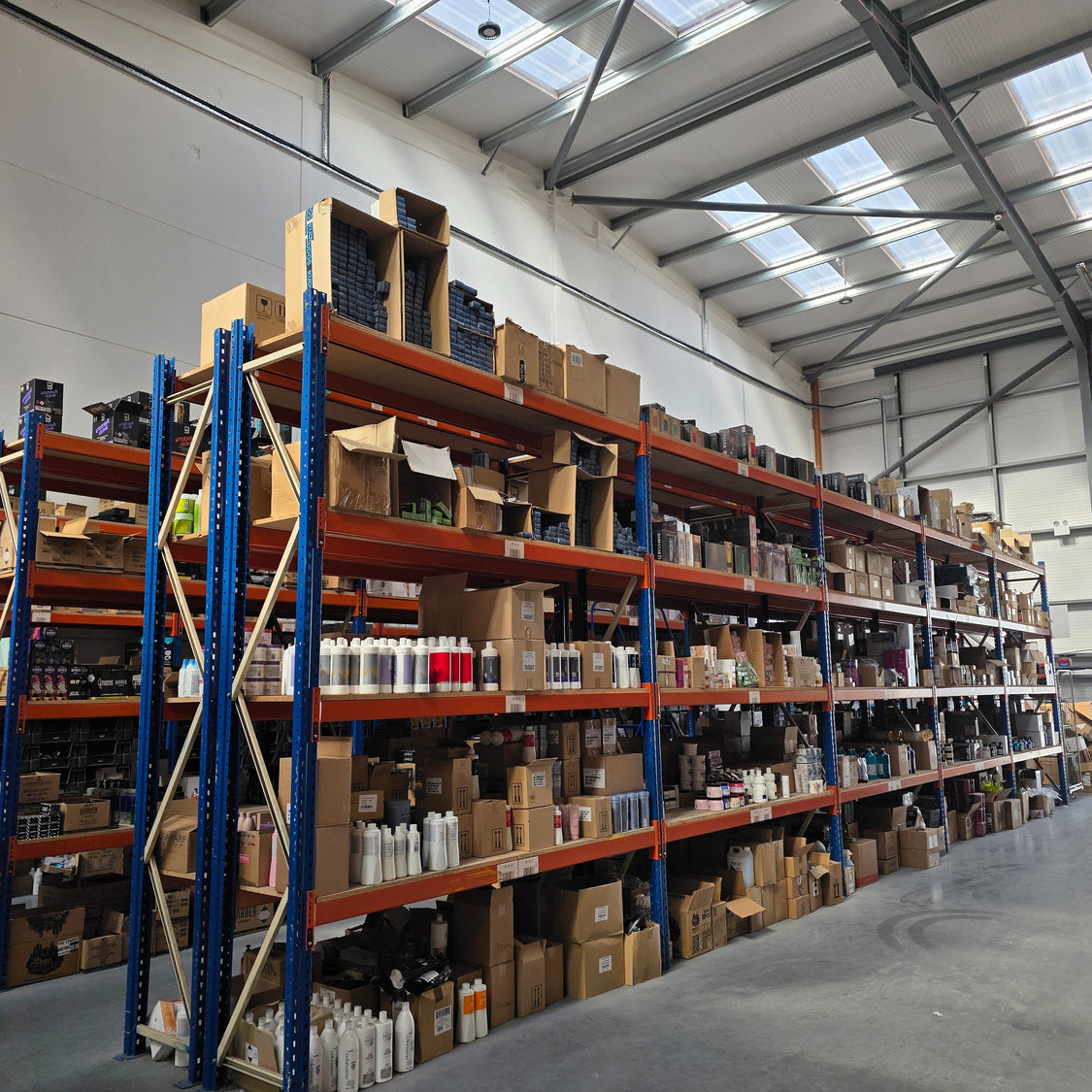
A load rating isn't one single figure. It's a uniformly distributed load (UDL) value and it only holds true if your items sit spread out evenly across the whole shelf. The second you place one heavy, compact item in a single spot, you've stopped testing the UDL. You're now testing something else: a point load. A common buying mistake is treating the rating as a point load, when it was never built for that job.
Getting this wrong is one of the quickest ways to overload a shelf without realising it, even when the total weight stays under the number on the spec sheet.
So why does this matter for how you actually load your shelves? Because two loads can weigh exactly the same and behave completely differently.
UDL Scenario
Picture a pallet of flat packed stationery, spread across the full shelf surface (that's a UDL scenario).
Point Load Scenario
Now picture a single cast iron vice, bolted to one corner of that same shelf, weighing less than the stationery but concentrated in one spot (that's a point load scenario, and a far riskier one).
Understanding types of structural loads like these is what separates a shelf that performs exactly as rated from one that buckles well below its stated capacity.
”This distinction runs through everything we stock, from boltless units in a home garage to longspan shelving carrying bulky warehouse stock. The number on the box only means something once you know which kind of load you're actually putting on it, which is exactly why load ratings deserve a closer look before you buy.
What Is Uniformly Distributed Load (UDL)?
What Does UDL Mean On Shelving?
Wondering what does UDL mean on shelving before we go any further? It's the safe working weight a shelf handles once that weight is spread out properly, rather than piled into one spot.
Uniformly distributed load (UDL) is the maximum weight a shelf or beam can safely carry when that weight spreads evenly across the entire surface, from edge to edge and front to back. You'll see it quoted in kilograms on nearly every shelving and racking spec sheet, and it assumes the load behaves like a flat, even blanket rather than a stack in one corner.
UDL In Action
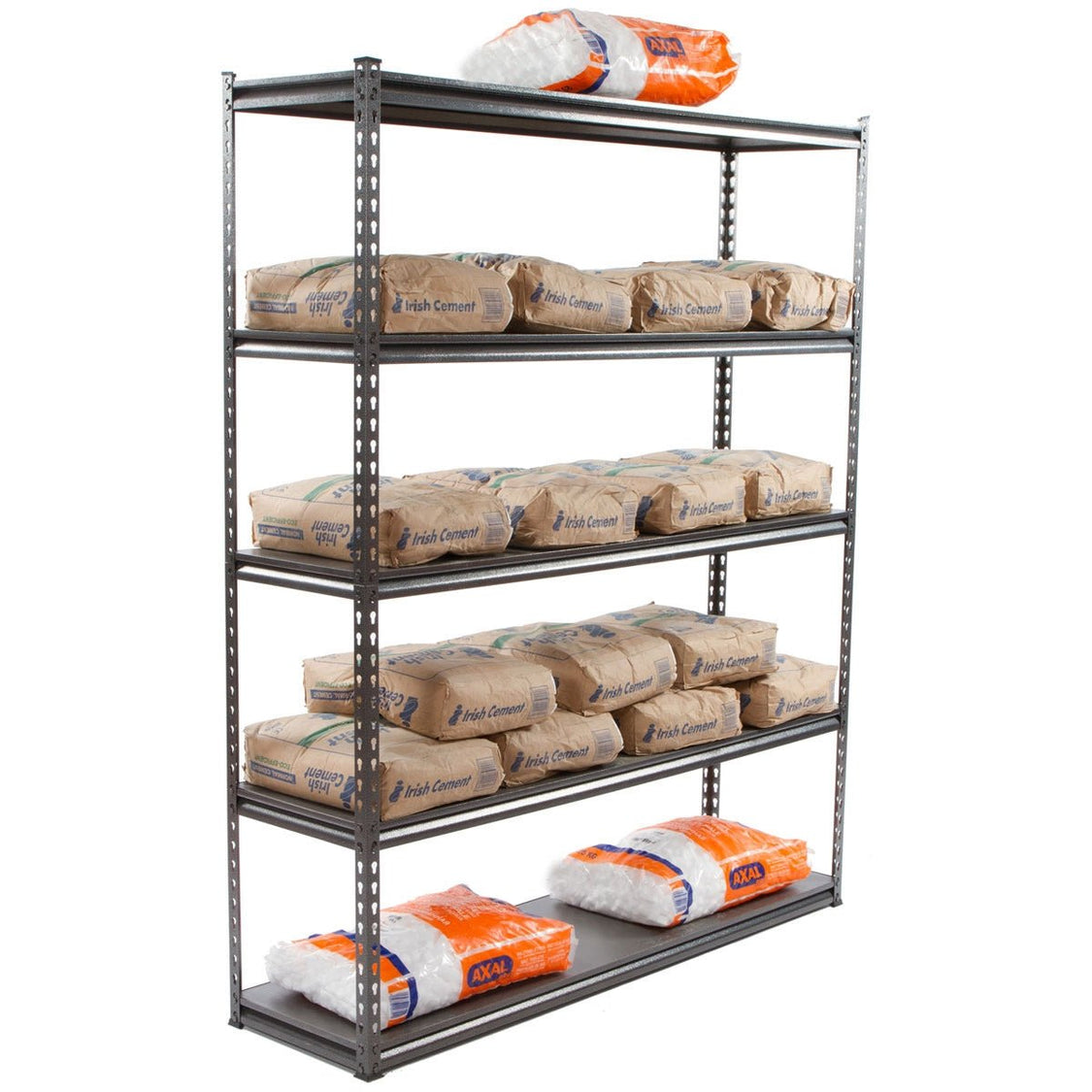
A shelf loaded with identical boxes, arranged in neat rows that cover the full deck - each box takes its fair share of the surface. No single point carries more than its portion. That's a textbook UDL in action, and it's why even weight distribution matters so much when you're deciding what goes where.
The UDL Formula Explained
The UDL formula in its simplest form for a shelf looks like this:
UDL = total weight ÷ shelf surface area
Say you're spreading 300kg evenly across a shelf measuring 1.8m by 0.6m. That works out at roughly 278kg per square metre, a figure that sits well within the range most industrial shelving is designed for (many everyday units are rated anywhere from around 175kg up to 800kg or more per shelf, depending on the range). This is uniformly distributed load formula thinking in practice: total weight divided by the area it covers, always assuming properly even coverage rather than a rough guess at "it looks spread out."
Longspan and pallet racking systems extend this same logic to beams. Beam ratings and UDL in racking systems work hand in hand. A beam's stated UDL tells you what it can carry across its full span when the load sits evenly along its length, and that figure shifts depending on how wide the span is. A beam rated for one span width won't carry the same UDL over a longer span, since the bending force on the beam grows as the unsupported distance stretches out.
What Is Point Load?
Point Load Definition
A point load is the weight applied to a small, concentrated area of a shelf or beam, rather than spread across the whole surface. Think of a heavy engine part, a stack of dense metal fixings or a toolbox with thick steel walls resting on one section of the shelf instead of spanning it.
This is exactly where a common buying mistake creeps in. Someone spots a shelf rated at 250kg UDL and assumes a 200kg compressor unit can go anywhere on it, comfortably under the limit. Fair assumption? Not really. That compressor's entire weight might land on a footprint of a few hundred square centimetres. The shelf deck under that spot bears far more localised force than the UDL rating ever accounted for, and it can buckle or crack long before you'd expect, even though the total weight sits comfortably under the rated figure.
Point load vs UDL comes down to one idea: UDL assumes cooperation from the load itself, spreading out and sharing the strain. Point load offers no such cooperation.
Think of it like standing on one foot versus spreading your weight across both feet. Same body weight, but the pressure on the floor beneath you changes a great deal depending on how you stand.
”UDL and Point Load on a Simply Supported Beam
A single shelf or beam supported at both ends - that's how most shelving and longspan systems work, and engineers call it a simply supported beam. It's the clearest way to watch the difference between these two load types play out.
”Spread a load evenly along that beam from one support to the other and the bending force builds gradually and predictably, peaking gently around the midpoint. That's uniformly distributed load to point load thinking at its most visual. The beam does exactly the job its UDL rating describes.
Now take that same total weight and rest it all in one place near the beam's centre, rather than spreading it out. The bending force at that single point spikes far higher than it would under an evenly spread load of the same weight. This is why a point load to UDL comparison on paper can look deceptively safe - the numbers suggest you're within your limit but the physical reality on the beam is a concentrated stress the rating was never designed to absorb at that intensity.
Point load vs distributed load isn't just an engineering distinction for people who design racking systems. It's a real, everyday consideration for anyone loading a shelf, because the same total weight can be perfectly safe or seriously risky depending on how it's arranged.
Load Ratings Explained: How To Load Heavy Duty Shelving More Sensibly
None of this means you need an engineering degree before you load a shelf. It just means a few sensible habits pay off, and they cost you nothing extra.
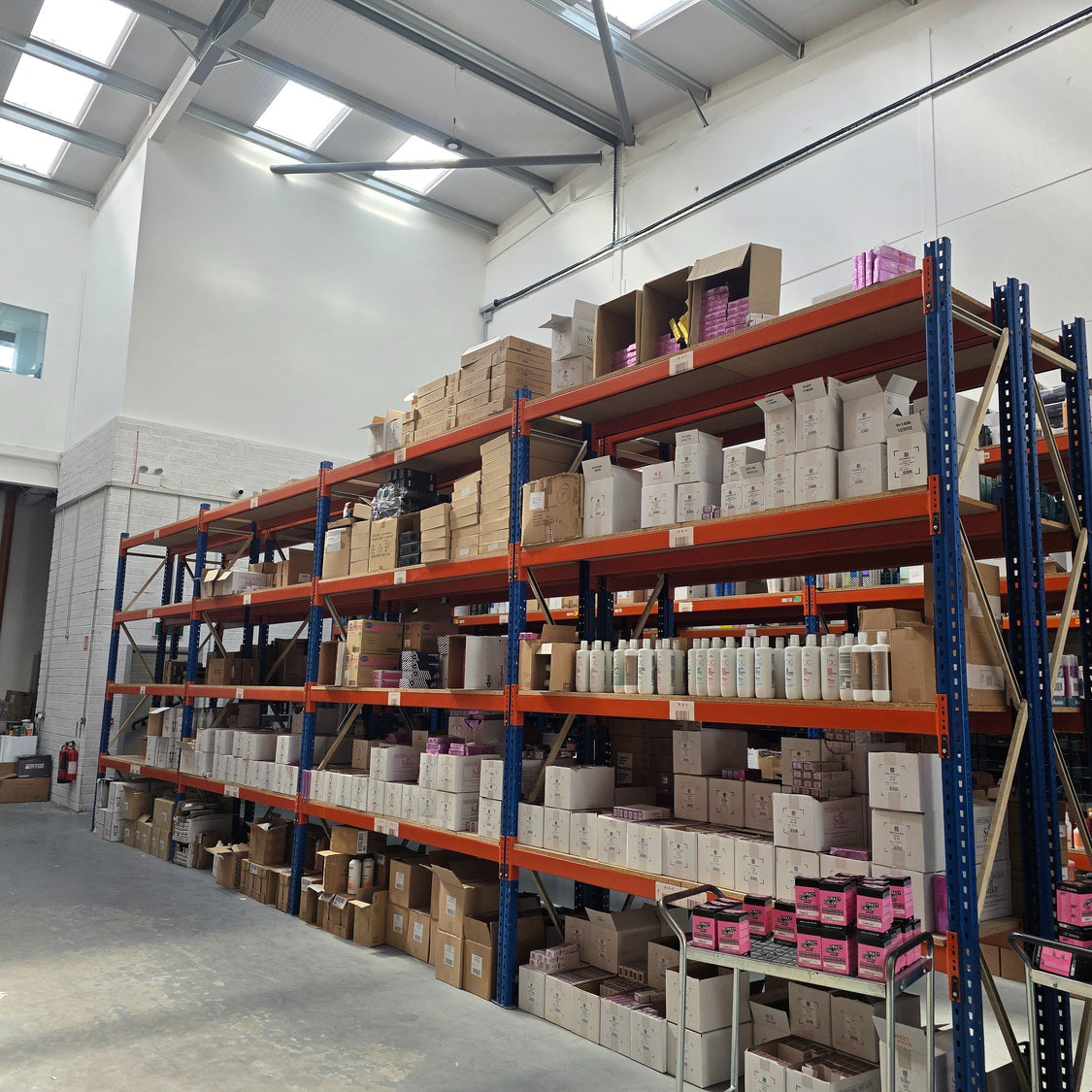
Spread heavier items across the full depth and width of a shelf, rather than pushing everything into one corner.
Storing something dense and compact, like machine parts or solid metal stock? Place it centrally over the strongest point of the shelf deck, well away from any unsupported edge.
A solid steel or timber deck works well for anything with a small, heavy footprint too, since these distribute concentrated force more effectively than open wire mesh.
UDL Shelving Explained, In Practice
For UDL shelving explained in the simplest terms: check the stated UDL, work out roughly how your items will actually sit on the shelf then ask whether they're behaving like a spread out UDL or a concentrated point load. If it's the latter, treat that rating with more caution, not less. This is exactly the thinking built into our range.
Boltless & Value Shelving
Boltless and value shelving suit lighter, evenly distributed household or office items well.
Industrial & Rivet Shelving
Industrial and rivet shelving handle heavier, denser loads spread across a full shelf.
Longspan Shelving
Longspan shelving bridges wider spans for bulky, hand loaded stock in warehouses and workshops, where load type matters just as much as total weight.
Whichever you need, understanding UDL and point load means choosing a unit that's properly matched to how you'll actually load it, not just to a number on a spec sheet.
Frequently Asked Questions
What does UDL mean on shelving?
UDL (Uniformly Distributed Load) is the maximum weight a shelf or beam can safely carry when that weight spreads evenly across the entire surface, from edge to edge and front to back. It's the figure quoted in kilograms on nearly every shelving and racking spec sheet.
What is a point load?
A point load is the weight applied to a small, concentrated area of a shelf or beam, rather than spread across the whole surface — like a heavy engine part or a toolbox resting on one section instead of spanning it.
What's the difference between UDL and point load?
UDL assumes the load spreads out and shares the strain across the whole shelf. A point load offers no such cooperation — the same total weight concentrated in one spot puts far more localised force on the shelf deck than its UDL rating ever accounted for.
What is the UDL formula?
In its simplest form: UDL = total weight ÷ shelf surface area. So 300kg spread evenly across a 1.8m x 0.6m shelf works out at roughly 278kg per square metre.
Is there a formula to convert point load to UDL?
Not really. A point load depends entirely on how small the contact area is, so the safest approach is always checking the manufacturer's rated UDL for your specific span, then asking whether your actual load spreads out or bunches up before you commit.
How should I load a shelf to avoid overloading it?
Spread heavier items across the full depth and width of a shelf rather than one corner, place dense compact items centrally over the strongest point of the deck, and choose a solid steel or timber deck for small, heavy footprints rather than open wire mesh.
Give our team a call on 090 9673261 for guidance on load ratings for your own setup, or browse the full shelving range and pallet racking range on rackzone.ie. We're 100% Irish owned and rated Excellent on Trustpilot. Order before 3pm, Monday to Thursday, and we'll deliver next business day nationwide.
