


 Value Shelving
  Chrome Shelving
 Warehouse Shelving
 Industrial Shelving
 Garage Shelving
 Metal Shelving
  Plastic Shelving
 HORECA
 Galvanised Shelving
 Industrial Workbench
  Value Workbench
  Modular Workstations
 Matting
  Metal Lockers & Benches
 Office
  Slatwall
  Cabinets
 Plastic Lockers
 Lean Products
 Mobile Steps
 Wall-Zone
 Longspan Racking
  Cantilever Racking
  Industrial Pallet Racking
 Wire Mesh Decking
 Tyre Racking
 Vertical Storage
 Racking Accessories
 Up & Over Gates
 Containers & Boxes
  Louvre Panels
 Crystal Box Systems
 Parts Bins
  Euro Containers
 Visible Storage Boxes
  Foldable Crates
 Shelf Bin
 Tool Organiser

 Waste Management
 Cabinets
 Chemical & CoSHH Cabinets
  Hex Lighting
 Packaging
 Platform Trolleys
  Hand Trucks
  Pallet Trucks
  Plastic Pallets

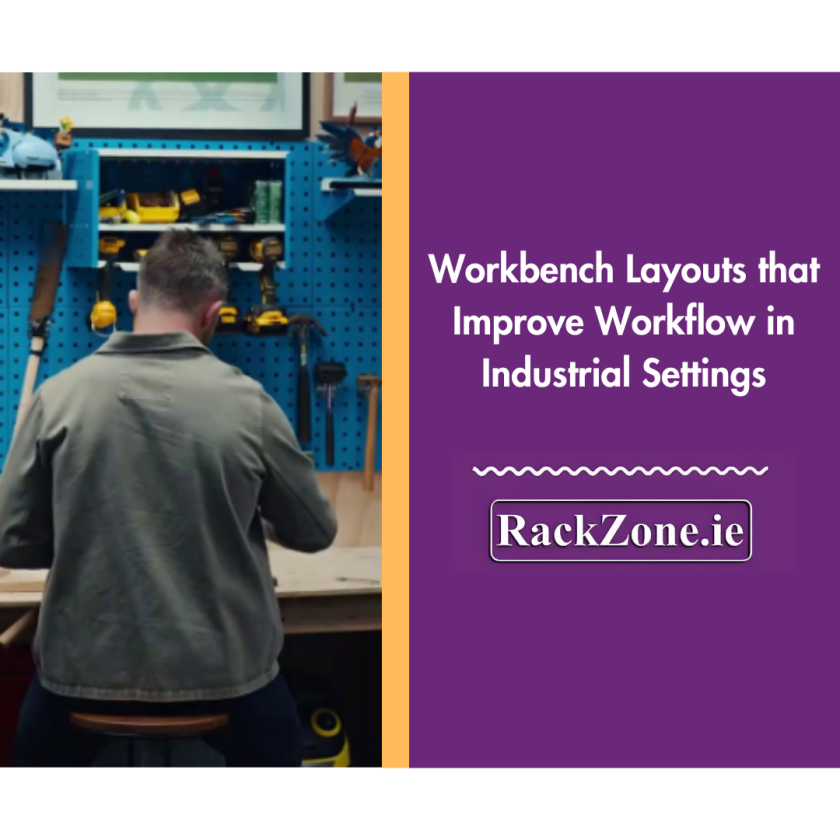
Workbench Layouts that Improve Workflow in Industrial Settings
Estimated reading time: 7 minutes
Key Takeaways
- Strategic workbench layouts reduce movement waste and improve productivity by positioning tools and materials within optimal reach zones.
- Height adjustable workbenches accommodate different tasks and operators, reducing physical strain and fatigue.
- Multi level workbench configurations maximise vertical space and maintain easy access to frequently used items.
- Mobile workbench solutions provide flexibility for dynamic production environments and collaborative workflows.
- Modular workstation systems adapt to changing production requirements without complete reconfiguration.
- Integrated storage solutions within workbench layouts eliminate time-wasting searches for tools and components.
- Proper lighting and ergonomic considerations enhance precision work and reduce operator error rates.
Efficient workbench layouts form the backbone of productive industrial settings. They directly impact manufacturing quality, worker safety and operational efficiency. The strategic arrangement of workstations, tools and storage systems can dramatically reduce production times. It also improves workplace ergonomics and employee satisfaction.
Understanding how to optimise workbench configurations enables manufacturers, workshop managers and facilities professionals to create environments that support current operations and future growth requirements. But where do you start?
Strategic Positioning Reduces Movement Waste in Industrial Settings
Effective workbench layouts begin with understanding workflow patterns and material flow within your facility. The most productive configurations position workbenches to minimise unnecessary movement between stations. This reduces non-value-added activities that drain productivity.
Strategic placement considers the sequence of operations. It ensures that materials flow logically from receiving through processing to completion.
The industrial workbench 1500w x 600d x 1000h provides an ideal foundation for many manufacturing processes. It offers substantial work surface area and maintains accessibility from multiple angles. When you position these workbenches correctly within production lines, they create efficient zones that support lean manufacturing principles and continuous improvement initiatives.
Optimal positioning also considers proximity to power sources, compressed air connections and material handling equipment. Workbenches located near these resources eliminate the delays associated with extending utilities. They also reduce the risk of safety hazards from trailing cables or air lines. The integration of workstations with existing infrastructure creates seamless operations that support individual tasks and collaborative work environments.
Height Adjustable Workbenches Accommodate Diverse Tasks and Operators
Industrial settings require workbench configurations that adapt to varying task requirements and operator preferences. Height-adjustable solutions eliminate the physical strain associated with inappropriate working heights and improve precision and quality outcomes.
Properly adjusted workbenches can help reduce the risk of musculoskeletal disorders and improve comfort. This leads to increased productivity, fewer workplace injuries and higher job satisfaction.
The industrial workbench 1850w x 600d x 900h 2 levels c w timber feet exemplifies multi-level design principles that maximise functionality within compact footprints. The dual-level configuration provides primary work surfaces and secondary storage areas, enabling operators to maintain organised workspaces.
Ergonomic principles suggest that when you position workbenches at appropriate heights, workers can maintain neutral positions. They can keep straight backs, relaxed shoulders and comfortable arm positioning. This configuration helps reduce fatigue and maintain consistent quality standards throughout production shifts.
Height-adjustable workbenches allow workers to alternate between sitting and standing positions throughout the day, promoting better circulation and reducing fatigue.
Multi-Level Configurations Maximise Vertical Space
Space constraints in industrial settings require workbench layouts that maximise vertical utilisation without compromising functionality. Multi-level configurations create additional storage and work surfaces within existing floor space, enabling facilities to expand capacity without expanding the facility.
These designs are particularly effective in environments where floor space commands premium costs or workflow density drives operational requirements.
The industrial workbench 1500w x 600d x 900h 2 levels c w timber feet demonstrates effective vertical space use through intelligent shelf placement and accessibility design. The steel construction provides stability for heavy-duty applications and maintains the flexibility to relocate workstations as operational requirements evolve.
Vertical configurations also enable better organisation of tools, components and work-in-progress materials. Upper levels accommodate less frequently used items. Primary work surfaces remain clear for active operations.
This hierarchical arrangement reduces clutter and improves visual management. It enables supervisors and quality control personnel to quickly assess workstation status and identify potential bottlenecks or quality issues.
Mobile Workbench Solutions Provide Dynamic Flexibility
Modern manufacturing environments require workbench layouts that adapt to changing production schedules, seasonal demands and collaborative project requirements. Mobile solutions enable rapid reconfiguration of work areas without disrupting ongoing operations or requiring significant downtime for layout changes.
The flexibility of mobile workbenches supports lean manufacturing principles and agile production methodologies.
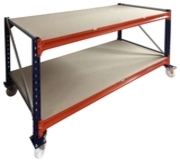
The industrial workbench with wheels 1850x900x800 provides the mobility required for dynamic production environments. It maintains the stability necessary for precision work. The wheeled design enables operators to position workstations optimally for specific tasks. It also provides the option to quickly reconfigure layouts for different production runs or collaborative activities.
Mobile configurations prove particularly valuable in environments where workstations must serve multiple production lines. They're also useful where seasonal variations require frequent layout adjustments. The ability to quickly reposition workbenches reduces changeover times and enables facilities to respond rapidly to changing customer requirements or market conditions.
Complementary stationary options like the industrial workbench 1850x900x800 provide stable anchors within flexible layouts.
Modular Workstation Systems Adapt to Changing Requirements
The most effective workbench layouts in industrial settings incorporate modular components that evolve with operational requirements. Modular systems enable facilities to expand, reconfigure or specialise workstations without replacing entire installations.
This adaptability proves crucial for businesses experiencing growth, diversification or technological advancement that impacts workspace requirements.
Advanced modular solutions like the industrial workbench 2000h x 1500w x 800 400d with bar and holder underneath c/w timber feet demonstrate sophisticated design integration that supports diverse operational needs. The included bar and holder attachments provide specialised storage for tools and materials. They maintain clean work surfaces and organised environments.
Modular approaches enable facilities to standardise on component systems and customise configurations for specific operational requirements. The steel workstation with two drawers exemplifies storage integration that supports organisation without consuming valuable work surface area.
These systems grow with business needs. They protect capital investments and maintain operational flexibility.
Integrated Storage Solutions Eliminate Time-Wasting Searches
Productivity in industrial settings depends heavily on tool and material accessibility. Workbench layouts that integrate storage solutions directly into work areas eliminate the time waste associated with searching for components, tools or documentation.
Keeping frequently used tools within reach can significantly improve task efficiency. Proper organisation enhances overall workflow performance.
The modular workstation system 1 represents a comprehensive integration of work surfaces and storage components. These systems enable operators to maintain everything needed for specific tasks within arm's reach. This reduces movement waste and improves focus on value-added activities.
The modular nature allows customisation for specific operational requirements and maintains standardisation across facilities.
Effective storage integration considers both immediate needs and longer term organisation requirements. Components like the 12 drawer industrial cabinet c/w castors provide mobile storage solutions that complement fixed workstation installations.
The combination of fixed and mobile storage creates flexible systems that adapt to varying task requirements. They maintain organisation standards.
Specialised Configurations Support Specific Industrial Applications
Different industrial settings require workbench layouts tailored to specific operational requirements. Assembly operations require different configurations than inspection activities. Packaging tasks demand layouts that support efficiency and accuracy.
Understanding these specific requirements enables facilities to create workstations that truly support operational objectives rather than merely providing generic work surfaces.
The value work bench 1000x600/300x1860 offers compact efficiency for space-constrained operations. It maintains functionality for detailed work requirements. These configurations are particularly effective for quality control stations, small component assembly or specialised maintenance activities requiring precision and attention to detail.
Specialised storage components enhance workstation functionality for specific applications. Items like the chip board 15mm 500 kg shelf provide heavy duty storage solutions that integrate seamlessly with workbench configurations.
Advanced Modular Systems Enable Complex Workflows
Sophisticated manufacturing processes require workbench layouts that support complex, multi-step workflows. These layouts maintain organisation and efficiency. Advanced modular systems enable the creation of integrated workstations that guide operators through sequential processes. These workstations provide all necessary tools and materials within optimised reach zones.
Systems like the modular workstation system 2 and modular workstation system 7 demonstrate the flexibility possible with thoughtful modular design. These configurations support complex assembly processes, multi-component integration or collaborative activities that require multiple operators working on related tasks.
The modular workstation system 3 provides another example of how modular components create specialised solutions for specific operational requirements. Mobile elements like the modular workstation trolley c/w pegboard 670 x 375 x 710 complement fixed installations by providing portable tool and material organisation that moves with operators as needed.
Ergonomic Design Principles Enhance Operator Performance
The most productive workbench layouts incorporate ergonomic design principles that support operator health and performance throughout extended work periods. Ergonomic approaches focus on fitting the workspace to the worker rather than forcing workers to adapt to poorly designed environments. This reduces muscle fatigue and can help decrease workplace injuries.
Ergonomic workbench design considers reach zones, sight lines and physical positioning requirements for specific tasks. Work surfaces positioned within optimal reach zones reduce overextension and awkward postures that can contribute to musculoskeletal disorders.
Workbench height selection depends on the specific tasks being performed and the physical characteristics of operators. Most industrial applications benefit from adjustable height solutions that can accommodate different workers and varying task requirements.
Lighting Integration: A Crucial Component
Lighting integration forms a crucial component of ergonomic workstation design. Adequate illumination reduces eye strain and improves precision for detailed work. Proper positioning eliminates shadows that can obscure work areas.
Combining task lighting and ambient illumination creates work environments that support accuracy and operator comfort throughout production shifts.
Implementation Strategies for Optimal Workbench Layouts
Implementing improved workbench layouts in industrial settings requires systematic planning and phased execution that minimises operational disruption. It maximises benefits. The implementation process begins with a thorough analysis of existing workflows, identification of inefficiencies and development of solutions that address specific operational challenges.
Pilot Implementation Approach
Pilot implementations enable facilities to test new configurations on limited scales before committing to facility-wide changes. These trials provide valuable data on productivity improvements, operator acceptance and unforeseen challenges that may require design modifications.
Successful pilot results build confidence and support for broader implementation initiatives. They identify best practices for wider application.
Change Management Considerations
Change management considerations ensure smooth transitions from existing layouts to optimised configurations. Operator training on new workstation features, updated procedures and ergonomic practices maximises the benefits of improved layouts. It builds employee support for ongoing optimisation efforts.
Regular feedback collection and continuous improvement processes ensure that workstation configurations continue to evolve with operational requirements and operator insights.
Transform Your Industrial Workspace
Optimised workbench layouts represent one of the most cost-effective improvements available to industrial settings seeking enhanced productivity, improved quality and better workplace ergonomics. The strategic application of layout principles, combined with appropriate workstation components, creates environments that support operational excellence. They also provide flexibility for future growth and adaptation.
Well-designed ergonomic workstations can deliver measurable improvements in productivity and help reduce the risk of workplace injuries.
Ready to transform your industrial workspace with expertly designed workbench solutions from RackZone? Contact our team to discuss your specific layout requirements. Discover how our comprehensive range of industrial workbenches, modular systems and storage solutions can improve your operational efficiency.
With next-day delivery across Ireland and Northern Ireland and professional installation services, we'll help you create workbench layouts that drive measurable productivity improvements.