

 Value Shelving
  Chrome Shelving
 Warehouse Shelving
 Industrial Shelving
 Garage Shelving
 Metal Shelving
  Plastic Shelving
 HORECA
 Galvanised Shelving
 Industrial Workbench
  Value Workbench
  Modular Workstations
 Matting
  Metal Lockers & Benches
 Office
  Slatwall
  Cabinets
 Plastic Lockers
 Lean Products
 Mobile Steps
 Wall-Zone
 Longspan Racking
  Cantilever Racking
  Industrial Pallet Racking
 Wire Mesh Decking
 Tyre Racking
 Vertical Storage
 Racking Accessories
 Up & Over Gates
 Containers & Boxes
  Louvre Panels
 Crystal Box Systems
 Parts Bins
  Euro Containers
 Visible Storage Boxes
 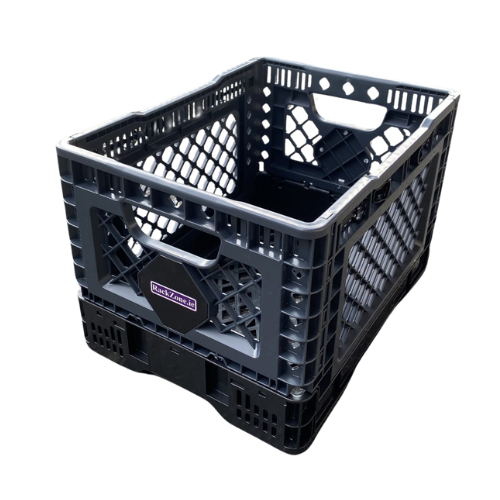 Foldable Crates
 Shelf Bin
 Tool Organiser

 Waste Management
 Cabinets
 Chemical & CoSHH Cabinets
  Hex Lighting
 Packaging
 Platform Trolleys
  Hand Trucks
  Pallet Trucks
  Plastic Pallets

What Do I Need to Consider When Buying Pallet Racking for the First Time?
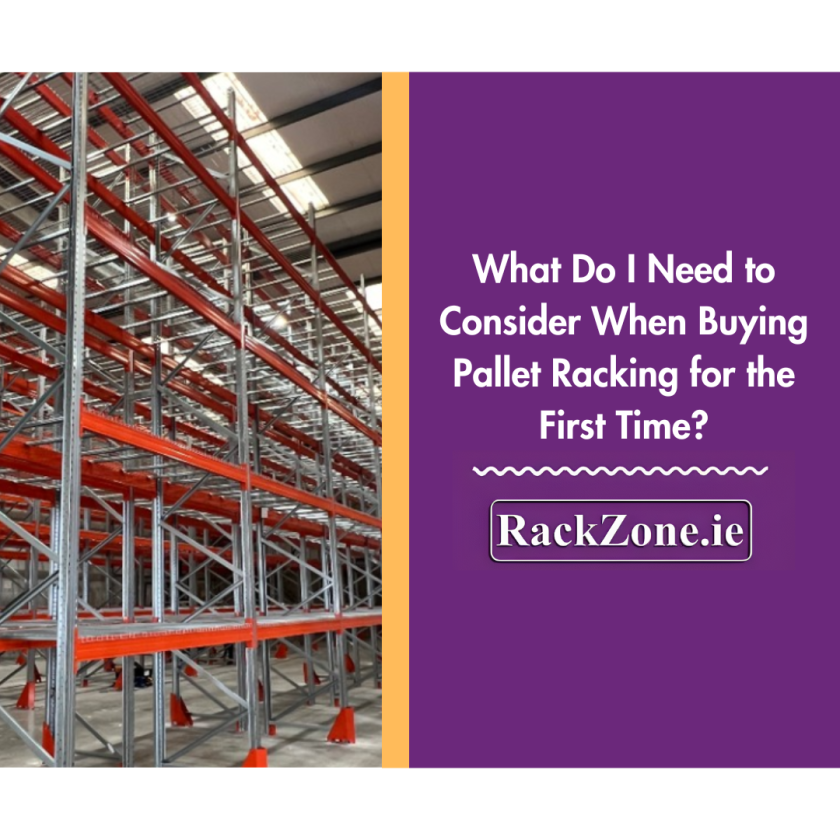
Purchasing pallet racking for the first time is a strategic investment that demands careful evaluation. You need to assess your warehouse space, operational requirements and safety standards. First-time buyers must examine available floor space, pallet dimensions, handling equipment compatibility, budget constraints and long-term scalability needs. The right system transforms warehouse efficiency by maximising storage density and ensuring safe, accessible inventory management.
Estimated reading time: 7 minutes
Key Takeaways
- Available warehouse space determines storage density and system configuration.
- Pallet dimensions and weight specifications directly influence racking design requirements.
- Handling equipment compatibility affects operational efficiency and determines aisle width requirements.
- The decision between new and used pallet racking systems depends on budget, timeline and customisation needs.
- Safety compliance requires expert installation, regular inspections and appropriate protective accessories.
- Different racking system types serve distinct operational requirements, from single-deep to high-density storage solutions.
How Does Available Warehouse Space Influence Your Pallet Racking Selection?
Available floor space shapes your entire storage strategy.
Available Space
Warehouse spatial parameters determine storage configuration options and capacity optimisation potential.
- Measure floor area dimensions and clear ceiling height
- Document column positions, loading bays and fixed infrastructure
- Evaluate vertical storage expansion opportunities
- Consider future operational growth requirements
When you're purchasing a racking system for the first time, conducting a comprehensive spatial analysis helps you determine optimal storage density. You'll maintain safe operational corridors at the same time. Irish warehouses, particularly in urban centres like Dublin and Cork, often face spatial limitations that make vertical storage solutions necessary.
You need to measure more than floor dimensions. Ceiling height matters. It directly impacts the number of beam levels you can incorporate. Industrial facilities feature varied ceiling heights, with each additional metre of vertical space representing substantial storage capacity gains. First-time buyers often underestimate the value of vertical expansion. They focus exclusively on horizontal footprint.
Column placement, loading bay positions and existing infrastructure create spatial constraints. You must map these precisely before selecting your system. Professional warehouse planning involves creating detailed facility layouts that identify obstructions, emergency exits and operational zones. This preparatory work prevents costly modifications during installation. It ensures compliance with Irish health and safety regulations.
Storage density calculations should account for future growth projections. A well-designed system accommodates expansion through modular components. You can increase capacity without complete reconfiguration. Long span shelving offers particular flexibility for businesses anticipating evolving inventory profiles.
Why Are Pallet Dimensions Critical to Racking System Design?
Pallet size specifications are fundamental design parameters.
Pallet Specifications
Pallet dimensions and load characteristics determine structural design requirements for beam length, frame depth and load capacity.
- Document maximum pallet dimensions in use
- Specify weight requirements per pallet position
- Ensure adequate beam support for load distribution
- Account for inventory variations throughout the year
They determine beam length, frame depth and load-bearing requirements. Standard Euro pallets (1200mm x 800mm) and UK pallets (1200mm x 1000mm) represent common configurations. But you must account for the largest pallets you'll store, not average dimensions. Undersized racking creates immediate operational constraints and safety hazards.
Load weight distribution affects structural specifications significantly. A system designed for heavier pallet loads requires substantially different engineering than one supporting lighter loads. Manufacturers calculate safe working loads based on uniformly distributed weight. Real-world applications often involve uneven loading patterns that require safety margins.
You need to minimise pallet overhang. But you must ensure adequate support across the beam face. Industry best practice suggests that pallets should rest adequately on beams to prevent instability and load displacement.
First-time buyers should document their complete pallet inventory. Include seasonal variations and special items. This ensures system compatibility.
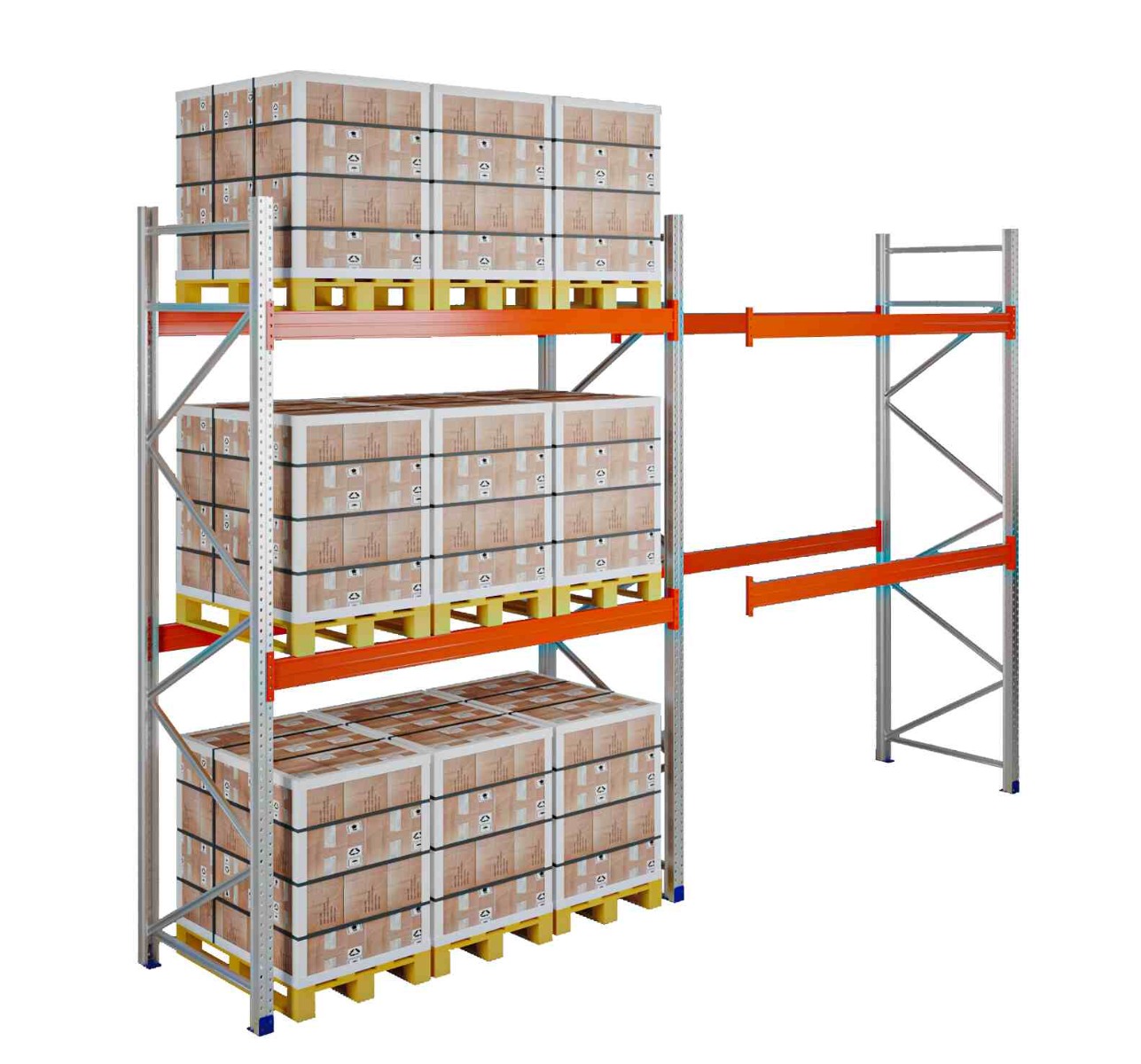
Mixed inventory operations present additional complexity. Facilities storing diverse product ranges may require adjustable beam levels to accommodate varying pallet heights. Industrial pallet racking systems with adjustable beam configurations provide operational flexibility without compromising structural integrity.
What Role Does Handling Equipment Play in Racking System Selection?
Handling equipment compatibility determines aisle width requirements, racking depth and overall system configuration.
Material Handling Equipment
Equipment specifications influence aisle width configuration, racking depth requirements and vertical storage limitations.
- Review forklift and reach truck specifications
- Calculate operational aisle width requirements
- Verify equipment lift height capabilities
- Assess turning radius and manoeuvring clearances
Counterbalance forklifts, reach trucks and Very Narrow Aisle (VNA) equipment each demand specific spatial parameters. These directly impact storage density. You must align your system design with existing or planned material handling equipment.
Reach trucks require narrower aisles than counterbalance forklifts. This difference translates to substantial floor space savings in medium to large warehouses. However, reach truck operations often need double-deep racking configurations. Pallets are stored two-deep from the aisle face. This requires specialised equipment capabilities.
Lift height capabilities constrain vertical storage potential. Different equipment types offer varying lift heights. Purchasing a racking system that exceeds your equipment's capacity creates inaccessible storage locations and operational inefficiency.
Turning radius requirements affect aisle junction design and overall layout efficiency.
You should consult equipment specifications to determine minimum turn requirements. This ensures adequate manoeuvring space at aisle ends. Poor spatial planning creates bottlenecks that diminish the productivity gains that proper racking should deliver.
Should First-Time Buyers Choose New or Used Pallet Racking Systems?
The decision between new and used pallet racking depends on budget constraints, timeline pressures and customisation requirements.
New vs Used Systems
Investment decisions balance budget parameters, delivery timescales and customisation requirements against operational needs.
- Evaluate budget constraints and timeline requirements
- Compare customisation capabilities between options
- Verify structural integrity of pre-owned systems
- Review warranty provisions and compliance documentation
New systems offer bespoke design specifications, manufacturer warranties and guaranteed compliance with current safety standards. They're ideal for long-term installations. Used racking provides cost advantages compared to new systems. This appeals to businesses with immediate needs and budget limitations.
New pallet racking systems
We engineer new systems specifically for your facility dimensions, load requirements and operational workflow. This customisation eliminates compromises and maximises storage efficiency. Additionally, new systems come with comprehensive documentation, installation support and compliance certification. This simplifies safety inspections and insurance requirements.
Used racking considerations
Used racking requires thorough inspection to verify structural integrity and load capacity. Reputable suppliers conduct comprehensive assessments. They check for frame damage, beam deformation and connection integrity. You should only work with established Irish providers who guarantee proper safety evaluations and provide detailed condition reports when you're purchasing used systems.
Lead times differ between new and used options. Manufacturing new systems requires several weeks depending on complexity and supplier capacity
Businesses facing urgent capacity constraints may prioritise used systems despite reduced customisation options. However, you must balance any cost savings against potential limitations in configuration flexibility.
What Safety Standards Must First-Time Buyers Prioritise?
Safety compliance is non-negotiable when you're purchasing pallet racking systems.
Safety Compliance
Adherence to Health and Safety Authority regulations and industry standards is mandatory for Irish warehouse operations.
- Engage qualified engineers for professional installation
- Establish regular inspection protocols and schedules
- Install protective accessories including frame guards and decking
- Implement clear load capacity identification systems
It represents your primary responsibility as a warehouse operator. Irish facilities must adhere to Health and Safety Authority (HSA) guidelines. These mandate professional installation, regular inspections and appropriate safety features. Inadequate racking safety creates liability exposure and endangers personnel.
Professional installation requirements
We strongly recommend professional installation by qualified engineers for structural integrity and compliance. DIY installation of pallet racking systems is dangerous. Improper assembly compromises load-bearing capacity and creates catastrophic failure risks. Experienced installers ensure correct frame anchoring, beam engagement and overall system stability according to manufacturer specifications.
Inspection protocols
Industry guidelines recommend regular inspections by competent personnel, with frequent visual checks by designated staff. Inspection protocols identify damage, overloading and structural deterioration before failures occur.
You should establish inspection schedules immediately upon installation. Maintain detailed records for regulatory compliance.
Safety accessories and features
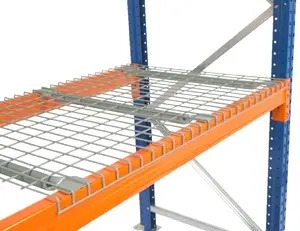
Racking accessories enhance safety significantly. Pallet racking corner protectors shield frame uprights from forklift impacts. Wire mesh decking prevents pallet falls and improves fire safety by eliminating gaps.
You must display load capacity signage prominently on each bay. This ensures operators understand weight limitations.
How Do Different Racking System Types Address Specific Operational Needs?
Different racking configurations serve distinct operational requirements. You need to understand these distinctions to select appropriate systems.
System Configuration Type
Different racking configurations address specific operational requirements, inventory characteristics and access patterns.
- Single deep selective: direct access to all pallet positions
- Double deep: increased density with reduced selectivity
- Drive-in: high-density storage for homogeneous inventory
- Specialised systems: cantilever, tyre and vertical configurations
Single-deep selective racking
This is the most common configuration. It provides direct access to every pallet location and maintains straightforward operation. This accessibility makes it ideal for diverse inventory with varying turnover rates.
Double-deep systems
These sacrifice individual pallet accessibility for increased storage density. They store two pallets per location from each aisle face. Double-deep configurations suit operations with multiple pallets of identical SKUs. Last in, first out inventory management is acceptable. However, double-deep systems require reach trucks with specialised attachments. This represents an equipment investment you need to consider.
High-density storage systems
Drive-in racking eliminates aisles between rows. Forklifts drive directly into the structure. These configurations maximise storage capacity for homogeneous products with low SKU variety. But they create last in, first out access patterns. Drive-in systems are particularly effective for cold storage facilities where floor space carries premium costs.
Specialised configurations
These address unique storage challenges. Cantilever racking accommodates long items like timber and steel. Tyre racking provides purpose-built storage for automotive applications. Vertical storage solutions optimise narrow footprints in space-constrained facilities.
Begin Your Pallet Racking Journey with Expert Support
Purchasing pallet racking for the first time represents a significant operational investment. It requires strategic planning and expert guidance.
We understand the challenges Irish businesses face when implementing warehouse storage solutions. Our comprehensive approach encompasses site assessment, system design, professional installation and ongoing support. This ensures your racking investment delivers maximum operational efficiency and safety compliance.
Contact our specialists today to discuss your specific requirements. We'll provide tailored recommendations that align with your business objectives, budget parameters and growth trajectory.
Frequently Asked Questions (FAQs)
What is the most important factor when buying pallet racking for the first time?
Safety is the most critical consideration when you're purchasing your first pallet racking system. Professional installation, appropriate load ratings, regular inspections and compliance with Irish Health and Safety Authority guidelines protect personnel and inventory. This mitigates liability risks.
How much does pallet racking cost for first-time buyers in Ireland?
Pallet racking costs are determined by system type, load capacity, height and configuration complexity. Pricing varies based on your specific requirements and the racking solution you choose. Contact RackZone for accurate quotations tailored to your needs.
What is the difference between new and used pallet racking systems?
New pallet racking is manufactured to your specifications with warranties and guaranteed compliance. Used systems may have limited customisation options. Both options are viable when you purchase from reputable suppliers who ensure structural integrity and safety compliance.
How long does pallet racking installation take for first-time projects?
Installation timelines are influenced by system complexity and warehouse size. The duration depends on your specific project requirements, from simpler installations to more complex configurations. Your supplier can provide accurate timeframes based on your particular needs.
What maintenance is required for pallet racking systems?
Pallet racking requires regular professional inspections and frequent visual assessments by designated staff. Maintenance includes checking frame plumbness, beam engagement, anchor integrity and identifying impact damage or overloading. You must repair damaged components promptly to maintain safety compliance.