


You've got a space to sort. Maybe it's a garage that's turned into a dumping ground or a workshop that's steadily running out of room. Either way, you've landed on a question that trips a lot of people up: freestanding or wall-mounted shelving?
Both approaches work but for most homes, garages and workplaces, freestanding shelving turns out to be the more practical option. This guide walks you through why, along with the genuine trade-offs, so you can make the right call for your own space. Browse our full range of freestanding shelving at RackZone and keep reading to see what fits.
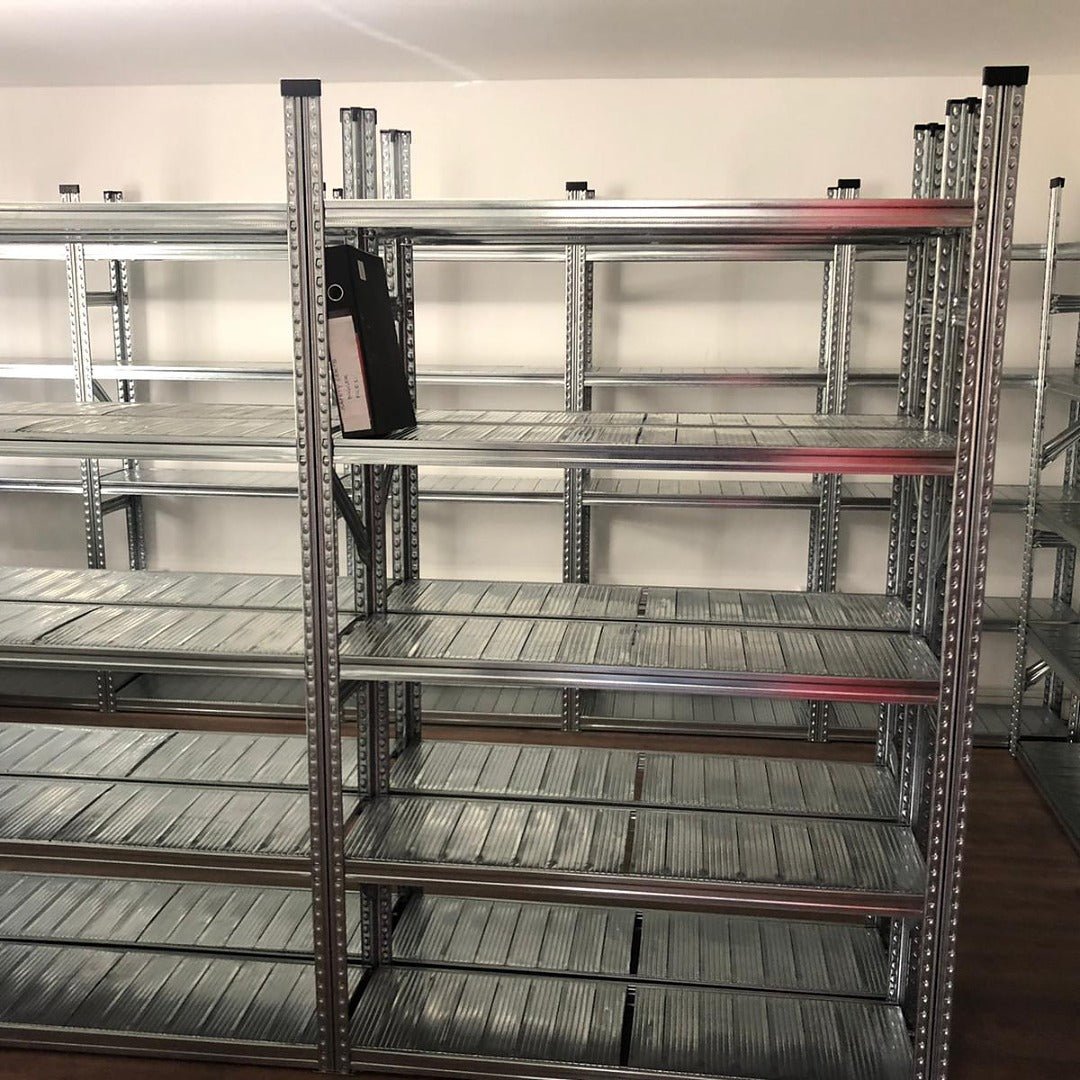
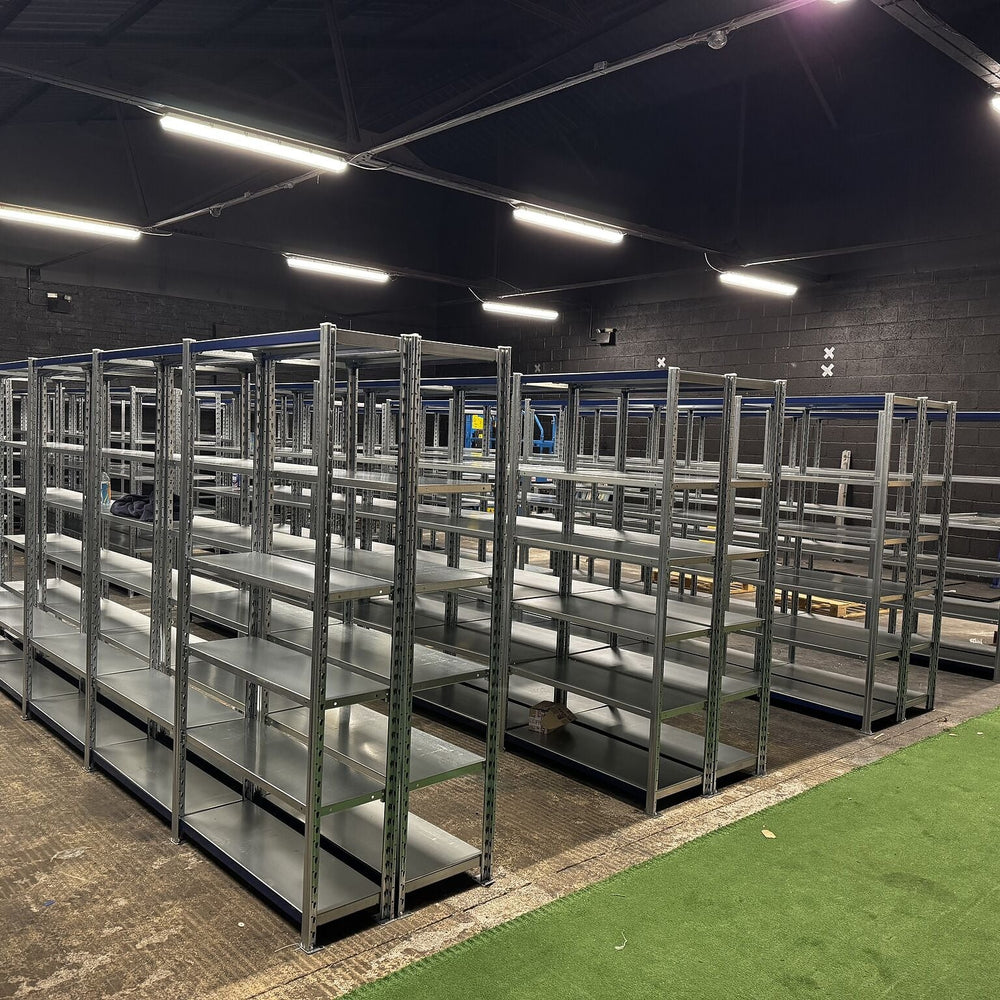
Freestanding or Wall-Mounted: What Actually Suits Your Space?
The honest answer starts with your walls and your plans for the room, not with which option sounds more impressive.
If you're renting or you're not certain what's behind your walls, freestanding shelving is the safer and far simpler choice. It needs no drilling and no wall fixings, so it goes up in minutes and moves with you if your circumstances change.
If you own the property with solid masonry or timber stud walls, and you need every inch of floor space clear, wall-mounted shelving can make sense. It's a narrower use case than people often assume though, and it comes with its own list of caveats around wall type and long-term fixings.
For most garages, workshops, stockrooms and retail store rooms, the practical answer is freestanding. RackZone's shelving range is built entirely around freestanding systems, which solve most storage problems without a wall assessment and without the risk of getting it wrong on plasterboard.
Freestanding Shelving: Built for Flexibility
Freestanding shelving stands on its own, with no fixings into the wall required. It's the natural first choice if you're renting, or if you'd simply rather have shelving up today than lose a weekend to drilling.
How Freestanding Shelving Works
RackZone's freestanding shelving uses a boltless frame that connects with a mallet, so you can assemble or reconfigure a full bay in minutes without tools. Load capacities vary by range: Value Shelving carries up to 400kg UDL per shelf, and Concealed Rivet Industrial Shelving is rated up to 300kg per shelf. Shelf heights adjust to suit whatever you're storing, whichever range you choose.
Because the frame carries its own load rather than relying on wall fixings, a freestanding unit performs consistently wherever you put it. There's no need to check what's behind the plaster or worry about a fixing pulling loose under load. RackZone's own guidance for freestanding units is to place them on a level surface and use wall anchors for extra stability.
The Case for Flexibility
The real advantage of freestanding shelving is that you can move it. Reconfiguring a garage layout or shifting an entire unit to a new spot takes minutes, not a weekend. For workshops where the layout changes as projects come and go, or for stockrooms where inventory shifts by season, that adaptability counts for a lot.
It's also faster to set up from new. There's no drilling and no need to check what's behind the wall before you start; a freestanding bay is ready to load as soon as it's assembled. If your garage or shed suffers from damp, our galvanised steel shelving is built to resist corrosion in those conditions.
Wall-Mounted Shelving: Where It Still Fits
Wall-mounted shelving fixes directly to the wall, typically through a system of vertical rails or brackets anchored into the wall structure. It clears the floor completely, which matters if you're parking a car in the garage or need clearance for a forklift or pallet truck.
As a general rule in the trade, its performance depends heavily on what you're fixing into. A system anchored into solid masonry can usually carry a heavier load than the same system fixed into plasterboard or an unknown wall type, since solid masonry gives the fixings far more to grip. That's not something to guess at. Always check the manufacturer's rated shelf UDL and confirm your fixings suit your wall type before committing to a layout.
RackZone doesn't supply dedicated wall-mounted shelving systems of this kind. If floor space is genuinely your priority, our Wall-Zone kits, Slatwall panels, Louvre Panels and wall-mounted parts bin systems give you the same floor-clearing benefit for tools and small parts, without the structural demands of a full shelving system.
Freestanding vs Wall-Mounted: A Straight Comparison
| Factor | Freestanding | Wall-Mounted |
|---|---|---|
| Floor space | Frame occupies floor footprint | Full floor cleared beneath the shelf |
| Load capacity | Good, based on the unit's own UDL rating | High, but heavily dependent on wall structure |
| Installation time | Fast: boltless assembly, no tools | Longer: drilling and levelling |
| Portability | Fully moveable | Fixed in place |
| Suitability for renters | Ideal, no wall fixings needed | Usually needs landlord permission |
| Aesthetics | Frame visible | Clean, minimal profile |
Floor space is the one factor where wall-mounted shelving has a clear edge. If that's the deciding issue for you, it's worth weighing against the flexibility and simplicity you'd be giving up.
Using Both in the Same Space
Plenty of people combine approaches, and it's often the most practical route. Freestanding units handle the bulk of the storage load at floor to shoulder height, where access and adjustability matter most. For anything above head height, or for small parts you'd rather keep off the workbench, RackZone's Wall-Zone kits and Louvre Panels free up wall space without asking a full shelving system to hang off your wall.
Choosing Between Freestanding and Wall-Mounted Shelving
Work through these questions and the right answer for your space usually becomes clear.
Do you own the property, or are you renting? Renters, and anyone unsure about future wall access, should default to freestanding. Owners with solid walls and a firm long-term layout have more room to consider wall-mounted options.
Do you actually need the floor space? If every square metre counts, for a car or a forklift, that's the strongest argument for going wall-mounted, or for pairing RackZone's Wall-Zone or Louvre Panel systems with freestanding shelving elsewhere in the room.
Is your wall type confirmed? Solid masonry or timber stud suits wall-mounted shelving. Hollow block or plasterboard makes freestanding the safer default, and an unfamiliar wall structure is reason enough on its own to skip wall-mounted altogether.
How quickly do you need it in place? Order a freestanding unit from RackZone before 3pm Monday to Thursday and, per our delivery information, it arrives next business day. Wall-mounted systems take longer to become functional even after delivery, since installation happens on site.
What's your storage timeline? Long-term, fixed layouts suit wall-mounted shelving. Changing or growing stock, and a workshop that gets reorganised every few months, both suit the adaptability of freestanding shelving better.
Freestanding vs Wall-Mounted Shelving: Quick Answers
Is freestanding or wall-mounted shelving better for a garage? Freestanding shelving is the better default for most garages, since it works on any wall type and moves with you if your setup changes. Wall-mounted shelving suits a narrower case: solid masonry walls and a genuine need to clear the floor completely.
Does wall-mounted shelving carry more weight than freestanding shelving? Load capacity is often as much about installation quality as it is about shelving type. A wall-mounted system anchored into solid masonry can carry a heavy load, but a well-specified freestanding unit, rated on its own UDL, often matches it without depending on wall structure at all.
Can freestanding shelving be moved once it's assembled? Freestanding shelving units are fully portable once built, since nothing fixes them to the wall. You can reposition a unit within a room or move it to a different space entirely without tools or wall repairs.
Is freestanding shelving suitable for a rented property? Freestanding shelving is generally the safer choice for renters, because it needs no wall fixings and leaves nothing to repair when you move out. Wall-mounted systems typically need landlord permission before you can install them.
Ready to Sort Your Space?
For most garages, workshops, stockrooms and retail store rooms, freestanding shelving gives you the storage capacity you need without the wall assessment or the drilling. Call us on +353 (0)90 9673261 or browse our full freestanding shelving range. We're 100% Irish owned. We hold stock here in Ireland. We're rated Excellent on Trustpilot.
