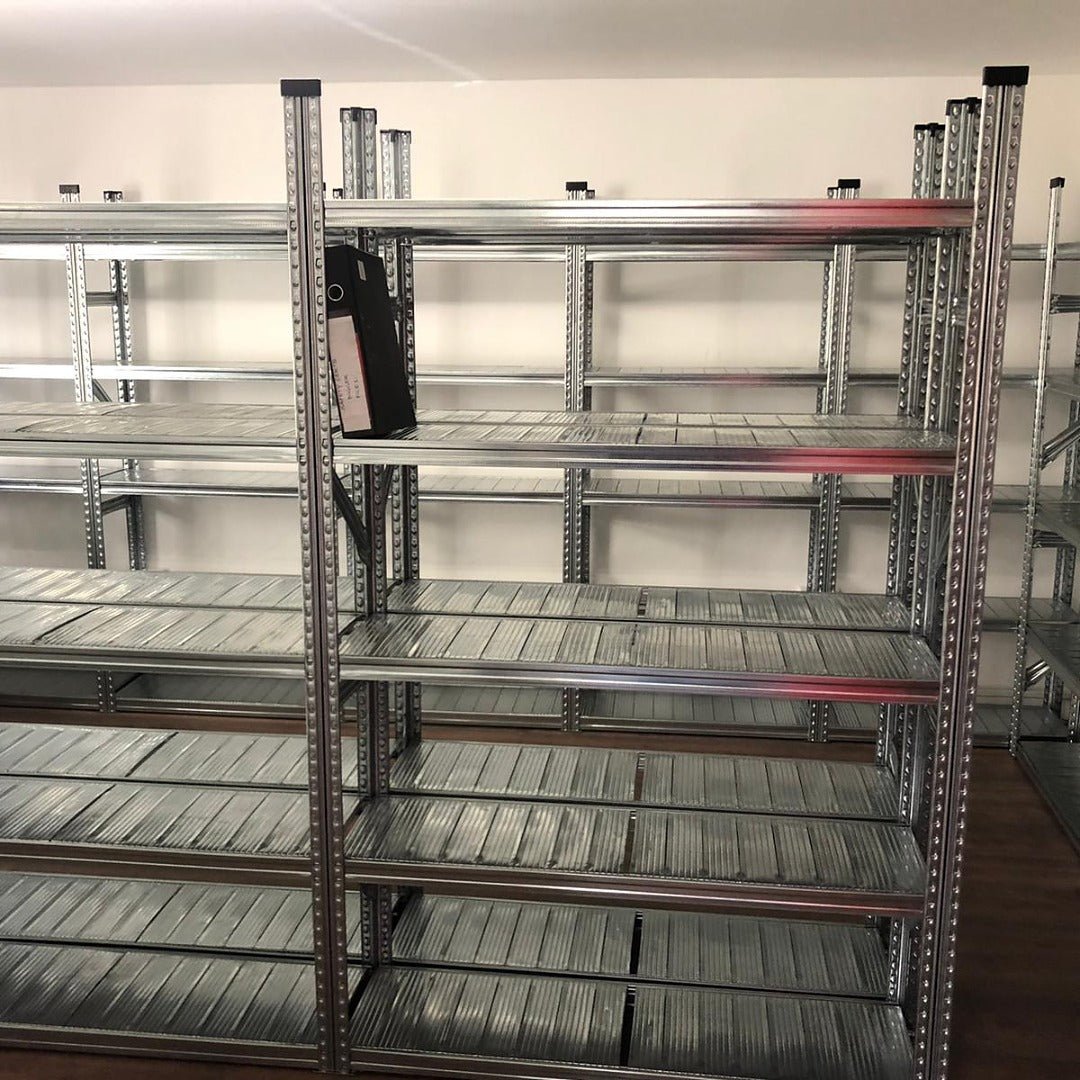
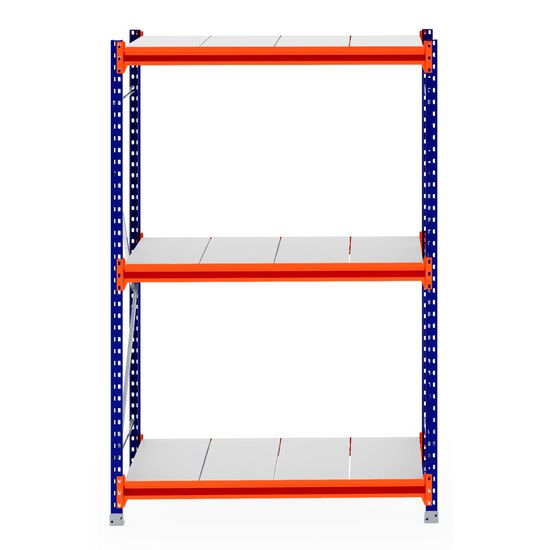
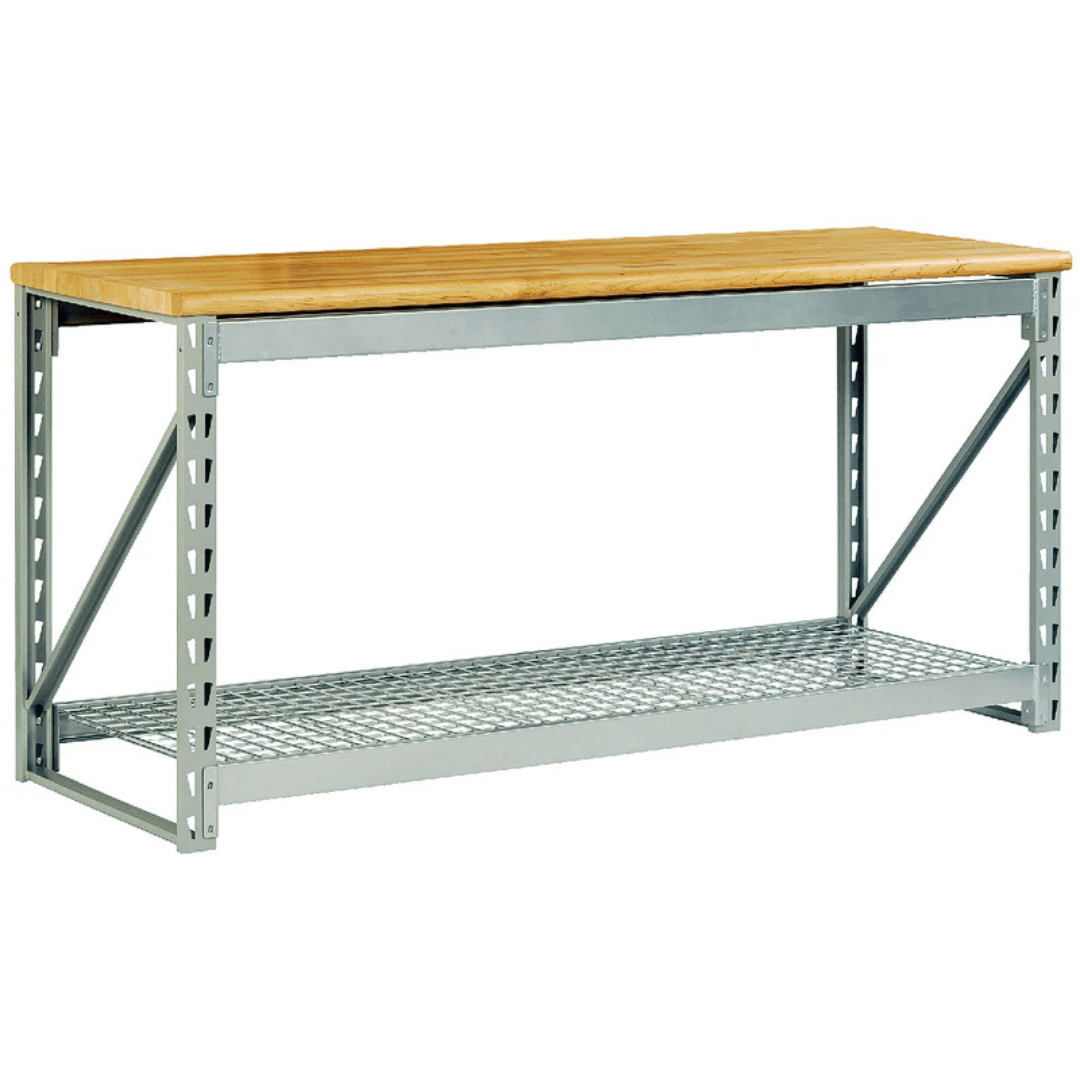
Your shelving is full again. Sound familiar? It happens to almost every business and every home organiser at some point. The good part? You rarely need to start from scratch. Our shelving range runs from a single starter bay right up to a full warehouse layout. That means you can grow your storage step by step, instead of ripping it all out. This guide shows you how to read your own space first so your next purchase is the right one.
Planning a shelving expansion? Read the space before you buy
When did you last look at your shelving? Most people see a packed unit, decide it's had its day and start browsing for something new. A smarter move is to treat your existing shelving like a floor plan rather than a problem to throw money at.
Walk the space. Where are things piled on the floor because there's nowhere else for them to go? Are any shelves bowing or creaking under the weight? Are you climbing over boxes to reach the one thing you need every single day?
That short walk usually tells you everything.
A shortage of floor space is a different problem to a shortage of load capacity. Mix the two up and you'll end up buying the wrong kit twice.
”When to reconfigure vs replace your shelving
Reconfigure
Reconfiguring makes sense when the bones of your shelving are sound but the layout just isn't working for you anymore. If the frames are solid and the shelves are undamaged, you don't need new shelving at all. Rearrange what's already there or bring in extender bays to run the system further along a wall. If the ceiling height allows it, add extra levels too.
Replace
Replacing is the right call once the shelving has actually reached the end of its working life. Watch for bent or rusted frames, and shelves sagging under everyday loads. A unit built for light home use shouldn't be asked to carry commercial stock either. Patch a struggling structure with more bays, and all you're doing is adding weight to something that's already buckling. At that point, stepping up to industrial shelving or a heavier duty range is the sounder long-term move.
Selecting between starter and add-on bays depends on specific storage requirements and that's exactly where the confusion tends to creep in. Get this decision right early and you'll save yourself from buying twice.
A guide to starter bays and add-on bays in shelving systems
Think of modular shelving the way you'd think of building blocks. Every system is built around two core parts and understanding the difference between them changes how you plan an expansion.
Starter Bay
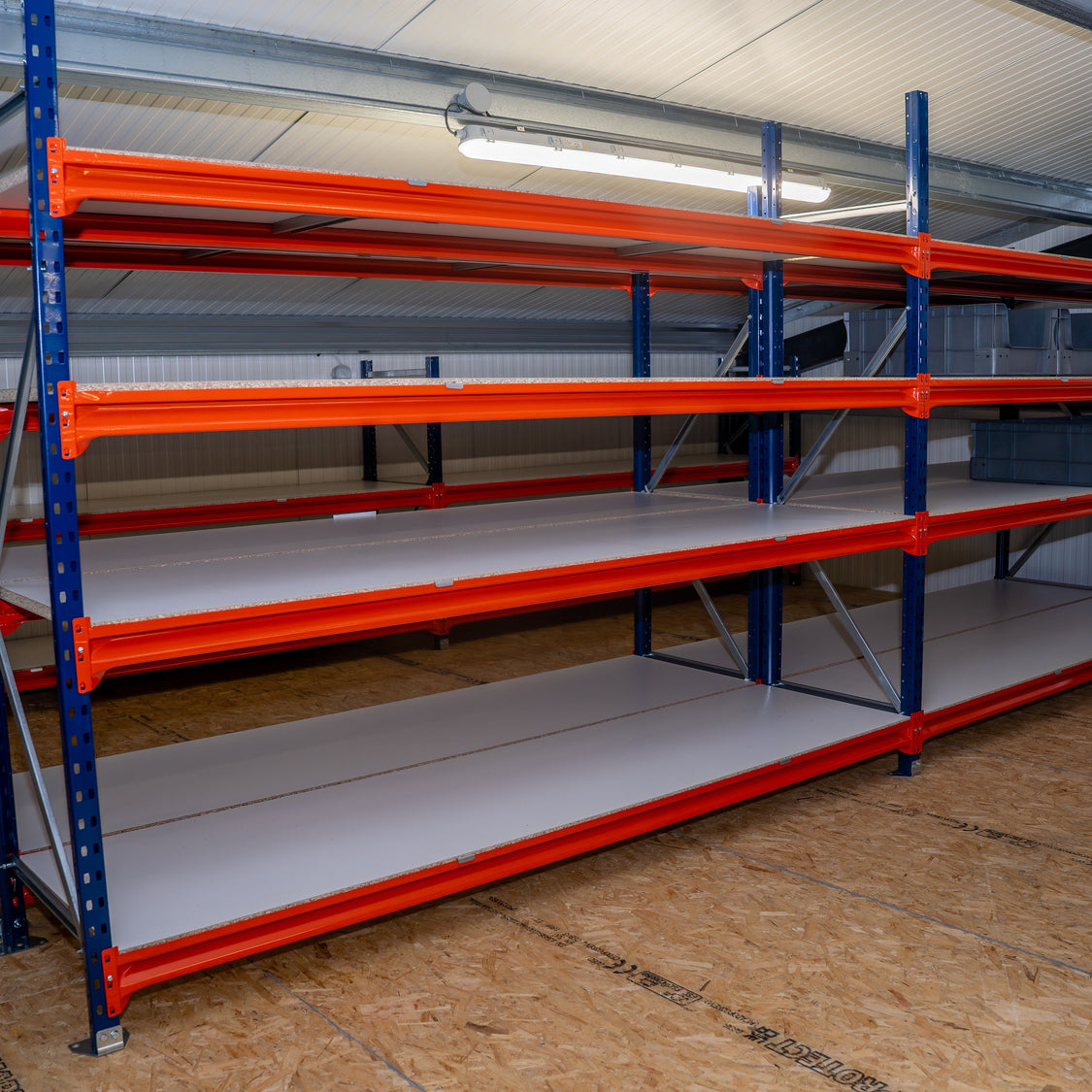
A starter bay is a complete, freestanding unit. It has its own full frame on both sides. That means it can hold weight and stand upright on its own, without leaning on anything else. Every shelving expansion begins with at least one starter bay in place - think of it as the anchor the rest of your run is built from.
Add-on Bay
An add-on bay (sometimes called an extender) shares one frame with the starter bay next to it, rather than carrying two full frames of its own. That's what makes it a more efficient way to extend a run along a wall or down an aisle. You're not paying for a second full frame that the next bay would only duplicate.
So, what's the practical rule? If you're starting a fresh section, whether that's a new wall in the garage or a new aisle in the warehouse, you need a starter bay. If you're lengthening a run that already has one in place, an add-on bay is the smarter, leaner choice. Selecting between starter and add-on bays depends on specific storage requirements: your target run length and whether the existing starter bay can bear the extra load.
How to build and extend your shelving system
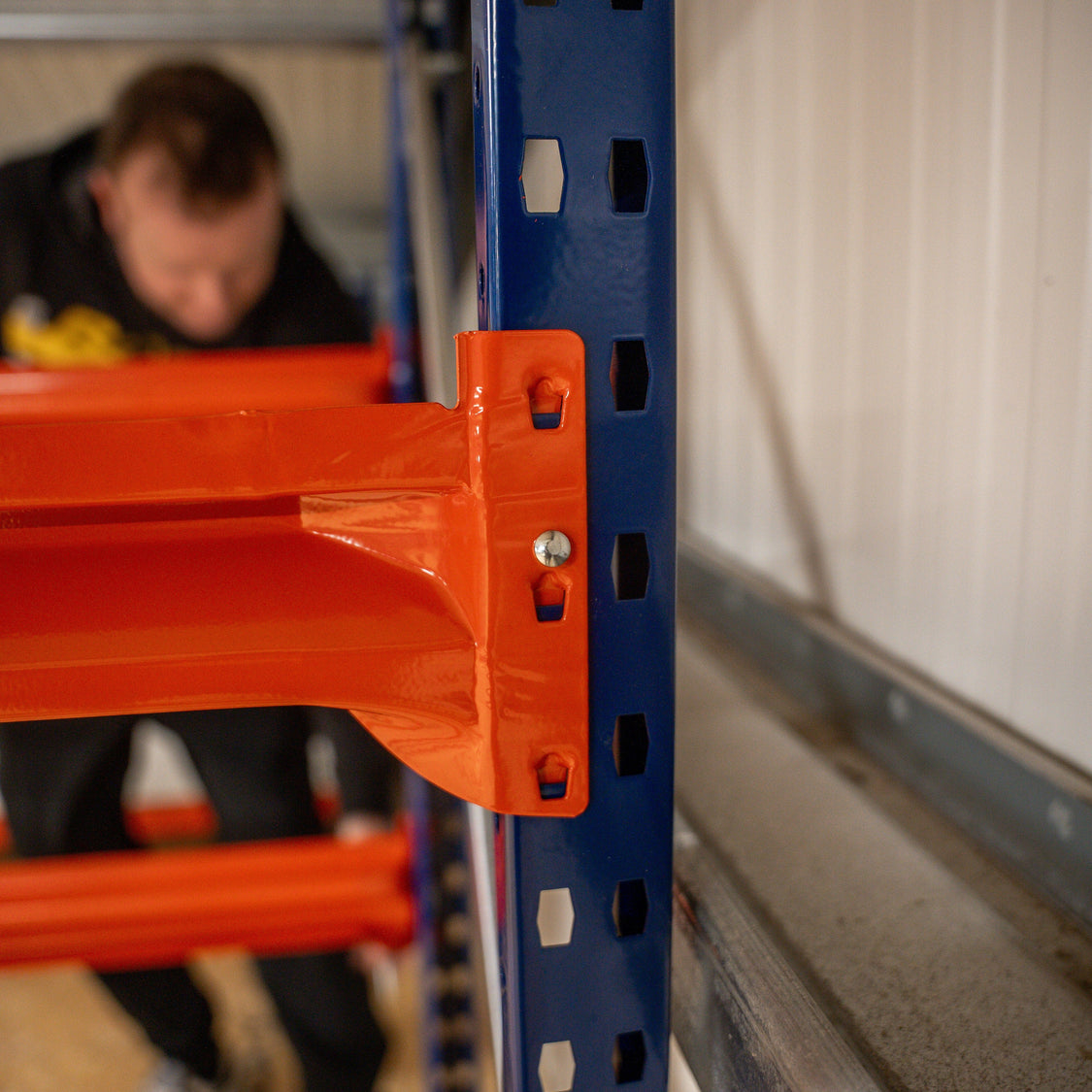
Building out a modular shelving system works in stages. It's one of the reasons the format suits businesses and homes still growing into their space; you're never locked into a single, all-or-nothing purchase.
Start with one starter bay where the pressure on storage is highest. Load it up. Live with it for a few weeks. See how it copes against your actual stock or belongings, not a rough guess scribbled on the back of an envelope. Once you know the shelf spacing and depth suit you, extend the run with add-on bays in the same direction. This kind of setup and customisation means every bay you add matches the one before it. The whole system stays level and stable, and it's easy to reconfigure later if your needs shift again.
The same staged thinking applies vertically in taller spaces. Rather than fitting the maximum number of shelf levels on day one, start with what you need now. Add more levels later if the frame height allows it. That keeps the unit balanced. And it stops you paying for shelf space you're not using yet.
Should you upgrade, improve or replace your shelving system?
Not every expansion calls for a complete overhaul, and it's worth pausing here before you reach for the credit card.
Sometimes the answer is a genuine upgrade: swapping standard shelves for a higher UDL rating within the same frame or moving from open shelving to a boxed system for smaller parts. Sometimes it's simply an improvement, like better wire mesh decking, clearer labelling or reorganising stock by how often you pick it, without buying anything new at all. And sometimes, as we've covered above, it really is time for a full replacement.
The safest way to decide? Match the fix to the problem you spotted on your floor plan walk.
”A load problem needs a load solution. A space problem needs more bays or a smarter use of height. What about a workflow problem, where staff are forever walking back and forth to fetch stock? That needs a rethink of layout, not a shelving purchase at all.
Maximising storage space without losing the plot
Maximising storage space isn't just about cramming more onto each shelf; that's the trap plenty of people fall into. It's about making sure every bay you add still lets you find what you need. You should be able to reach it without a struggle and shift stock around without friction.
It's also much easier to audit next time you do a stock check. Everything's roughly where you'd expect it to be.
A modular shelving system that grows in a planned, staged way tends to stay organised for far longer than one bought in a rushed panic.
”| Problem you've spotted | Likely fix | Not the fix |
|---|---|---|
| Floor space running out | Extend with add-on bays | Buying a wider, heavier unit |
| Shelves bowing under load | Upgrade to a higher UDL rating | Adding more bays to a weak frame |
| Frames bent, rusted or unstable | Replace with industrial shelving | Reconfiguring the same worn parts |
| Constant back-and-forth to fetch stock | Rethink the layout | Buying new shelving |
Once you've matched your problem to its fix, ordering the right bays or upgrade becomes a much simpler job.
If you're planning a shelving expansion for a warehouse, garage, stockroom or home storage area, we're happy to talk you through starter bays, add-on bays and load requirements before you order.
Call our team on 090 9673261, or browse our full shelving range to see the starter and extender options available today.